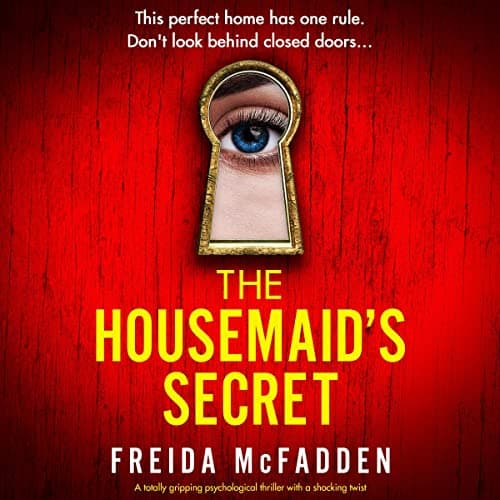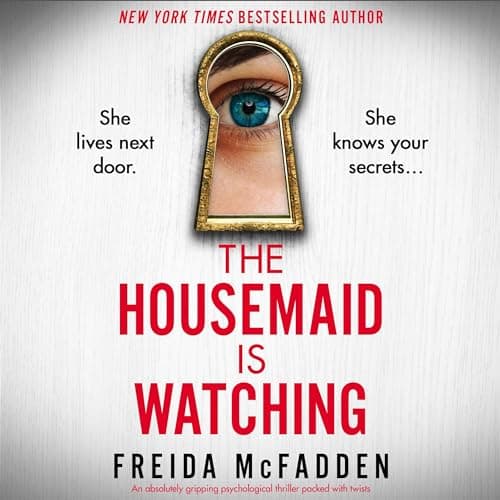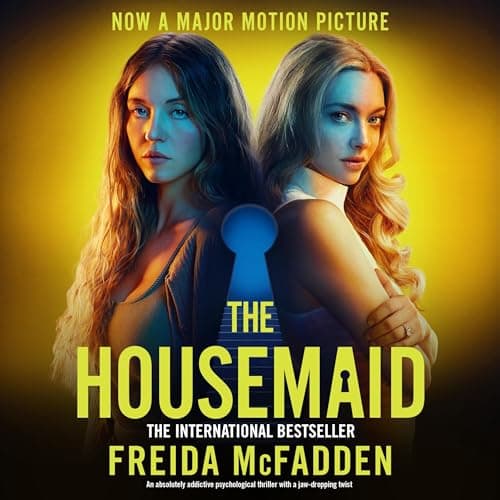

Everybody and their cousin has been calling this one "so twisty," which usually makes me suspicious. That phrase gets thrown around way too easily. But I listened to The Housemaid while folding tiny soccer uniforms at my kitchen table after a run of night shifts, and yeah - this one got me. Not because it's subtle. It's not. It's because Freida McFadden knows exactly how to weaponize domestic discomfort.
You know from the jump that something is off in the Winchester house. Millie is supposed to be grateful for this fresh start, but then she's eating alone in her little attic room, Nina is creating messes just to make her scrub them up, and there's that deeply creepy detail about the bedroom door locking from the outside. That's the kind of thing that makes the hair on the back of your neck stand up before the book has even shown all its cards. And when Millie tries on Nina's pristine white dress - just once, just to feel what that life might be like - you can practically hear the trap snapping shut.
That's what worked for me here: not realism, exactly, but escalation. The book keeps taking ordinary rich-people-house details - marble hallway, walk-in closet, school pickup, family dinners - and making them feel contaminated. By the time Nina starts lying in ways that are so blatant you almost wonder if Millie is missing something obvious, the whole story starts feeling like one long held breath.
And honestly? Perfect for that post-shift decompression when your brain is too fried for literary gymnastics but still wants a good adrenaline spike.
The house is the monster here
This isn't a thriller where I loved spending time with the characters. I don't think that's the point. If you need everyone to feel richly layered and lovable, this may not be your lane. A few of the complaints I saw - that it's far-fetched, that they didn't connect emotionally - make sense to me. Some of the turns absolutely ask you to go with it. You either buy the heightened, nasty little game this book is playing, or you don't.
I did. Mostly because the setup is so shamelessly effective.
Nina is one of those characters who makes you want to yell out loud. Not because she's complicated in a quiet way, but because she's aggressively unsettling. She says weird things about her daughter. She behaves like someone performing instability rather than just living in it. Andrew, meanwhile, is written to make both Millie and the reader keep reassessing what kind of danger is actually in the room. That shifting power dynamic is the engine of the whole book.
And the attic bedroom. Lord.
As someone who's actually worked a code, I can tell you suspense is often about confinement and loss of control more than gore. Same principle here. That room over the house becomes its own little panic chamber. The thriller math is simple, but it works: isolation + dependence + secrets + one locked door = keep listening even when you should probably be sleeping.
The ending landed for me too, though I get why some listeners called parts of it predictable. I guessed one piece before the reveal, but not the exact shape of it, and McFadden moves fast enough that I didn't have time to get smug. That matters. A thriller can survive a partially anticipated turn if the execution still makes you sit up straighter. This one did.
Lauryn Allman understood the assignment
Single-narrator psychological suspense can go very wrong if the performance is flat or if all the women sound interchangeable and the men sound like cartoons. Not the case here.
Lauryn Allman gives Millie a nervous, trying-to-hold-it-together energy that fits the character's constant self-monitoring. Then she shifts into Nina with a colder, more polished edge that makes even normal-sounding lines feel faintly dangerous. That contrast does a lot of heavy lifting, because this story depends on you reading every conversation twice - once for what's said, once for what's underneath.
She sells the tonal pivots, too. Millie can sound determined one minute and deeply cornered the next. Nina's poise has that brittle quality where you're waiting for something to crack. Allman doesn't overplay it, which I appreciated. No weird theatrics. No horror-movie cheese. Just enough edge to keep the unease humming.
Production-wise, it's clean. No sound effects, no gimmicks, no editing issues pulling me out. For a book like this, that's exactly what you want. You need the voice in your ear and the claustrophobia in your brain. Done.
If I have one small caveat, it's that this is not a "throw it on while answering emails" audiobook. You can listen while doing something mindless - laundry, dishes, alphabetizing your kids' nonsense art pile, whatever - but not if your attention is split six ways. Miss one key interaction and you'll lose some of the fun because so much of the tension comes from reassessing motive.
Who Should Listen (And Who Should Skip)
Pick this up if you like your thrillers nasty, fast, and built around shifting perceptions inside one deeply wrong household. If books like Verity, The Wife Upstairs, or The Silent Patient worked for you because they made you question everybody in the room, this should hit. Good Girl's Guide to Murder belongs in that same pile too - different setup, but that same obsessive need to keep pulling at the thread even when you know it's going to unravel something ugly.
Skip it if you need airtight realism or deeply literary prose. This book is here to make you mutter, "Oh, absolutely not," and hit play on the next chapter. That's its job. It does it well.
For me, this was a very solid audiobook experience - strong performance, smart pacing, and enough menace baked into the everyday details to keep me listening long past the point where I should've gone to bed. Night shift approved.
Not the kind of thriller I'd call elegant. But effective? Oh yes.
And sometimes effective is exactly what you want.