Look, I have a complaint. Eighteen hours. Eighteen hours of a LitRPG comedy I told myself I'd listen to casually while splitting firewood before the first real snow hit. That was the plan. Instead I'm three days deep, the woodpile's half-done, and I've been standing in my yard with an axe in one hand and my ears glued to Popper's latest catastrophic decision like some kind of frostbitten statue.
Here's what got me: this book is genuinely funny. Not "ha, gaming reference" funny. Actually funny. Popper's voice - and I mean literally her voice, the way Andrea Parsneau delivers every exasperated, profanity-laced observation - made me laugh out loud more than once while alone on a mountain. That's a high bar. I could listen to Parsneau read a trail guide so long as she threw in Popper's cadence every few paragraphs. The comedic timing isn't just good narration, it's performance art. When Popper mutters something under her breath during a mob scene, Parsneau plays it like she's lived in that character's skin. Hays McGee handles the complementary narration without stepping on anything, which is harder than it sounds with two narrators sharing a comedy.
The Tower Defense Nobody Asked For (But Everyone Needed)
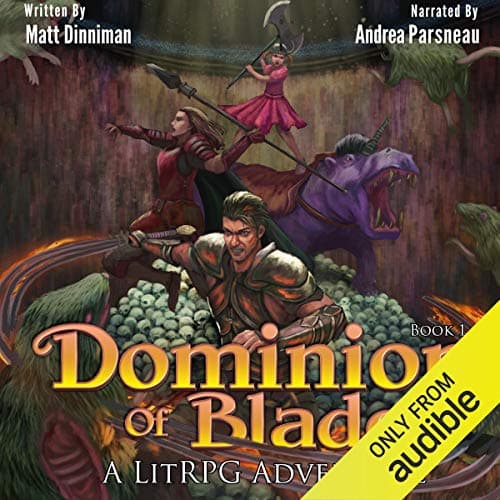
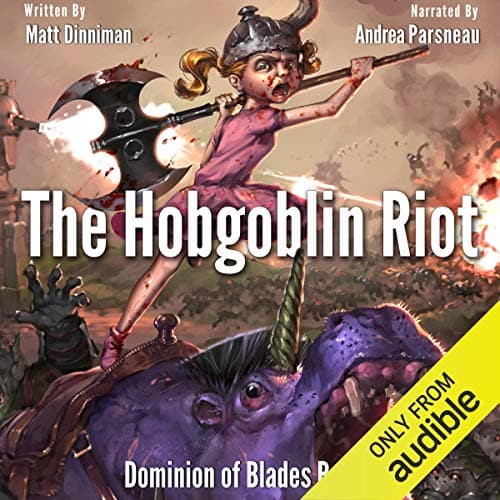
The premise is simple enough - scouting mission gone sideways, tower-defense mechanics, hobgoblin politics. Standard LitRPG scaffolding. But Dinniman does something I respect: he lets the chaos be the story. The "clusterf--k" framing isn't just marketing copy, it's the actual narrative structure. Popper's plan falls apart in layers, and each layer reveals something new about the world, the characters, or the game mechanics. By hour six or seven, I stopped trying to predict where things were headed and just let the spiral (literally, the Spiral) pull me in.
The dropped plotlines bothered me. I won't pretend they didn't. Around the middle stretch there's genuine wheel-spinning - scenes that feel like Dinniman's buying time or forgot where he left a thread. I was snowshoeing a ridge above the cabin during one of these sections and nearly switched to a podcast. But here's the thing: most of those threads do pay off by the end. Not all. But most. And the payoffs hit harder because you'd given up on them. Whether that's intentional craft or happy accident, I can't tell. But the result works.
Parsneau Owns Every Voice in the Room
Two-narrator setups can go wrong fast. Tonal clashes, pacing disagreements, characters who sound like different people depending on who's reading. None of that here. Parsneau carries the heavy lifting - her voice differentiation across characters is clean enough that I never lost track of who was talking, even during the mob scenes where a dozen voices pile up. That mob scene specifically? That's how audio should be done. Multiple characters shouting over each other, panic and comedy layered together, and I could still follow every beat. The production is tight. No background noise, no weird volume shifts between narrators.
The emotional range caught me off guard. I expected comedy - got it. Didn't expect the quieter moments to land as hard as they did. Dinniman writes grief and frustration into these characters alongside the jokes, and Parsneau doesn't flatten those beats for laughs. She lets them breathe. There's something symbiotic happening between this author and narrator that lifts the material past where it'd sit on the page alone.
Who Should Listen (And Who Should Skip)
If you loved the first Dominion of Blades book, this is the payoff. The characters have weight now. The world has stakes. If you're coming in cold - don't. Start with book one. This isn't a standalone.
If you need tight, efficient plotting with zero slack, the middle third will test your patience. Some of that wheel-spinning is real, and at 18+ hours, you feel it. Skip this one if you can't tolerate a loose middle in exchange for a strong finish. But if you can sit with the chaos - if you trust Dinniman to land the plane even when he's doing barrel rolls - the destination justifies the turbulence.
If you're a LitRPG skeptic who thinks the genre can't do real character work, Popper might change your mind. She's not a stat sheet with legs. She's a person making terrible decisions in a system that punishes terrible decisions, and Parsneau makes you care about every one of them. The Crown of Gilded Bones is another one that understands this — characters who earn their complexity through bad choices and worse consequences, not just backstory.
Last Marks on the Trail
I finished this one sitting on my porch at dusk, wood still unsplit, watching the first snowflakes of the season drift into the valley. Eighteen hours is a commitment. This one earned most of them. The comedy is sharp, the narration is elite, and the story - underneath all the game mechanics and hobgoblin politics - actually has a pulse. Nature doesn't forgive mistakes. Neither do I. But I'm forgiving the pacing issues here because the payoff at the end made me grin like an idiot alone on a mountain.