
I realized something terrifying yesterday while grading the third consecutive essay that misspelled "Hemingway" (two m's, people, it's not hard). I wasn't breathing.
Literally.
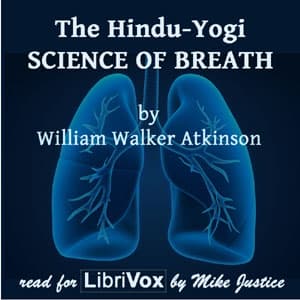
I was holding my breath out of sheer frustration. My wife Denise tells me I sigh a lot, but apparently, between the sighs, I'm just… stopping? So, naturally, instead of going to a doctor like a normal person, I downloaded a book from 1903 about how to inhale.
(This is exactly the kind of behavior that makes my students think I was born in the Victorian era. They're not entirely wrong.)
A Lawyer-Turned-Occultist Teaches You to Breathe
Here's the thing about William Walker Atkinson. He was writing this stuff before "mindfulness" was a billion-dollar industry sold by apps with calm blue icons. He was a lawyer-turned-occultist (which is a career pivot I honestly fantasize about during faculty meetings), and this book is… dense. But in a good way. Atkinson has this whole catalog of dense-but-practical manuals from that era—Your Mind and How to Use It has the same vibe, just aimed at concentration instead of respiration.
It's basically a user's guide to your own lungs.
He talks about how Western civilization has forgotten how to breathe—becoming a society of "mouth breathers." (I definitely glanced at the sophomore in the back row who sleeps with his mouth open during 4th period. Sorry, Kevin.) The text blends pragmatic, physiological explanation of the nervous system with Eastern philosophy. Weirdly fascinating. You don't realize how shallow your breathing is until a guy from a hundred years ago politely shames you for it. Power of Concentration does the same thing with focus—turns out we're all terrible at basic human functions and needed Atkinson to tell us so.
Mike Justice: The Steadiest Voice in Audiobooks
First off, "Mike Justice" sounds like the name of a detective in a noir novel I would absolutely read. But his voice? It's not gritty. It's incredibly… steady.
Look, if you're expecting a performance with fireworks and emotional peaks, you're in the wrong place. This is instructional audio. Mike keeps it super level. Some people might call it monotone—and okay, fair, it borders on that—but think about the context. Do you really want an actor chewing the scenery while explaining the diaphragm? No.
He reads with this deliberate, soothing cadence that actually forces you to slow down. I listened to this while walking the lakefront (trying to ignore the runners who were definitely breathing wrong, according to Chapter 4), and I found myself matching my stride to his rhythm. Clear enunciation that cuts through the noise. It's the voice of a teacher who knows the material is dry but knows you need to hear it. I respect that.
The Cleansing Breath Incident
I tried the exercises.
(I did them in the teachers' lounge. Principal Martinez walked in while I was doing the "Cleansing Breath" and just slowly backed out of the room. I consider this a victory.)
The pacing of the audio is helpful here. Because it's short—under two and a half hours—it doesn't overstay its welcome. You can get through the theory and get straight to the exercises.
My only gripe? Sometimes it felt a little too slow. Even I, the man who refuses to listen at 1.5x speed, was tempted to bump this up just a notch during the anatomy sections. But I resisted. The author chose those words, and Mike Justice chose those pauses.
Who Should (and Shouldn't) Listen
Is this going to replace The Sound and the Fury on my favorites list? Obviously not. It's a manual. But it's a manual that might actually lower your blood pressure.
If you're stressed, overworked, or just realized you've been holding your breath while reading this review—give it a shot. It's cheaper than therapy and takes less time than grading a stack of AP Lit exams. Skip it if you need dynamic narration or want something you can half-listen to while multitasking; this one demands you actually slow down and pay attention to your own lungs.