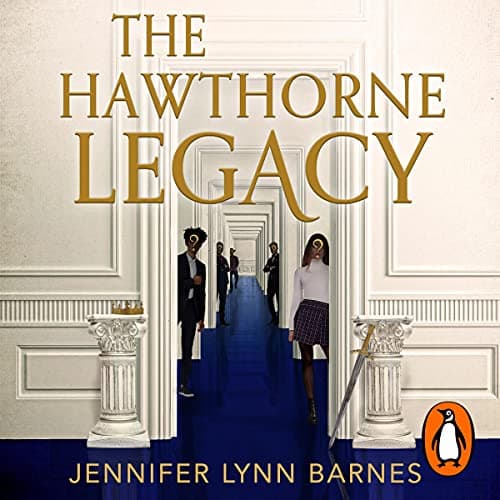

Most listeners seem to agree that The Hawthorne Legacy improves on its predecessor. I went in expecting a typical sequel — same formula, slightly diminished returns — and was genuinely surprised by how wrong that assumption turned out to be.
Jennifer Lynn Barnes does something clever with this second installment that I didn't fully appreciate until I was deep into my listen: she expands the mystery without diluting it. The central question — why did Tobias Hawthorne leave everything to Avery Grambs — doesn't just carry over from book one. It mutates. New suspects emerge, old answers unravel, and the scope widens beyond Hawthorne House into private islands and family vaults. The puzzle-box structure returns, but now the puzzles have real consequences attached. People get hurt. Alliances fracture. Avery stops being the girl who stumbled into billions and starts becoming someone who fights to keep them — not out of greed, but because walking away means letting dangerous people win. Barnes pulls off something similar with her protagonists in Killer Instinct — that slow burn from passive recipient of circumstances to someone actively choosing who she wants to be is basically a Barnes signature at this point, and it's one I find genuinely worth tracking across her catalog.
What makes the love triangle work here, psychologically, is that Grayson and Jameson aren't just two hot options for Avery to choose between. They represent fundamentally different approaches to power and loyalty. Grayson performs control — every word measured, every emotion filtered through duty to the family name. Jameson performs chaos — risk as identity, puzzle-solving as intimacy. Avery's pull toward each of them reveals what she's actually grappling with: whether she wants to protect what she's inherited or burn through it looking for truth. I changed sides three times during my listen, which tells me Barnes understands that a good romantic subplot isn't about who's hotter — it's about what each choice says about the person choosing.
Now, about Christie Moreau's narration, because this is where the audiobook decision gets interesting. Moreau captures Avery's internal voice with real precision. When Avery is piecing together a clue, the pace shifts — you can hear her thinking before she speaks. When she's cornered by Zara or navigating a threat, there's a tightness in Moreau's delivery that communicates danger without melodrama. The suspense scenes are where Moreau earns her keep. During tense confrontations, her rhythm tightens in a way that kept me locked in past my exit on more than one commute home.
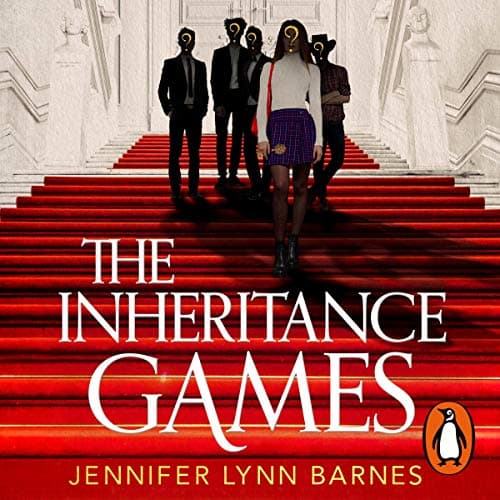
But here's the trade-off you need to weigh before buying: the Hawthorne brothers sound too similar. Moreau gives both Grayson and Jameson Southern-inflected voices — appropriate for the Texas setting — but the execution is inconsistent enough that in dialogue-heavy scenes between the two brothers, I found myself rewinding to figure out who said what. Sometimes Grayson's voice drops lower and carries that trademark ice; other times it drifts close enough to Jameson's register that context clues are the only thing keeping you oriented. This was an issue in book one, and it hasn't been fixed. I noticed Moreau wrestling with similar challenges in The Inheritance Games — the brother voices were already blurring there, and it's genuinely surprising that no one in production addressed it before this sequel went to record. If you're someone who listens while cooking or driving in traffic, these moments will trip you up.
The plot mechanics deserve specific praise. Barnes structures her chapters like mini-episodes, each ending on a reveal that recontextualizes something from earlier. Not cheap cliffhangers — genuine turns that reward attention. At ten hours and change, nothing drags, but the density of names, clues, and family connections means this isn't a set-it-and-forget-it listen. I tried it as background audio during housework once and had to restart an entire chapter. This book demands your active brain.
Compared to The Inheritance Games, the sequel feels less like setup and more like a story with its own center of gravity. The family dynamics are sharper — Emily's ghost haunts the Hawthorne brothers in ways that create genuine emotional stakes beyond the inheritance itself. The threats against Avery escalate from legal maneuvering to physical danger, and Barnes handles the tonal shift without losing the aspirational fun of the setting. You still get private jets and hidden passages. You just also get real fear.
Who Should Listen (And Who Should Skip)
If you listened to The Inheritance Games on audio and enjoyed Moreau's work, this is a natural continuation at the same quality level — same strengths, same weaknesses. Fans of puzzle-driven YA with genuine psychological texture in the romance will find a lot to chew on here. But if the brother voices bothered you last time, they'll bother you here too, and you might be better served reading the print edition. If you can tolerate the occasional rewind during Grayson-Jameson exchanges, though, Moreau's command of pacing and her sharp read of Avery make this a genuinely engaging listen that pulls you through the mystery faster than reading would.