
What is it about weddings that makes people so willing to destroy each other?
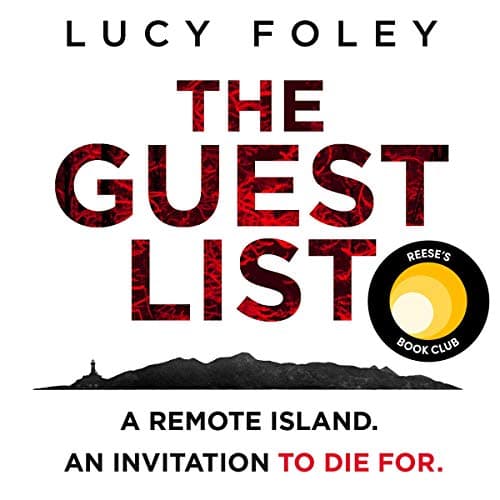
I was chopping onions for a dal that was going to take way too long for a Tuesday night — the kind of elaborate solo cooking project I use to avoid opening my laptop and staring at my half-finished manuscript — when the first body dropped. Not literally, of course. Lucy Foley plays this smarter than that. The body is there from the start, unnamed, and then she peels back every layer of social performance and festering resentment to show you how thirteen people on a rain-battered Irish island could all have a reason to want someone dead. My eyes were watering, and not just from the onions.
Everyone at This Wedding Is a Case Study in Pathological Masking
Here's what Foley gets right that a lot of mystery writers fumble: the protagonist exhibits classic narcissistic presentation — Will Slater, the golden-boy TV host with a smile that never reaches his eyes — but she doesn't make it cartoonish. She distributes the dysfunction across every single character. Jules, his bride, is fascinating because her ambition reads as both empowering and deeply anxious, the kind of woman who curates her life like an Instagram grid because she's terrified of the chaos underneath. Hannah, the plus-one wife, is the character my therapist would have thoughts about — she's so conflict-avoidant she practically folds into the wallpaper, but Foley uses her timidity to weaponize the reader's sympathy. And Aoife, the wedding planner with her own ghosts on that island? I found myself asking: why does she really stay on Inis an Amplóra when everything about that place screams run?
The research actually shows that people reveal more about themselves in celebratory contexts than in crisis — we drop our guard at parties, at weddings — and Foley uses this instinct beautifully. Every champagne toast is a confession. Every group dinner is a low-grade interrogation.
What makes the character work compelling is that nobody is purely sympathetic. The ushers — Will's old school friends — carry this general predatory menace that reminded me uncomfortably of real patterns I've studied in group dynamics and institutional cover-ups. The "boys will be boys" culture isn't subtext. It's text. And it's ugly in the right way. That same slow excavation of institutional rot and group complicity shows up in House of Secrets, though Foley's control of the material is sharper.
Six Narrators Walk Into a Wedding
The full cast here is doing something genuinely interesting. Six narrators — Olivia Dowd, Aoife McMahon, Chloe Massey, Sarah Ovens, Rich Keeble, and Jot Davies — each take a character, and the effect is less "audiobook" and more "BBC radio drama you stumbled into at midnight." Aoife McMahon's Irish delivery for the wedding planner grounds the whole thing in place; you can practically feel the salt air and the damp stone. Rich Keeble's Will is charming in exactly the way that should make you uncomfortable — the vocal warmth is a performance within a performance, which is a smart choice.
But — and this is real — the constant switching between narrators and timelines (present-tense wedding night chaos intercut with the days leading up to it) does demand your attention. I paused twice during the first two hours because I'd lost track of whose perspective I was in. Once the structure clicks, around hour three, the time-jumping becomes propulsive rather than confusing. That slow start is the price of admission.
The production is clean. No sound effects, no music. Just voices. Which works, honestly, because the isolation of the island setting is scarier when it's just a voice in your ear and the silence underneath.
Psychologically, This Mostly Tracks
I have a minor complaint. The reveal — the who and the why of the murder — is satisfying in a plot-mechanics sense, but one character's motivations in the final hour felt compressed. Like Foley knew where she needed to land but rushed the psychological runway. The preceding nine hours build such careful, slow-burn tension that the resolution felt about twenty minutes short of what the story earned. It's a fascinating case study in how a mystery can be structurally complete but emotionally slightly undercooked at the finish.
That said? The way Foley braids the secrets together — revenge porn, old boarding school violence, class resentment, sibling rivalry that's actually about survival — is smart enough that I forgive the final sprint. She understands human nature. She knows that the scariest thing about a locked-room mystery isn't the locked room. It's the people you're locked in with.
Who Gets an Invitation
If you love Agatha Christie's And Then There Were None energy but want it filtered through contemporary class anxiety and wedding-industrial-complex satire, this is your book. If you need a single protagonist to anchor you or if you tend to listen while doing something else — driving, working out, half-paying attention — the six-narrator, timeline-hopping structure will lose you. This one wants your focus.
The Diagnosis
I finished this around 11 PM, standing in my kitchen eating cold dal straight from the pot. The onions were overcooked. The book was not. It's a sharp, mean little mystery that understands something essential: the people most capable of ruining your life are the ones you invite in willingly. Foley doesn't let anyone off the hook, including the reader. And the full cast format? It turns suspicion into something almost physical — you're hearing the lie in their voices before you can name it.