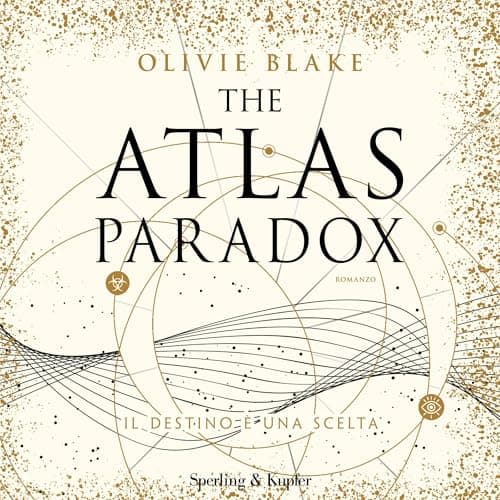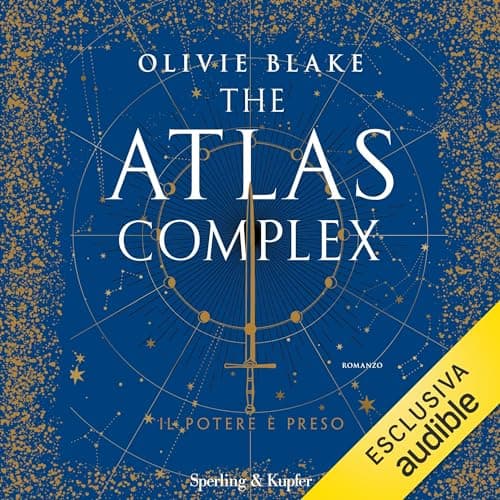

Look, I need to rant about something. I've been following The Atlas Six trilogy since it blew up on BookTok, and I've been patient. I read Book One instead of writing my thesis. I read Book Two instead of writing my thesis. And now I've finished Book Three - still instead of writing my thesis - and I have feelings. Not all of them good.
I was up at 2 AM, my apartment lit by the glow of three monitors (one running my thesis code that I was absolutely ignoring, one with my D&D campaign notes, one with Audible open), listening to Giada Bonanomi narrate what should have been the triumphant conclusion to this series. And instead of triumph, I got... philosophy homework?
Six Magicians Walk Into a Library and Never Leave
Here's the thing about The Atlas Complex - it's 22 hours and 41 minutes of some of the most ambitious, cerebral fantasy writing I've encountered in the dark academia space, and also 22 hours and 41 minutes of characters having conversations about the nature of power that circle back on themselves like a snake eating its own tail. Olivie Blake writes like she's constructing a Sanderson-level magic system, except instead of hard rules and clear constraints, you get existential monologues about what it means to wield cosmic-scale abilities. Which - okay, that's a valid artistic choice. But when your six protagonists spend more time philosophizing about whether they should use their powers than actually using them, the pacing starts to feel like my thesis progress: technically moving forward, but you'd need a microscope to prove it.
The premise is still fire. Six magically gifted people, chosen by a secret Alexandrian society, navigating betrayal and ethical dilemmas while the outside world mobilizes against them, and Atlas Blakely - the Custode, the puppet master - is still pulling strings with a plan that keeps escalating. The bones of this story are genuinely great. The problem is that Blake buries those bones under layers of internal monologue so dense you could use them as armor plating. Brideshead Revisited does something similar — characters drowning in their own interiority while the plot technically advances — but Waugh at least keeps the melancholy doing structural work rather than just piling up.
Callum's sections still have that cold sociopathic edge that made him compelling in Book One. Libby and Nico's dynamic gets interesting when Blake stops being coy about what they actually mean to each other. But Parisa and Reina - characters I loved - feel like they're treading water for entire chapters. There's a stretch around the middle third where I genuinely forgot what the external conflict was because we'd been living inside someone's head for so long.
Bonanomi Carries What She Can
This is the Italian edition narrated by Giada Bonanomi, and I want to be upfront: my Italian is limited to ordering food and understanding maybe 60% of what's happening in an Assassin's Creed cutscene. But I listened to this because I'm a completionist weirdo who wanted to hear how this series sounds in Italian, and honestly? Bonanomi does solid work. Her delivery is clean and consistent across 22+ hours, which is no small feat when the source material is this dialogue-heavy and introspective. She maintains distinct energy levels for different characters even when the text doesn't always give her a lot to work with.
That said - and this is a gap I'll be honest about - I can't speak to how well she differentiates all six main characters vocally in the way someone like Steven Pacey would. Pacey walked so other narrators could run, and the bar he set for multi-character distinction is brutal. Bonanomi keeps things professional and engaging, but this is a solo narrator handling a cast that really could've used a full ensemble. The philosophical passages, which are already dense on the page, become genuinely challenging to follow in audio when you're trying to track which genius magician is having which existential crisis.
The Magic System Is... Wait, What Is It Now?
The magic system is where I get genuinely frustrated. Book One introduced these fantastic, distinct abilities - Libby and Nico with their physical magic, Callum's emotional manipulation, Tristan's sight, Parisa's telepathy, Reina's naturalism. Clean. Elegant. My D&D group would love that setup - it's basically a perfectly balanced adventuring party. But by Book Three, the power scaling has gone so abstract and cosmic that I lost the thread of what anyone can actually do versus what they're theoretically capable of. When your characters start bending reality itself, you need either Sanderson-level rule clarity or you need to lean fully into the vibes. Blake tries to do both and lands somewhere in the middle.
The ending - without spoilers - resolves things, but it resolves them in a way that felt more like a chess match where I missed three crucial moves. I finished, sat in my desk chair at 2:47 AM, and said out loud to no one: "Wait, that's it?" Which is not the reaction you want from a 22-hour investment.
Roll for Satisfaction (I Got a 12)
If you're already deep in this trilogy, you'll finish it. You kind of have to. And there ARE moments of brilliance - the political maneuvering, the ethical weight of what these characters are choosing, the way Blake writes about power as both addiction and burden. That stuff hits. But this needed an editor willing to cut 30% of the internal monologue and tighten the last act.
Who should listen: If you've read Books One and Two and need closure, grab this - you'll get enough payoff to justify the hours. Who should skip: If you bounced off the pacing in Book Two, Book Three doubles down on everything that frustrated you. And if you're new to the series, for the love of all that is holy, do not start here.
I read this instead of writing my thesis, and for once, I'm not sure that was the right call. (It was still the right call. My thesis can wait. But it's closer than usual.)