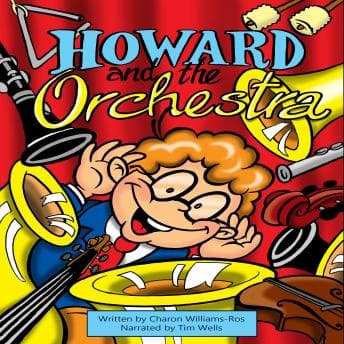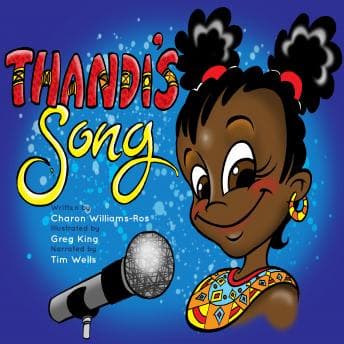

"When Howard and Thandi argue about music" — that's the setup, and honestly, it's a setup I watch play out in my classroom about forty times a week. Not about music, exactly, but about taste. About the deeply held conviction that what I like is correct and what you like is wrong. My sophomores do it with books. These two kids do it with songs. Same energy.
I found this one on a Sunday morning while Denise was at her sister's and I was scrolling through children's audiobooks for our nephew's birthday. Twenty-four minutes. I figured I'd listen while making coffee. And here's the thing about a 24-minute audiobook — it either earns every second or it doesn't. There's nowhere to hide.
Two Kids, One Argument My Students Have Every Monday
The premise is simple in the way good children's stories should be. Howard and Thandi have different musical tastes. They butt heads. Their choir mistress, Miss Trill — and I love that name, it's doing exactly the work a name should do in a children's book — steps in and teaches them that diversity of taste isn't a bug, it's the feature. This reminds me of what Hemingway said about prose being architecture. Williams-Ros builds a small house here, but the foundation is square.
What works is that the lesson doesn't arrive like a lecture. It arrives through singing, through the act of making music together despite disagreement. That's a distinction worth noting. The book doesn't just tell kids that differences are valuable — it shows them through performance, through the collaborative messiness of a choir where everyone brings something different. As a teacher, I've spent two decades learning that the lesson kids remember is never the one you announced. It's the one they stumbled into.
Some disagreements, of course, don’t end in harmony—American Tragedy is a masterclass in how personal taste curdles into something far more destructive. That book is a monument to the opposite of this little story’s worldview. I appreciate the contrast.Charon Williams-Ros is herself a teacher and an award-winning actor, and you can feel both of those identities in the writing. The characters have that slightly exaggerated energy that works for young listeners — Miss Trill is excitable in a way that reminds me of every great elementary music teacher I've ever met. The kind of adult who claps too loud and means every clap.
Tim Wells and the 24-Minute Challenge
Here's where I have to be straight with you. Tim Wells narrates, and at 24 minutes, there's only so much range a narrator can demonstrate. He carries the story competently. The pacing feels right for the target audience — young enough to need the story to move, old enough to follow an argument between friends. But I can't point to a specific vocal choice that made me stop stirring my coffee and think, that's the voice of a performer who's interpreting this text. The narrator understands that pause is punctuation — there are moments where the breathing room between lines lets the message land — but I wanted more distinct characterization between Howard, Thandi, and Miss Trill. In a story about the richness of different voices, the narration could've leaned harder into making each voice feel genuinely different.
That said, for a children's audiobook at this length, it does what it needs to do. It's warm. It's clear. Young listeners won't get lost.
The Author Who Teaches and the Teacher Who Acts
This is the second book in the Howard and Thandi Performing Arts series — the first covers dance — and I appreciate what Williams-Ros is building here. A series that introduces kids to different art forms through friendship and conflict? That's smart scaffolding. Each book is a doorway, not a dead end. You can see the teacher's instinct in the structure: here's a concept, here's a conflict that makes you care about the concept, here's a resolution that doesn't feel cheap.
And the fact that Williams-Ros grew up between the UK and South Africa, with theatrical parents, gives the diversity message a rootedness that keeps it from feeling like an after-school special. She's writing from lived experience, not a curriculum guide. My students would probably call this "a little young for them" — but the underlying argument? They need it. We all do.
Who This Is Really For
If you've got kids roughly ages 4 to 8 and you want something short, purposeful, and genuinely kind, this works. It's a bedtime listen. A car ride listen. A "we have fifteen minutes before soccer practice" listen. It won't challenge adult listeners, and it's not trying to. But if you're the kind of parent or teacher who believes stories should do quiet work on young minds — planting the idea that disagreement doesn't have to mean division — then Thandi's Song earns its brief runtime.
I've spent entire podcast episodes unpacking books that tackle big questions—Sea of Tranquility took two hours of conversation just to scratch the surface. This one, though, fits neatly into a coffee break.It's not going to make my podcast episode list. But it might make my nephew's playlist. And honestly, that's the audience that matters here.
The Assignment
A gentle, purposeful little story that does exactly one thing and does it with warmth. I wish the narration had more vocal personality to match the story's message about celebrating differences. But at 24 minutes, it's a low-risk listen for any family looking to sneak a good lesson inside a good time. Worth streaming on a Sunday morning. Trust me — I did.