
What happens when the real monster isn't the thing hunting you across the ice, but the slow, inevitable collapse of everything that makes you human?
I listened to this at 2 AM during a bout of insomnia that wouldn't quit, wrapped in a blanket while Oregon rain hammered my windows. Shirley was curled against my feet, utterly unbothered. I was not unbothered. I was deeply, viscerally bothered—and that's exactly what Dan Simmons intended.
The Cold Gets Into Your Bones
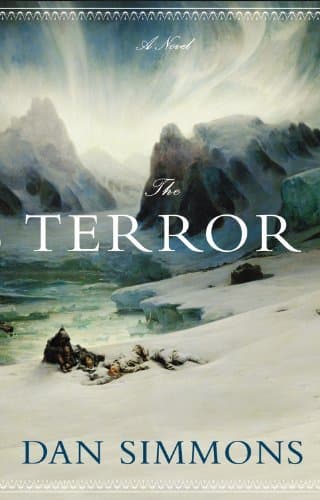
The Terror understands something fundamental about horror that so many writers miss: dread is a slow poison. Yes, there's a creature out there on the ice. Something massive and wrong and hungry. But Simmons spends far more time on the horror of scurvy-blackened gums, of men rationing coal while the temperature drops to levels that kill exposed flesh in minutes, of leadership fracturing under impossible pressure. The supernatural threat almost becomes secondary to the very real terror of 126 men slowly dying in the Arctic darkness.
This is historical horror done right. The 1845 Franklin Expedition was a real disaster—every man died, and we still don't know exactly how or why. Simmons takes that mystery and fills it with something ancient and hungry, but he never lets the monster overshadow the human tragedy. Captain Crozier's journey from functioning alcoholic to desperate leader to... something else entirely... is the actual heart of this story. The creature is almost incidental. Almost.
Simon Vance Reads Like a Man Who's Seen Things
Here's the thing about Simon Vance—he could make a grocery list sound like a captain's final log entry. His English accent gives the whole production this quality of a recorded journal, like you're listening to recovered documents from a doomed expedition. It's exactly the right choice for material this grim.
One listener said Vance "could make Curious George sound like Shakespeare," and honestly? They're not wrong. His reading is clear and firm, never melodramatic, which serves the horror better than any theatrical performance could. When men are dying of lead poisoning and starvation, you don't need vocal fireworks. You need someone who delivers the facts and lets the horror speak for itself.
But—and this is critical—you're getting the abridged version at 8 hours and 50 minutes. The full novel is over 28 hours. I need you to understand what that means: you're missing roughly two-thirds of this book. The pacing complaints some listeners have about the beginning dragging? That's partially an artifact of abridgment. Simmons is a writer who builds slowly, deliberately, and cutting that down means losing some of the atmospheric groundwork that makes the payoffs hit harder. Life as We Knew It understands that same slow-building dread—the horror of watching resources dwindle and civilization crack under pressure.
Where It Freezes and Where It Burns
The abridgment is my biggest frustration here. Simmons wrote a massive, sprawling novel that earns its length through accumulating dread—the kind of horror that seeps into you over 28 hours until you're as exhausted and desperate as the crew. Cutting that to under 9 hours means sacrificing texture for efficiency. You still get the story. You still get the creature and the cold and Crozier's arc. But you're reading the CliffsNotes of something extraordinary.
Some listeners wished for more buildup before the antagonist reveals itself, and I get that. Shirley Jackson walked so Dan Simmons could run, but only if you let him take his time. The abridged version rushes what should be a slow suffocation.
That said—what remains is still remarkably effective. The ending wraps up with a twist I didn't see coming, one that recontextualizes Lady Silence (the Inuit woman who may be salvation or doom) in ways that feel earned. And Vance's delivery of the final sections? Genuinely haunting.
Who Should Brave the Ice (And Who Should Stay by the Fire)
If you want horror that respects the genre—that understands terror comes from inevitability rather than jump scares—this delivers. If you can handle content warnings for violence, starvation, and the slow physical deterioration of human bodies in extreme conditions, you're in the right place. My podcast listeners who love historical horror and slow-burn dread are going to devour this.
Skip if you need fast pacing or if abridged audiobooks are a dealbreaker for you. I'd honestly recommend seeking out the unabridged version if you can find it—this is a book that deserves its full runtime.
Dawn After the Long Night
I finished this as dawn was breaking, which felt appropriate. Something about surviving the night alongside these doomed men. Shirley was unimpressed. I was terrified—not of the monster, but of the cold, the hunger, the way civilization strips away when survival becomes the only priority.
Simon Vance earned that Earphones Award. Dan Simmons wrote something that will haunt me for weeks. Even abridged, even truncated, The Terror is horror that respects its source material and its audience.
I listened in the dark. Mistake? Maybe. Worth it? Absolutely.