
How do you teach a generation raised on instant gratification that healing takes time? That grief doesn't follow a syllabus?
I was grading sophomore essays on The Great Gatsby - the ones where they insist Gatsby was "just really in love" and miss the tragedy entirely - when Elizabeth Louise's voice cut through my red-pen fog with something that stopped me mid-annotation. Kacey Cleary, twenty years old, survivor of a car accident that killed everyone she loved, counting breaths like they're the only math that matters. Ten tiny breaths. Not a metaphor my students would catch, but one that hit me somewhere between the sternum and the stack of papers I suddenly couldn't focus on.
This is not the kind of book I typically review. My podcast listeners (all 47 of them, hi Mom) know I live in Faulkner and Fitzgerald territory. But here's the thing - K.A. Tucker understands something about trauma that even some literary heavyweights fumble. She knows that survival isn't poetic. It's ugly and repetitive and involves a lot of counting to ten.
What Hemingway Knew About Wounds
Hemingway once said, "The world breaks everyone and afterward many are strong at the broken places." Tucker's Kacey embodies this - but Tucker doesn't romanticize the breaking. The first few hours of this audiobook are uncomfortable in the best way. Kacey is prickly, defensive, sometimes genuinely unlikeable. She pushes away her neighbor Trent with the kind of hostility that would make my students say "she's being so extra." And she is. That's the point.
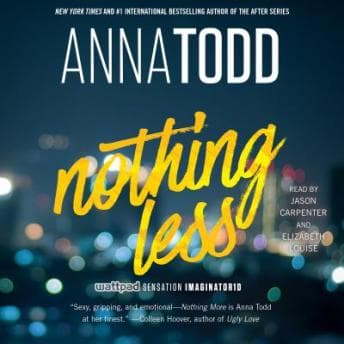
Elizabeth Louise navigates this beautifully. Her voice carries Kacey's brittleness without tipping into melodrama - a tightrope I've watched lesser narrators fall from. There's this quality to her delivery during the flashback sequences, when Kacey remembers being trapped in that car, that made me pause my grading entirely. Not because I needed a break from the emotional weight (though I did), but because I wanted to hear those sentences again. The prose deserves to be savored, even when - especially when - it hurts.
The Twist That Changes Everything
I won't spoil it. I can't. But I will say this: around the midpoint, Tucker drops a revelation that recontextualizes everything you've absorbed. I was walking the lakefront with Denise when it hit, and I actually said "oh no" out loud. She asked if I was okay. I wasn't, really.
What makes this work - what elevates it from soap opera territory into something genuinely affecting - is that Tucker earns it. The clues are there, scattered like breadcrumbs through Kacey and Trent's interactions. On a second listen (yes, I went back), you can hear Louise's performance shift in ways I initially missed. Her Trent carries this undercurrent of guilt that I'd attributed to garden-variety romantic tension. It wasn't.
My students would hate this. The slow build, the way Tucker makes you wait for catharsis. They want everything resolved by the end of class. I love it precisely because it refuses to hurry.
Louise's Voice Does The Heavy Lifting
Let me be clear about the narration: Louise doesn't do wildly different voices for each character. If you're expecting a full theatrical performance with distinct accents and dramatic range, adjust your expectations. What she does is more subtle - a slight softening when Livie speaks, a careful warmth that creeps into Trent's dialogue as Kacey's walls come down. It's interpretation through tone rather than impersonation.
The emotional peaks hit hard. There are moments - the kind that make you grateful you're alone in your car or walking where no one can see your face - where Louise's delivery captures something raw. Not overwrought. Just... true. I've listened to enough audiobooks to know the difference between a narrator performing emotion and one channeling it. This is the latter.
One small note: apparently in the sequel, there's an Irish character whose accent wanders toward British territory. That's not an issue here, but if you continue the series, you've been warned.
Who Should Listen (And Who Should Walk Away)
If you need content warnings: this book has them. Violence, abuse, language, sexual content. Tucker doesn't shy away from the darkness that shapes Kacey's survival mechanisms. This isn't a cozy romance you half-listen to while cooking dinner.
This is for readers who understand that love stories can also be grief stories. For anyone who's ever counted their breaths to get through a moment. That same raw honesty about survival shows up in Fast Ice, though the stakes there are more literal life-and-death. For my fellow travelers who believe the classics endure because they tell truths about human nature - and who recognize that contemporary romance, done well, can do the same thing.
If you loved One Day by David Nicholls, this is its spiritual successor in some ways - that same willingness to let heartbreak breathe.
Skip this if you want your romance uncomplicated, your heroines immediately likeable, or your emotional payoffs quick. My students who think audiobooks are "just reading for lazy people" would never touch this. Their loss.
Class Dismissed
At just under nine hours, this is a commitment - but not an unreasonable one. I'd recommend listening at 1.0x because the author chose those words, and Louise delivers them with the kind of pacing that rewards patience. The quiet moments matter as much as the dramatic ones.
This isn't Middlemarch. But it's honest, and it's earned, and Elizabeth Louise's performance makes the emotional journey land. Sometimes that's enough. Sometimes that's everything. Worth pausing the faculty meeting for. (Sorry again, Principal Martinez.)