
I have a bone to pick with early 20th century mystery writers. They understood something about human motivation that modern thrillers have completely forgotten: greed doesn't need to be complicated. A clerk sees a will. The will means money. The clerk makes a choice. That's it. That's the whole psychology. And it's devastating in its simplicity.
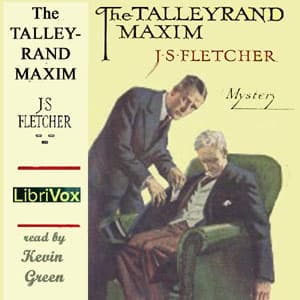
I was making dal makhani at 10 PM—the kind of elaborate cooking project I undertake when I'm avoiding grading papers—when J.S. Fletcher's The Talleyrand Maxim reminded me why I fell in love with Golden Age detective fiction in the first place.
The Clerk in the Office (A Case Study in Opportunistic Morality)
Here's what makes this setup genuinely clever: an old bookseller discovers a will hidden in a book from the Mallathorpe estate. He does the right thing—takes it to a solicitor. And then he dies. Right there in the office. The clerk on duty witnesses everything. And in that moment, watching a dead man clutching a document that could destroy a wealthy family, he makes a calculation.
Classic opportunistic decision-making under pressure. No elaborate villain origin story. No childhood trauma explaining his choices. Just a man, a dead body, and a piece of paper worth a fortune. Fletcher understood that most human corruption isn't dramatic—it's banal. It's the split-second choice to pocket something when no one's looking.
The Edwardian Yorkshire setting serves this perfectly. The rigid class structures, the industrial wealth, the way money moves through society like blood through arteries. The Mallathorpe family has been living well for years on an inheritance that was never legally theirs. They're not villains either—just beneficiaries of an administrative accident. Everyone in this story is operating on their own internal logic, and that's what makes it work.
Kevin Green's Yorkshire Knows What It's Doing
I've listened to other Fletcher audiobooks that were—how do I put this diplomatically—narrated like someone reading a grocery list. Kevin Green is not that narrator. His Yorkshire accent for the Yorkshire characters isn't affectation; it's characterization. You can hear the class divide between the industrial nouveau riche and the professional solicitors in how he shapes vowels.
The character differentiation is genuinely useful in a book with multiple suspects and witnesses. By hour three, I could identify who was speaking before the dialogue tags caught up. That's not a small thing in mystery fiction, where keeping track of "who said what to whom and when" is half the puzzle.
At just under seven hours, the pacing feels appropriate for the genre. These aren't modern thrillers designed to be consumed at 1.5x speed. The investigation unfolds methodically—witness interviews, document examination, the slow accumulation of evidence. If you're expecting car chases, you're in the wrong century.
Why This Still Works (And Why Modern Mysteries Often Don't)
Fletcher was considered a leading writer of the Golden Age, with over 200 books to his name. That prolificacy shows. The plotting is economical. No wasted scenes. Every conversation advances either the mystery or our understanding of character.
What makes the clerk compelling is that Fletcher never asks us to sympathize with him. He's not a tragic figure. He's just a man who saw an opportunity and took it. The moral framework is refreshingly clear: some choices are wrong, and wrong choices have consequences. My therapist would have thoughts about how reassuring I find that kind of moral clarity in fiction.
The title itself—"The Talleyrand Maxim"—refers to the French diplomat's famous advice about patience and timing. It's a thematic key to the whole novel. Everyone is waiting. The family waits for their comfortable life to continue. The clerk waits for his moment. The investigators wait for someone to make a mistake. Edwardian society, with its elaborate social rituals and careful propriety, was built on waiting.
Who Gets the Invitation to This Particular Party
If you want psychological complexity in the modern sense—trauma narratives, moral ambiguity, villains you're supposed to root for—skip this one. Fletcher writes in a tradition where the detective represents order and the criminal represents chaos, and order wins. Full stop.
But if you appreciate detective fiction as a formal exercise, as a puzzle box with human pieces, this is genuinely satisfying. The twists are earned. The resolution makes sense. And Kevin Green's narration elevates what could be a dusty period piece into something engaging. Litigators gave me that same satisfaction—a legal thriller that delivers exactly what the genre promises without pretending to be something it's not.
I finished the dal makhani. I finished the audiobook. Both were exactly what they promised to be, and sometimes that's enough.
Case Closed
This is a fascinating case study in why certain narrative structures endure. The "found document that changes everything" plot has been done a thousand times since 1906, but Fletcher's version still works because he understood the fundamental truth: people will do terrible things for money, and they'll convince themselves it's justified. Psychologically, that tracks. It tracked in Edwardian England, and it tracks now.