
What happens when a fantasy series finally has to stop setting up dominoes and actually knock them down?
I was on a night drive back from a client site in Houston—three hours of empty highway, Ranger snoring in the back seat—when I finally got to see if Terry Brooks could stick the landing on this Heritage of Shannara quartet. Four books of buildup, scattered quests, and the Shadowen threat looming over everything. Time to pay the piper.
The Final Op Comes Together
Let me cut to the chase: after three books of sending the Scions of Shannara on separate missions, Brooks finally brings everyone's storylines crashing together. Par's wrestling with the Sword of Shannara and whether he can actually use the thing. Walker Boh's facing down the Four Horsemen—and yes, they're exactly as nasty as that sounds. Wren's dealing with betrayal from someone she trusted. It's a lot of threads to tie up in seventeen hours, and Brooks mostly pulls it off.
Mostly.
Here's the thing about series finales in fantasy—you've either earned your payoffs or you haven't. Brooks spent three books making us care about these characters, and now he's cashing those checks. When Par finally confronts the truth about the Sword's power, it lands. When Walker has to face impossible odds at Paranor, it means something because we've watched him resist his destiny for so long.
But I've seen this scenario play out in real life—sometimes the grand plan looks better on paper than in execution. The pacing here gets uneven. Some battles feel appropriately desperate. Others drag when they should punch. Brooks has a habit of telling you how tense things are rather than just letting the tension speak for itself.
John Lee Earns His Combat Pay
Smart casting putting John Lee on this series. The man's got an Audie Award for a reason. His Walker Boh carries this weight of reluctant power—you can hear the Druid legacy sitting heavy on his shoulders. Par's voice has that young idealism fighting against growing desperation. And when Lee voices the Shadowen? Ranger actually lifted his head during one scene. That's the dog's seal of approval.
Lee differentiates the entire cast without resorting to cartoon voices. The elves sound different from the dwarves, the villains from the heroes, but it's subtle work. Professional. Like a good NCO who doesn't need to yell to command respect.
Now—there's this tree squeak sound effect. Some listeners apparently couldn't handle it. I've heard worse sounds in combat zones, so it didn't bother me much, but fair warning if you're sensitive to that kind of thing. Minor gripe in an otherwise solid production.
Where It Lost Me (And Where It Didn't)
Brooks sometimes forgets that we've been paying attention. There's repetition here—reminders of things we learned three books ago, recaps of magical rules we already understand. I get it, maybe some folks jumped in at book four (bad call, by the way—don't do that). But for those of us who've been on this mission from the start, it feels like being briefed on intel we already know.
What works? The dark magic themes hit harder in this finale. The Shadowen aren't just generic evil—they're corruption, they're power twisted wrong. When characters face them, there's actual moral weight to the confrontations. Brooks isn't just writing fight scenes; he's writing about what you're willing to sacrifice to win. Storm of Swords wrestles with that same question—what lines you cross when everything's on the line.
The Four Lands feel appropriately poisoned, appropriately desperate. Seventeen hours is a commitment, but the world-building justifies the runtime. Prophecy of the Seven demands similar patience for its world-building, though it takes a different approach to the dying-world premise. You're not just listening to a story—you're inhabiting a place that's dying and watching people try to save it.
Who Should Saddle Up (And Who Should Stand Down)
If you've made it through the first three Heritage books, you're finishing this. No question. You've invested too much to bail now, and the payoffs are worth it. New to Shannara? Start with The Sword of Shannara or at least The Scions of Shannara. Jumping in here is like showing up to a mission briefing in the last five minutes. And if you need constant action, be warned—Brooks takes his time. There's philosophy here, character moments, slower stretches between the combat. I listened at 1.25x and it felt right.
Mission Debrief
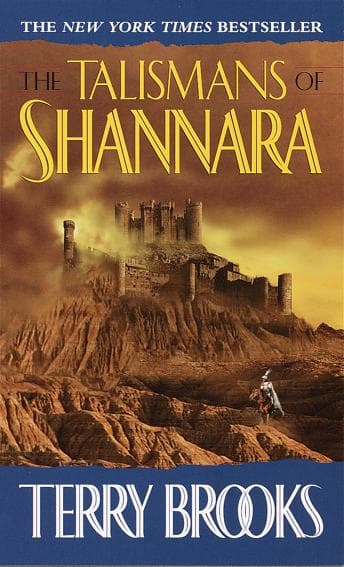
Talismans of Shannara delivers what it promises—a satisfying conclusion to a four-book arc with strong narration and genuine stakes. It's not perfect. The pacing stumbles, the recaps annoy, and Brooks occasionally trusts telling over showing. But when Par finally understands the Sword's true nature, when the final confrontations arrive, it earns the emotional weight.
Ranger approved this one. And so do I—with the caveat that this is a marathon, not a sprint. Bring coffee. Bring patience. The Four Lands are worth the journey.