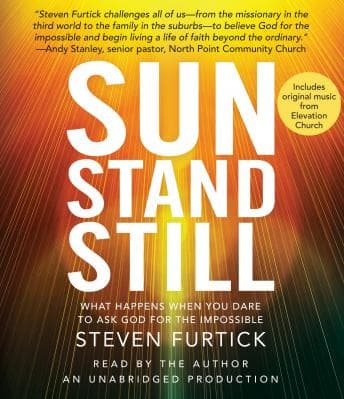

Everyone kept telling me this book would change my prayer life. That it would blow the lid off my faith. That I'd walk away ready to move mountains. And look — I get why people say that. Steven Furtick is a genuinely talented communicator. But I found myself asking: why does this book land so hard for some people and leave me standing here with my arms crossed, psychologist brain whirring, picking apart the motivational architecture?
Let me back up. I was making dal makhani last Thursday — the kind that takes forever, the kind where you're standing over the stove stirring and you need something in your ears or you'll start spiraling about your publication timeline. I queued this up because honestly? I was curious. Self-help books that frame themselves as faith challenges are a fascinating case study in persuasion psychology, and Furtick's whole brand is built on high-energy conviction. I wanted to see how the book version compared to his sermon style.
The Sermon That Became a Book (For Better and Worse)
Here's the thing about author-narrated books by pastors: you're essentially getting a six-hour sermon. And Furtick is good at sermons. His voice has that specific cadence — rising intensity, strategic pauses, the emotional crescendo right when he wants you to lean in. The audiobook reads like he's standing in front of Elevation Church delivering this live, and if that's your thing, you'll feel like you're in the front row.
But here's where my researcher brain starts twitching. The central premise — based on Joshua commanding the sun to stand still in battle — is essentially: pray bigger, believe harder, and God will show up for your "audacious" requests. Interestingly, Josephus covers the Joshua narrative with far more historical detachment in Antiquities of the Jews, Volume 3, and reading that version really highlights how much interpretive spin Furtick layers onto the source material. The protagonist here (and yes, Furtick positions himself as the protagonist of his own story) exhibits classic confirmation bias patterns. Every success story is evidence that bold faith works. Every setback is reframed as a test. There's no room in this framework for the possibility that the system doesn't always operate the way he describes, and psychologically, that doesn't track for me.
The research actually shows that people who frame all outcomes as divine validation tend to have higher short-term motivation but struggle when reality doesn't cooperate. Furtick doesn't really address this. He's too busy being inspiring.
When Passion Substitutes for Depth
I'll give credit where it's due — Furtick's personal anecdotes about building his church from scratch, the financial risks, the moments of doubt before planting Elevation, those feel real. There's genuine vulnerability when he talks about standing in front of a tiny congregation wondering if he'd made a catastrophic mistake. That's the good stuff. That's where the book actually works.
But then he pivots back to the framework — Page-One Prayer, Move-The-Sun faith, these branded concepts that feel more like sermon series titles than actual psychological tools. And at six hours and twenty-four minutes, the ratio of motivational energy to actionable substance is... not great. By hour three, I was stirring my dal on autopilot and thinking: okay, I believe you believe this. But what do I do Monday morning when audacious faith meets a landlord who wants rent?
Compared to, say, a book like Mark Batterson's The Circle Maker — which covers similar territory about bold prayer — Furtick's version is more personality-driven and less structured. If Batterson gives you a framework you can actually implement, Furtick gives you an emotional experience that fades. Both have theological blind spots, but at least one of them sends you home with homework.
My Therapist Would Have Thoughts About This Theology
I don't say this to be glib. There's a real psychological concern with the prosperity-adjacent messaging here. The implicit promise — dare to believe and watch God deliver — can be genuinely harmful for people in crisis who are already believing as hard as they can. Furtick isn't Joel Osteen (he's sharper, more self-aware, and he acknowledges suffering exists), but the theological architecture still leans heavily toward "your faith determines your outcomes," and that's a weight some listeners shouldn't be asked to carry.
As a narrator, though? He's magnetic. The conversational delivery, the humor, the way he shifts from casual storytelling to full preacher intensity mid-sentence — it works. If you've watched his YouTube sermons, this is exactly what you'd expect, and there's real skill in translating pulpit energy to a solo recording booth.
Who Gets the Most Out of This
If you're already in the Elevation Church ecosystem and you want Furtick in your ears during your commute — this is your book. No question. If you're looking for a psychological framework for building genuine resilience through faith, you'll want something with more rigor. And if you're someone who's been praying bold prayers that haven't been answered? Be gentle with yourself before picking this up.
I finished the dal. It was excellent. The book was fine. Sometimes that's the honest answer.