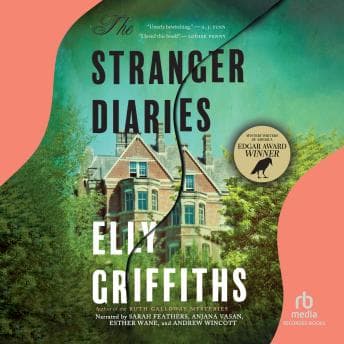

Everyone in my department reads gothic fiction the same way - at arm's length, analytically, with the comfortable distance of scholarship. I made the mistake of listening to Stranger Diaries while cooking a dal that needed forty minutes of occasional stirring, alone in my apartment at 9 PM, with the lights doing that thing where they're technically on but somehow the kitchen still feels dim. Not ideal conditions for a book where someone starts finding messages in their own diary that they didn't write.
The Psychology of a Character Who Should Know Better
Clare Cassidy is, on paper, exactly the kind of person who should not be rattled by gothic fiction bleeding into real life. She teaches R.M. Holland's work. She knows the tropes. She has the academic framework. And yet - and this is what makes her interesting to me as a character study - she falls apart anyway. Because knowing the pattern intellectually does not immunize you against experiencing it emotionally. The research actually shows this repeatedly in anxiety literature: metacognitive awareness of your own fear response does almost nothing to stop the fear response. Griffiths understands this. Clare's expertise becomes a liability, not a shield, because she keeps pattern-matching her life to a story with a very bad ending.
What makes this character compelling is the diary structure specifically. Clare's internal voice is unreliable not because she's lying to us, but because she's lying to herself - a much more interesting and psychologically honest form of unreliability. She writes things in her diary she won't say out loud, and then someone else starts writing in it too. The violation of that private cognitive space is genuinely disturbing in a way that a straightforward murder threat wouldn't be. My therapist would have thoughts about this character. Specifically about the diary as externalized self and what it means to have that contaminated.
Detective Harbinder Kaur is the structural counterweight - skeptical, procedural, not particularly interested in gothic atmosphere as an explanation for anything. That kind of no-nonsense investigator energy is something I tracked closely in Cop Town, where the procedural grind is similarly doing emotional work that the characters themselves refuse to name. I found myself asking: why does Harbinder work so well next to Clare? And I think it's because she represents the part of Clare's brain that Clare herself can't access right now. The part that says: someone real did this. Find the person.
Four Narrators, One Uneven Bet
The four-narrator structure is doing real work here, and it mostly pays off. Esther Wane's Clare has this quality of someone confessing to a diary she knows might be read - slightly careful, slightly performing even in private moments. That's the right instinct for the character. Sarah Feathers as Georgia captures something specific: the confidence of a teenager who doesn't yet know which of her instincts to trust, which makes her scenes feel genuinely precarious.
Andrew Wincott narrating the embedded gothic story 'The Stranger' is where opinions diverge sharply, and I'll tell you where I land: he's theatrical to the point of self-parody, yes, but I think that's actually correct? R.M. Holland's story-within-the-story is supposed to feel like a different register of reality. The over-the-top dramatic delivery creates genuine tonal whiplash when you cut back to Clare's ordinary school-corridor anxiety. That contrast is doing psychological work.
Anjana Vasan as Harbinder is described as briskly formal, almost like a police report being read aloud, and that's accurate - and it's also occasionally too brisk. There are moments where the pace of the female narrators generally outstrips the emotional weight of what's being said. You notice it most in scenes that should land harder than they do. Not a dealbreaker, but the dal was fully cooked before I'd processed one particular revelation because the narration moved past it before I could sit with it.
Case Closed (Provisionally)
This is a book that understands something real about how stories colonize the mind - how a narrative frame, once activated, makes you see everything as evidence for itself. Clare can't stop reading her life as gothic fiction because she literally teaches gothic fiction. That's not a plot contrivance. That's how cognition works under stress. Griffiths earns the premise.
The audiobook format genuinely enhances this, because hearing four distinct voices creates the sensation of being inside a case file rather than a novel. You're assembling testimony. Some of it contradicts. Psychologically, that's the right way to experience this story.
If unrealistic character motivations make you put a book down, you're safe here. If you need a fast-paced thriller where things happen constantly, you'll be impatient. This one earns its atmosphere slowly and asks you to sit in it.
Perfect for: fans of Magpie Murders who want the meta-literary game with more psychological interiority. English teachers with a dark sense of humor about their own subject matter. Anyone who has ever felt like their life was following a script they didn't write.
Not for: people who find embedded-story-within-story structures annoying. Anyone who needs their detective to be warm.