
Okay, look. We need to talk about the "meta" thing.
Usually? I hate it. When characters interrupt the narrative to argue with the author or the narrator, it feels like a gimmick. It pulls me out of the flow. I'm trying to analyze your trauma, Mary Jekyll, stop breaking the fourth wall! I was listening to this while chopping onions for a vindaloo (yes, it was a spicy night, don't judge), and the first time the characters started bickering over the narration, I almost dropped my knife.
But—and I hate admitting when a gimmick works—here, it's actually the whole point.
See, psychologically speaking, this isn't just a mystery. It's a case study in agency. You have these women—daughters of Jekyll, Hyde, Moreau, Rappaccini—who were literally created to be experiments or plot devices for men. By interrupting the story, they are aggressively reclaiming their own narrative identity. It's cognitive reframing in real-time. (My dissertation advisor would probably roll her eyes at that leap, but I stand by it.)
The Voice Inside the Madness
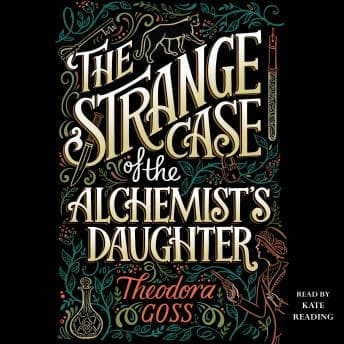
Kate Reading narrates this, and honestly? She deserves a medal. Or a very stiff drink.
She has to juggle Mary Jekyll (who is basically the Victorian superego—repressed, polite, terrified of being broke) and Diana Hyde (pure, feral id). Reading pulls off similar vocal gymnastics in Rhythm of War, where she juggles multiple POV characters across an entire epic fantasy series. And then she throws in a German accent for Justine Frankenstein and something entirely different for the others. It's a lot.
If the narrator wasn't this technically skilled, the audiobook would be a disaster. A mess. But Reading has this dry, sharp tone—like a strict governess who has seen it all and is slightly amused by the chaos. She anchors the story. When the characters start interrupting, she handles the shifts cleanly. You always know who is speaking. That takes serious control. She brings that same precision to Memory of Light, where tracking dozens of characters through a climactic finale requires absolute clarity.
(Side note: I couldn't find much on whether Reading did specific prep for the "feral" vocalizations of Diana, but the contrast between her grunts and Mary's polished English is... psychologically fascinating. It's the duality of man, quite literally screaming in your ear.)
Daddy Issues: The Novel
Let's be real. This book is 13 hours of women dealing with the worst fathers in literary history.
The psychology here tracks. You have Mary, who is trying to clean up her father's mess (classic parentification), and Diana, who embraces the chaos. Watching them form a "found family" unit is satisfying because it's a survival mechanism. They aren't just solving a murder; they're solving their own origins.
The author, Theodora Goss, actually teaches at Boston University. (I haven't run into her on campus yet, but if I do, I have questions about her take on the female grotesque.) She understands that "monstrosity" is a social construct. These women aren't monsters because of how they look; they're monsters because they refuse to be polite victims.
Also, Sherlock Holmes is in this. He's... fine. But he's rightfully sidelined. The men are just props for the women's development. As they should be.
Who's This For (And Who Should Run)
If you like your Victorian atmosphere with a side of feminist rage and a narrator who can do five accents without breaking a sweat, pick this up. Skip it if you're a purist who wants a straight Gothic mystery without postmodern commentary—the interruptions will drive you up the wall.
Case Notes, Closed
Is it perfect? No. The pacing drags a bit in the middle—classic "saggy middle" syndrome where they run around London a few too many times.
But for me? It worked. It's smart, it's angry, and it's funny. It treats fictional women like complex psychological subjects rather than plot devices. Just maybe don't listen while using sharp kitchen knives during the jump scares.