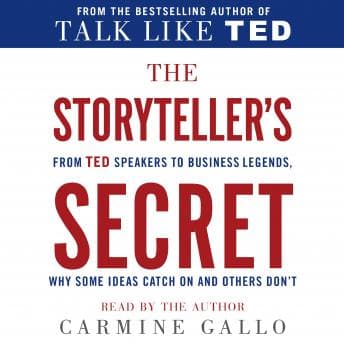

Everyone says this book will change how you communicate. My Audible feed was drowning in recommendations. Gallo's TED talk stuff, his Steve Jobs breakdown - the guy's built a whole cottage industry around storytelling frameworks. So I went in expecting to love it.
I liked it. That's the honest answer. Liked, not loved.
Fifty Case Studies Walk Into a Bar
Here's the structure: Gallo basically curates 50-ish stories of people who used storytelling to build movements, brands, careers. Richard Branson. Sara Blakely. Martin Luther King Jr. Malala. Sheryl Sandberg. The Starbucks origin story. Southwest Airlines culture. It's a greatest hits album of business communication wins.
And some of them land. The Churchill section - where Gallo breaks down how Churchill deliberately chose shorter, Anglo-Saxon words instead of Latinate ones to rally Britain against Hitler - that's genuinely useful. I paused my walk, pulled out my phone, and made a note. That's the kind of tactical insight that earns its place in 8 hours of audio.
But here's my problem: at 50 examples, you're getting breadth, not depth. Each story gets maybe 10 minutes of treatment. Setup, lesson, move on. Setup, lesson, move on. By hour 5, I started feeling like I was at one of those conferences where every speaker has exactly 18 minutes and a personal tragedy to share. You know the format. The format knows you know.
The key takeaway is worth the listen. The other 7 hours? Not so much.
The Author-Narrated Advantage (And It Is One)
Gallo narrates this himself, and credit where it's due - the man practices what he preaches. He reads with this confident, measured energy that makes you feel like you're getting a private coaching session. Someone compared him to Tom Hanks, which is a stretch, but I get the impulse. There's a warmth there, a conversational ease that a hired narrator probably wouldn't have nailed.
When he's walking you through the neuroscience of why rags-to-riches stories light up our brains differently, his genuine enthusiasm sells it. He believes this stuff. You can hear it. And because he wrote it, the emphasis lands exactly where it should - no weird pauses before proper nouns, no mispronounced business jargon. (You'd be shocked how often narrators butcher "Salesforce" or say "McKinsey" like it's a sneeze.)
Solid 4 out of 5 on narration. Clean audio, good pacing, no complaints.
Where My Parents' Dry Cleaning Business Enters the Chat
Here's what kept nagging me. Gallo's thesis is that storytelling is your competitive advantage, your most valuable asset, the thing that separates the Elons from the everyone-elses. And sure, in a TED talk context, in a pitch deck context, in a Sheryl Sandberg keynote context - absolutely.
But my parents told a story every day. It just wasn't the kind that gets a standing ovation. It was pressed shirts returned on time, a smile when Mrs. Hernandez brought in her husband's work uniforms, the fact that they remembered your name and your kid's name and which starch you preferred. That's storytelling too. It's just not the kind that fills business books.
Gallo's not wrong. He's just incomplete. This is what my parents did instinctively. Now it has a TED talk.
The book works best as a reference library - a swipe file of communication techniques you can steal before your next board presentation or all-hands meeting. The "three-act structure for business pitches" framework is genuinely portable. But it's a toolkit dressed up as a philosophy, and I wish it would just own that.
Who Gets ROI Here
If you're prepping for a keynote, a fundraising pitch, or you're a founder who freezes up when investors ask "so what's your story?" - skip to the frameworks. How to be Heard covers similar ground with more focus on the listening half of the equation. There's real value in how Gallo reverse-engineers what makes certain presentations stick. Practical, applicable, steal-it-Monday stuff.
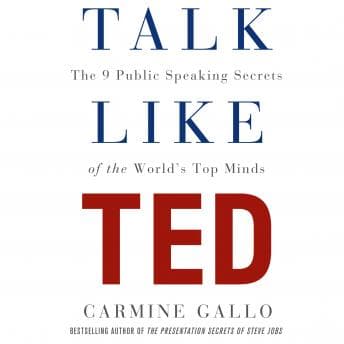
If you've already read Talk Like TED (his earlier book), you're going to get déjà vu. A lot of the same principles, different case studies. Not a dealbreaker, but worth knowing before you spend a credit.
If you're looking for deep analysis of storytelling craft - the kind of thing Robert McKee or Lisa Cron would give you - this isn't it. This is broader, shallower, more motivational.
I listened to most of this on a Sunday morning while reorganizing my home office - Jenny was at brunch, the house was quiet, and business books at 2.0x with coffee is basically my church. Good background for that kind of focused-but-not-intense work. Not the kind of book that demands you pull over.
Bottom Line on the Balance Sheet
Bottom line: Gallo's a skilled communicator writing about skilled communication, and the irony is the book could use a tighter story itself. Cut 20 of those 50 examples, go deeper on the remaining 30, and this is a must-listen. As it stands, it's a solid business audiobook that respects your intelligence if not quite your time. The Churchill bit alone is worth the price of admission. The rest is a well-organized buffet - take what you need, leave the rest.
My 2.0x speed couldn't save this one from feeling padded, but the core material is genuinely useful. Wait for a sale.