
I'll admit something that might get my teacher card revoked: I've never read the Bible cover to cover. Taught Paradise Lost for fifteen years, referenced Genesis in countless lectures, used Job as a framework for understanding suffering in literature—but actually sat down and read the whole thing? Nope. So when I started listening to this during my lakefront walks with Denise, I told myself it was "professional development." (She saw right through that excuse. She always does.)
Here's the thing about approaching Scripture as an English teacher rather than a theologian—you start noticing the craft. The narrative arc. The way stories echo and mirror each other across thousands of years of text. And this particular production? It gets that. It really, really gets that.
When the Text Becomes Theater
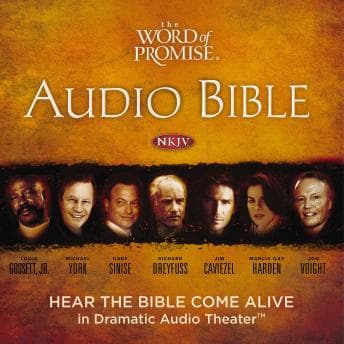
The multi-voice approach here is smart. Not gimmicky-smart, but genuinely intelligent casting that serves the material. Allison Moffett and Michael Blain-Rozgay anchor the narration, but the full cast treatment means you're not just hearing words—you're experiencing scenes. The music and sound effects could've gone wrong in a dozen ways (I've heard dramatized audiobooks that sound like community theater fever dreams), but the production team showed restraint. The soundscape enhances without overwhelming.
What struck me most was the pacing. Biblical text can be dense—genealogies, laws, repetitive prophetic structures—but the way this version handles transitions keeps the momentum going. Max Lucado's foreword sets up the "one continuing story" framework, and the production actually delivers on that promise. You feel the through-line from Genesis to Revelation in a way that reading chapter-by-chapter sometimes obscures.
The NIV Question (Because Someone's Going to Ask)
Look, translation debates are their own battlefield, and I'm not wading into that particular war. But for listeners who already appreciate the NIV's accessibility, this is that translation at its most listenable. The language is clear without feeling dumbed-down. If you're a King James purist, you already know this isn't for you. If you're someone who wants the narrative to breathe—to feel like story rather than ancient decree—the NIV text works beautifully in this format.
I found myself pausing during faculty meetings (sorry, Principal Martinez) to really sit with certain passages. The Psalms hit differently when they're performed rather than read. David's laments have weight. The prophetic books—which, let's be honest, can be a slog on the page—become urgent, almost uncomfortably relevant.
Where It Clicked for Me
About six hours in, somewhere around the Exodus narrative, I realized I was listening differently than I do with novels. This wasn't entertainment exactly, and it wasn't study exactly. It was something in between. I've felt that same liminal space with Yoga Sutras of Patanjali, where ancient wisdom sits uncomfortably between philosophy and practice. The dramatization made familiar stories feel fresh—I've taught the Joseph narrative as a literary archetype for years, but hearing it performed made me understand it as lived experience in a way my academic brain had missed.
The sixteen-hour runtime sounds daunting, but think of it as a semester's worth of listening rather than a weekend binge. I spread it over three months of morning walks. Some days I'd do twenty minutes. Some days an hour. The episodic nature of biblical narrative actually suits commute listening better than most novels.
One small gripe: navigation by track number rather than book name is annoying if you want to jump to a specific section. Minor issue, but worth mentioning if you're someone who likes to revisit particular passages.
Who Should Press Play—and Who Should Pass
If you want a single narrator reading text in monotone, skip this. If dramatization feels too theatrical for your taste, this will grate. But if you're someone who's always meant to engage with the Bible as a complete narrative—whether for faith, for cultural literacy, or for understanding the foundation of Western literature—this is genuinely one of the best ways to do it.
Mr. Williams's Final Lecture (I Promise It's Short)
My students would probably roll their eyes at me recommending a Bible audiobook. But you know what? Half of them don't understand the allusions in Steinbeck because they've never encountered the source material. This isn't preaching at you. It's storytelling. And as someone who's spent two decades trying to convince teenagers that old stories still matter, I can tell you—the presentation here makes the case better than I ever could in a classroom.
Denise asked me last week if I was "done with the Bible thing." I told her I'd probably listen again next year. She didn't seem surprised.