
Look, I started this during a 6 AM jog through Cambridge in February. It was freezing, my breath was visible, and I thought: perfect time for ancient yogic wisdom. What I didn't expect was to basically get a psychology lecture from 200 BCE.
Here's the thing about the Yoga Sutras - and I say this as someone who spends her professional life analyzing why people do what they do - Patanjali was doing behavioral psychology before we had a name for it. The research actually shows that a lot of modern cognitive behavioral techniques? They're basically repackaged sutra concepts. Mindfulness, attention regulation, breaking automatic thought patterns. Patanjali was there first. By about two thousand years.
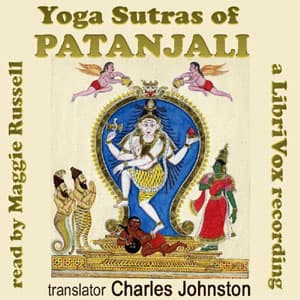
Charles Johnston's translation and commentary is what makes this version worth your time. He frames everything around "the birth of the spiritual from the psychical man," which - okay, sounds a bit Victorian and mystical - but what he's really talking about is psychological transformation. How do you move from reactive, automatic living to something more intentional? This is a fascinating case study in ancient self-help that actually has substance.
Now. The narrator situation.
Maggie Russell has this clear, meditative delivery that I genuinely appreciated during my morning runs. Her pronunciation is precise, her pacing is deliberate. For a text like this - one that's meant to be contemplated, not consumed - that works. I found myself actually absorbing concepts instead of just letting them wash over me.
But I need to be honest: I can see why some listeners bounce off this hard. One reviewer literally said they couldn't make it past nine minutes because the tone was "so annoying." And yeah, if you're expecting dynamic narration with vocal variety and emotional range, you're going to be disappointed. Russell's approach is more like a meditation guide than a performance. Monotonous? Maybe. But I'd argue that's the point.
(My therapist would have thoughts about why I find monotone voices soothing. We're not getting into that.)
The structure itself is interesting from a psychological perspective. Each sutra is like a compressed behavioral principle, and Johnston unpacks them with commentary that bridges ancient wisdom and practical application. Some of his interpretations felt spot-on. Others? I found myself asking: why does he really read it that way? There are moments where the commentary seems to contradict itself, and as someone who values internal consistency, that bugged me.
Psychologically, though, most of it tracks. The sutras on attachment, on the fluctuations of the mind, on how suffering comes from mistaking the impermanent for the permanent - this is basically the foundation of acceptance and commitment therapy. The protagonist here is the human mind itself, and Patanjali is documenting its patterns with remarkable precision. He understood human nature. Millennia ago.
At three hours and forty-five minutes, this isn't a casual listen. I broke it into chunks - a sutra or two per run, then I'd let them sit. That worked for me. Trying to power through in one sitting would be a mistake. The pacing is slow by design, and if you're impatient (I am, generally, about most things), you'll need to adjust expectations.
The production quality is clean. No background noise, no weird audio artifacts. LibriVox recordings can be hit or miss, but this one is solid on the technical front.
Who Should Listen (And Who Should Skip)
Yoga practitioners who want to understand the philosophy behind the practice. Spiritual seekers who aren't put off by slow, contemplative content. And honestly? Psychology nerds like me who want to see how ancient thinkers approached the same questions we're still wrestling with. But if you need energy in your audiobooks, if monotone narration makes you zone out, if you want something you can half-listen to while doing dishes - skip this one. It demands attention.
I wouldn't call this a must-listen for everyone. But for the right listener? It's genuinely valuable. I came away with actual insights about attention and mental discipline, which is more than I can say for most self-help books published this decade. Compare that to something like Big Leap, which has solid psychological frameworks but lacks this kind of historical depth.
One more thing: I listened at 1x speed, which felt right for the material. Speeding it up would defeat the purpose. This is meant to be slow. Let it be slow.