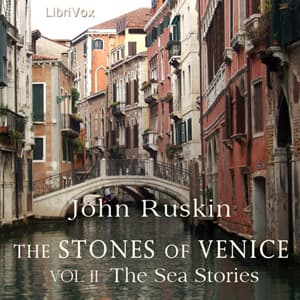

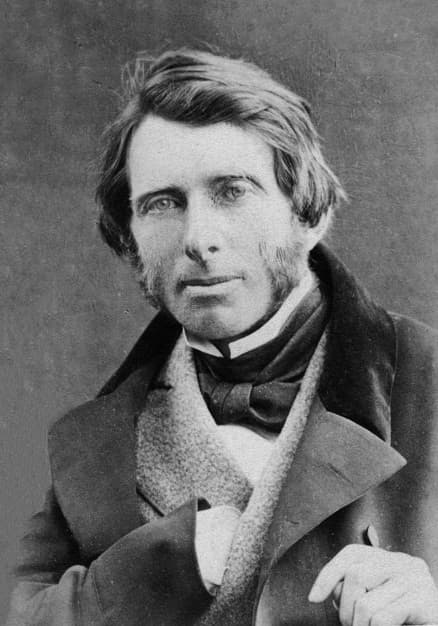
Look. I need to be honest with you. I picked this up because I wanted something to make me feel cultured while I designed wedding invitations for a couple who insisted on "rustic elegance" for the fortieth time this month. What I got instead was John Ruskin yelling at me - lovingly, passionately, with Victorian fervor - about why Renaissance architecture is basically the moral downfall of Western civilization.
And I'm not even mad about it?
This Man Has FEELINGS About Columns
Ruskin doesn't just describe Venetian architecture. He prosecutes it. He defends it. He mourns it. The famous "Nature of Gothic" chapter that William Morris loved so much he published it separately? It's not really about pointed arches and flying buttresses. It's about the soul of the worker, about how Gothic architecture allowed craftsmen to be imperfect and human and creative, while Renaissance perfection demanded they become machines.
My heart. MY HEART.
I wasn't expecting to get emotional about 12th-century stone carving techniques, but here we are. Ruskin writes about the anonymous medieval workers who carved grotesque little faces into cathedral corners - faces no one would ever see clearly - and he's basically saying their imperfection was their humanity. Their rough edges were their freedom. Abuela would have understood this. She always said the best food was made with hands that weren't afraid to get messy.
The passion in this text is almost overwhelming. Ruskin catalogs over eighty churches with the intensity of someone who believes Venice's stones contain actual moral lessons. He's not being metaphorical. He genuinely thinks you can read the spiritual health of a civilization in its window tracery.
The LibriVox Reality Check
Okay, so here's the thing about LibriVox - and I say this with genuine appreciation for the volunteers who give their time to make classic texts accessible. This is a 14-hour-and-40-minute commitment read by multiple volunteers, and the quality varies. A lot.
Some readers bring genuine warmth to Ruskin's elaborate Victorian sentences. Others sound like they're reading a terms of service agreement. The transitions between readers can be jarring - you'll get used to one person's cadence and then suddenly someone new appears with completely different energy. For a text this dense, that inconsistency matters.
I'm not going to pretend this is a polished professional production. It's free. It's a labor of love. But if you're the kind of listener who gets pulled out of the experience by narrator changes (and honestly, who isn't?), you need to know what you're getting into.
When Dense Becomes Devotional
Here's my confession: I listened to this at 1.0x because speeding up Ruskin feels like a crime. His sentences are architectural themselves - long, ornate, with clauses nested inside clauses like those Russian dolls my cousin collects. You can't rush through a description of Byzantine capital carvings any more than you can rush through the carvings themselves.
But - and this is a big but - you also can't background-listen to this. I tried while sketching logo concepts. Mistake. Ruskin demands your attention. He's building arguments that span chapters, referencing details from fifty pages ago, assuming you're following his logic about the relationship between moral character and architectural proportion. Varieties of Religious Experience has that same demanding quality - William James assumes you're tracking his philosophical arguments across hundreds of pages, building toward conclusions that require your full attention.
This is a rainy Sunday book, but the kind of rainy Sunday where you're also taking notes and occasionally pausing to Google "Byzantine mosaic techniques" because he's assuming you know things you definitely don't know.
Who Should Press Play (And Who Should Walk Away)
If you're an architecture nerd, an art history enthusiast, or someone who finds Victorian prose genuinely beautiful rather than exhausting - this is free and it's a foundational text. Ruskin influenced everyone from the Arts and Crafts movement to modern preservation ethics.
If you want something cozy and emotionally accessible? This ain't it. I cried during 47 books last year; this wasn't one of them. The emotion is there, but it's intellectual emotion - the kind you feel when an idea suddenly clicks, not the kind that makes you reach for tissues. Skip this if you need narrative momentum or can't handle narrator switches mid-chapter.
If you've never read Ruskin before, maybe start with excerpts. "The Nature of Gothic" chapter alone is worth your time. The whole 14+ hours is... a commitment. A beautiful, demanding, occasionally frustrating commitment.
My Designer's Verdict on These Venetian Stones
I'm genuinely glad I listened to this. Ruskin made me see buildings differently - not as static objects but as frozen expressions of the people who made them. That's a gift.
But the LibriVox format means this is really for dedicated listeners who want access to a classic text and don't mind some rough edges in the delivery. It's free, it's historically important, and it's imperfect in ways Ruskin himself might have appreciated. The volunteers who recorded this were craftsmen in their own right - unpolished, human, doing their best.
Just like those medieval stone carvers he loved so much.








![Steve Jobs [unabridged audiobook] audiobook cover](/_next/image?url=https%3A%2F%2Fcovers.audiobooks.com%2Fimages%2Fcovers%2Ffull%2F9788499923406.jpg&w=1920&q=75)