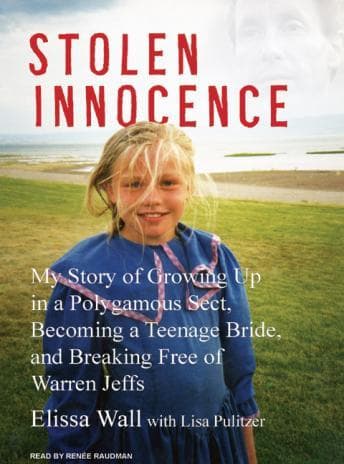

How do you explain to someone that a book made you so angry you almost missed your exit on the 101? Not angry at the book - angry FOR Elissa Wall, angry at every adult who failed her, angry at a system that let Warren Jeffs operate for as long as he did.
I listened to this over four night shifts and the drive homes after. Sixteen hours is a commitment, but honestly? It didn't feel long. It felt necessary.
The Weight of What She Carried
Look, I've worked trauma. I've held hands with patients who've survived things that would break most people. But there's something about hearing Elissa Wall's story - in her own words, with all the details of how the FLDS operated - that hits different. She was FOURTEEN. Married to her first cousin. And the adults around her, including her own mother at times, just... let it happen. Participated in it.
The book does something really important: it doesn't just tell you the FLDS is bad. It shows you how the control works. The incremental steps. The way they isolate you from the outside world until you don't even know there IS an outside world. As someone who's actually worked with patients escaping abusive situations, this rings painfully true. The psychology of it - the way Elissa describes doubting herself, blaming herself, trying to be a "good" wife even as she was being destroyed - that's textbook trauma response. And Wall explains it without clinical distance. She lived it.
The courtroom stuff near the end? I was white-knuckling my steering wheel. Knowing she had to face Jeffs again, testify about the worst moments of her life, all while his followers watched from the gallery. The courage that took. I can't even.
Renée Raudman's Voice - A Deliberate Choice
Okay, so here's where I have to be honest. The narration is... polarizing. Raudman reads with this almost childlike quality, and I've seen reviews that hated it. Called it "like a librarian reading a picture book." And I get that criticism.
But here's my take: Elissa WAS a child when most of this happened. The innocence in the voice? It works. It makes the horror of what's being described hit harder because there's this contrast between the sweet, young-sounding narrator and the absolute nightmare she's recounting. When she describes her wedding night - and I'm not going to get into details because content warning, this book has them all - the almost naive delivery makes it MORE devastating, not less.
That said. When Raudman shifts voices for different characters, it can pull you out of the story. And the pacing drags in a few spots. I bumped it to 1.25x during some of the middle sections where Wall is describing the day-to-day monotony of FLDS life. Not because it wasn't important, but because my post-shift brain needed a little more momentum to stay locked in.
What Stays With You
Carlos asked why I was crying in the car. I blamed allergies. (It was not allergies.)
The part that wrecked me wasn't even the abuse itself - though that's horrific. It was the moments of hope. When Elissa meets Lamont. When she finally gets out. When she realizes she has value outside of being someone's plural wife. Those moments of her reclaiming herself, piece by piece, while still carrying all that trauma? That's the real story.
And the fact that she testified. That she faced that monster in court so other girls might be spared. My mom always says the bravest thing isn't not being afraid - it's being terrified and doing it anyway. Elissa Wall is that definition.
Who This Is (and Isn't) For
This is not an easy listen. The content warnings are real - sexual abuse, child marriage, psychological manipulation, all of it. If you're in a fragile headspace, maybe save this for when you're feeling stronger. Skip it if you need something light or if these topics are too close to home right now. But if you can handle it and you want to understand how cults trap people - really understand it - this memoir will change how you see the world. It made me hug my kids tighter. It made me grateful for my loud, chaotic, imperfect family where everyone gets to choose their own life.
That kind of moral clarity - knowing what's right even when the world around you says otherwise - reminded me of To Kill a Mockingbird, though Elissa's fight was so much more personal.
Clocking Out
Night shift approved - but maybe not for your first night back after vacation. You need emotional reserves for this one.