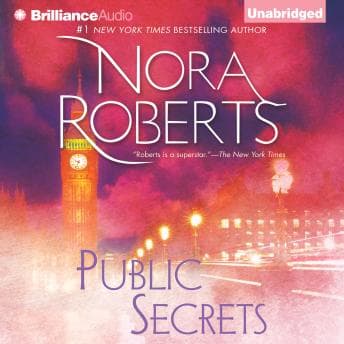

Everyone kept telling me Nora Roberts was basically the Shakespeare of romantic suspense. (My students would hate that comparison. I love it.) I'd avoided her for years—some misguided literary snobbery, I'll admit—but twenty hours of lakefront walking demanded something substantial. So here we are.
And look, I was wrong. Not about everything, but about enough.
The Architecture of Memory
What surprised me most about Public Secrets is how structurally ambitious it is. This isn't just a romance with some thriller elements tacked on. Roberts is doing something genuinely interesting with memory and trauma—how childhood experiences shape adult identity, how we construct narratives about our own lives that may or may not be true. Emma McAvoy grows up in rock royalty, witnesses something terrible as a child, and spends the rest of her life with this half-buried truth festering beneath her success.
It reminded me, honestly, of what Dickens does with David Copperfield—that sense of a life being told retrospectively, with the narrator slowly realizing they've misunderstood their own story. (Don't tell my students I compared Nora Roberts to Dickens. Actually, do tell them. The looks on their faces would be worth it.)
The pacing is deliberate. This is a twenty-hour listen, and Roberts takes her time establishing Emma's world before the thriller elements kick in. Some listeners will find this slow. I didn't. The gradual build creates genuine investment when things start unraveling.
Renee Raudman's Emotional Intelligence
Here's where I have to be honest about something: the accent work is... uneven. I've seen other listeners complain about this, and they're not wrong. There are moments where the British characters sound like someone doing a bad impression of someone doing a bad impression of Hugh Grant.
But.
Raudman's emotional range is remarkable. She understands that pause is punctuation. There's a scene—I won't spoil it—where Emma confronts a memory she's been suppressing, and Raudman's delivery made me stop walking. Just stood there on the lakefront like an idiot, staring at the water. That's performance, not just reading.
She's an Earphones Award winner for a reason. The character differentiation is strong, the pacing matches Roberts' prose perfectly, and she fills the romantic scenes with genuine warmth without tipping into melodrama. The accents are a flaw, sure. But they're not the whole picture.
What Roberts Is Really Saying
If you're coming to this expecting pure escapism, you might be surprised. Yes, there's romance. Yes, there's a detective with a cold case. But Roberts is also writing about celebrity culture, about how fame distorts family relationships, about the ways we protect ourselves from truths we're not ready to face.
The mystery itself is well-constructed. I figured out part of it early—occupational hazard of teaching too many murder ballads—but the emotional revelations hit harder than the plot revelations. That's the mark of good character work.
Denise listened to parts of this with me. She's not usually a Roberts reader either. Her verdict: "This is way darker than I expected." She's right. There's violence here, abuse, some genuinely disturbing content beneath the glossy surface. The content warnings exist for a reason.
Who Should Listen (And Who Should Skip)
If you loved Rebecca or Gone Girl—books where the protagonist slowly realizes their reality isn't what they thought—this is their spiritual successor in romance form. There There does something similar with fractured perspectives, though it takes a completely different narrative approach. Roberts blends genres more effectively than I'd anticipated.
Skip it if you can't tolerate imperfect accents. That's fair. Or if you need your thrillers to move at breakneck pace. This is a slow burn that earns its payoffs, but you have to be patient.
I listened at 1.0x because—well, you know my position on that. But I could see going to 1.15x during some of the middle sections without losing anything essential.
Worth Pausing the Faculty Meeting For
I finished this during a particularly tedious budget presentation. (Principal Martinez, if you're reading this... actually, you're definitely not reading an audiobook review site. We're safe.)
Would I listen again? Probably not—I rarely revisit contemporary fiction. But would I recommend it? Absolutely. Roberts earned her reputation. This is accessible, engaging work that doesn't insult your intelligence, with a narrator who brings genuine emotional depth despite some technical limitations.
My students would probably hate this. Too long, too slow, too much romance.
I loved it.