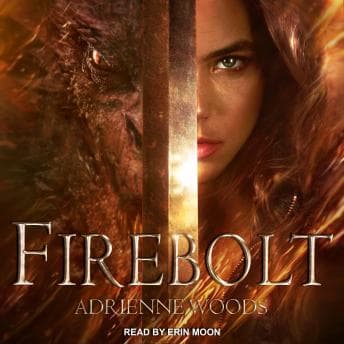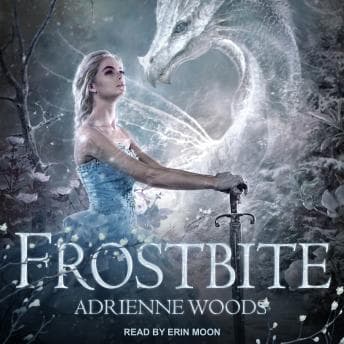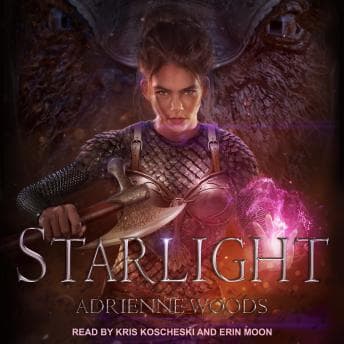

Okay so here's my complaint: you spend four books building up to a series finale — dragons, bonded riders, mysterious missing ingredients, the whole epic campaign arc — and then the payoff feels like your DM looked at the clock and said "alright, we need to wrap this up in one session." That's Starlight in a nutshell.
I was sitting on my apartment floor at 1 AM sorting my board game collection by BGG weight rating (don't judge me, it's therapeutic) when I queued this up, expecting 21 hours of satisfying finale energy. And look — there ARE moments where the Dragonian world does its thing. Elena and the Rubicon have that rider-dragon bond that scratches the same itch as a well-played beast master ranger at the table. But the pacing? The pacing is the DM rolling behind the screen and just... deciding things happen now because we're out of time.
When Your Campaign Finale Runs Out of Session Time
Here's the thing about book five of any series. You've done the setup. You've laid the groundwork. The "missing ingredient" plot — the thing that can free Elena's father from Etan — should be this slow-burn mystery that builds tension until you're white-knuckling your earbuds. Instead, Starlight has this rushed quality where major plot beats, including the will-she-or-won't-she-sacrifice-herself question, get resolved with the narrative equivalent of "and then they found it." I kept waiting for the Sanderson Avalanche, that moment where all the threads pull tight and the magic system clicks and everything cascades into place. It doesn't land with the weight it should.
The world itself has bones. Good bones. Dragon riders, bonded magic, a setting that my D&D group would've homebrewed into a campaign years ago if I'd pitched it right. I know it sounds like a weird leap, but world-building with this kind of elemental pull always drags my brain back to Grimms' Fairy Tales — those stories have survived centuries precisely because their bones are so solid that no amount of retelling can hollow them out. But five books in, I wanted the world-building to feel deeper, not just wider. The lore is there in concept — the Dragonian academy structure, the different dragon types and their abilities — but this final installment skims over things I desperately wanted to sit with. You're telling me we have a creature literally called the Rubicon and we're not going to get a deeper dive into what makes that bond mechanically and emotionally distinct? Come on.
The Narrator Situation Is a Whole Table Argument
So here's where it gets complicated. Starlight runs dual narrators — Erin Moon and Kris Koscheski — and the listener community is basically split down the middle. Some folks call Moon's performance "perfect." Others — and I'm quoting actual reviews here — call the narration "really really bad." That's not a small disagreement. That's a table-flip-level debate, the kind that splits a D&D group.
My take? It lands somewhere in between, which is maybe the most frustrating answer. Moon handles emotional beats with genuine feeling, and there are moments where her delivery carries scenes that the prose doesn't fully earn on its own. But the character differentiation isn't sharp enough for a cast this size. When you're dealing with dragons and royalty and magical beings, I need to hear the difference between speakers without checking who's talking. Steven Pacey walked so other narrators could run, and this performance is still stretching before the warm-up jog. Koscheski provides some contrast in his sections, but the handoff between the two narrators doesn't always feel intentional — more like you switched audiobooks for a few chapters.
At 21 hours, the narration needs to be pulling serious weight to justify the runtime. It mostly does. Mostly.
Who Should Roll Initiative on This
If you've listened to books one through four and you need closure — yeah, obviously finish the series. You're already invested. The Elena-Rubicon dynamic still has charm, and there are enough payoff moments around the sacrifice question to make it worthwhile for existing fans.
But if you're thinking about starting the Dragonian series based on this review? Start at book one and decide for yourself. And if you're a world-building junkie like me who needs the magic system to be chef's kiss? Temper your expectations. This is more about character relationships and emotional stakes than intricate lore systems. It's not going to scratch that itch.
Back to the Board Game Shelf (and My Thesis, Probably)
I read this instead of writing my thesis, and honestly? I should've been writing my thesis. (Dr. Patel, if you're reading audiobook reviews at 2 AM — fair enough, we both have problems.) That's not me being cruel. It's me saying that 21 hours is a LOT of runtime, and Starlight doesn't always justify the length. The core story is fine. Elena's potential sacrifice has genuine emotional weight. But a series finale should feel like the best session of the campaign — the one you talk about for years. This one feels like a decent session that ended too quickly in the wrong places and dragged in others.
For existing Dragonian fans, stream it. Get your closure. For everyone else, there are better dragon-rider fantasies competing for your earbuds right now.