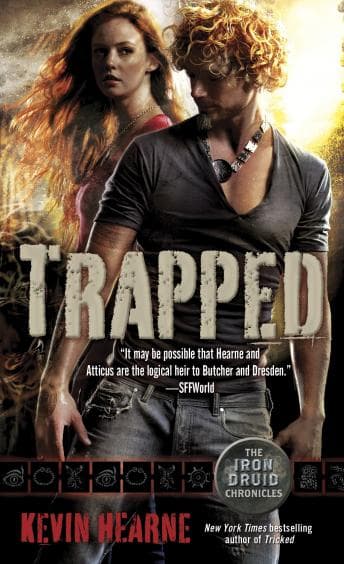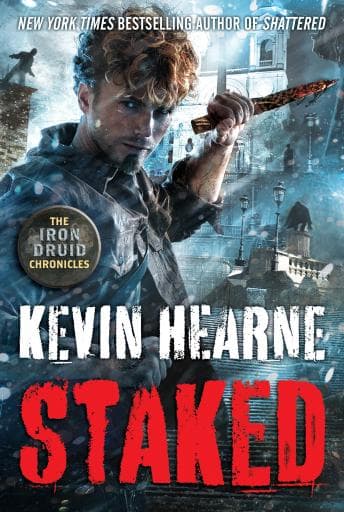

I came to book eight of a series having read exactly zero of the previous seven. My students would call this a "speedrun to confusion." They'd be right. But here's the thing: I was grading a stack of Hamlet essays at 11 PM, desperately needed something that wasn't about Danish princes, and this was what my library app had available. Sometimes that's how literary adventures begin.
And you know what? Kevin Hearne writes with enough context that I wasn't completely lost. Confused about some backstory? Absolutely. But not lost. That's a skill.
A Two-Thousand-Year-Old Druid Walks Into Rome
Let me say upfront—this is not the kind of fantasy I typically gravitate toward. I'm more of a "let's discuss the mythological underpinnings of Tolkien" guy than a "vampires versus druids in modern Rome" guy. But Hearne does something clever here that kept me engaged: he treats mythology like a living, breathing ecosystem. The Slavic nightmares Granuaile encounters, the way Atticus navigates Roman supernatural politics—there's genuine research underneath the humor.
The structure bounces between three narrators (Atticus, Granuaile, and Owen Kennedy), which could feel chaotic but actually works. Each character has a distinct voice and purpose. Owen's troll troubles provide comic relief while the main vampire conflict builds. Granuaile's quest to shake Loki's mark adds genuine stakes. (Yes, I know. Staked. Stakes. Hearne would appreciate the pun.)
What surprised me most was the emotional weight of the Leif subplot. A former friend turned vampire enemy? That's classical tragedy dressed in urban fantasy clothes. Shakespeare would recognize the betrayal dynamics, even if he'd be puzzled by the werewolf lawyers.
Why Luke Daniels Is THE Narrator for This
Here's where I have to eat some humble pie. I've been skeptical of comedic fantasy in audio format—timing is everything in humor, and bad narration can murder a joke faster than Atticus can murder a vampire. Luke Daniels, though? The man understands pause as punctuation.
His Irish accent for Atticus hits exactly right. Not a caricature, not overdone—just enough to establish character without becoming distracting. That same balance of authenticity without overdoing it is what makes the narrator in Murder in an Irish Village work so well. Owen Kennedy's voice is distinct enough that I never confused the two, even when grading papers and only half-listening. (Principal Martinez, I definitely wasn't listening to this during the budget meeting. That would be unprofessional.)
The comedic timing is genuinely impressive. Hearne writes funny, but Daniels delivers funny. There's a difference. Some narrators read humor like they're reading a grocery list. Daniels understands that comedy lives in the breath before the punchline, in the slight shift of tone that signals "here comes the bit."
I did notice the Canadian accent criticism some listeners mention, and yeah—it's not his strongest work. But honestly? It's a minor character, and I was too busy enjoying the overall performance to care much. If you're the kind of listener who gets pulled out of a story by an imperfect accent, fair warning. For me, it barely registered.
Vampires as Political Animals
Look, vampire fiction is oversaturated. My students have been writing vampire stories since Twilight, and I've read approximately ten thousand of them. Most are terrible. Hearne's approach works because he doesn't treat vampires as romantic figures or tortured souls—they're political animals. Theophilus isn't compelling because he's mysterious; he's compelling because he's power-hungry in a way that feels disturbingly human.
The Rome setting for the climax is perfect. What better place to end an immortal than the Eternal City? Hearne knows his classical references, and he deploys them with the confidence of someone who's actually done the reading. As a teacher who spends half his life trying to convince teenagers that ancient history matters, I appreciated this more than I probably should.
The ending hits hard. I won't spoil it, but the "lose an old friend" promise in the description isn't empty marketing. There's genuine loss here, handled with more emotional sophistication than I expected from a book featuring troll debt collection.
Who's This For (And Who Should Skip)
If you want accessible mythology wrapped in humor and genuine emotional stakes, this delivers. Series fans will obviously love it, but even newcomers like me can follow along. Skip it if imperfect accents pull you out of stories, or if you need your fantasy completely serious—Hearne's humor is baked into every chapter.
Class Dismissed
Would I go back to book one? Honestly? Maybe. I'm not rushing to add seven more audiobooks to my queue—Denise already thinks I spend too much time with earbuds in during our lakefront walks. But I'm curious now about how Atticus got here, about the history with Leif, about how this whole supernatural ecosystem developed.
That's the mark of good series writing. Even jumping in at book eight, Hearne made me care about what came before.
For my 47 podcast listeners: no, I'm not pivoting to urban fantasy analysis. My students would probably love this. I'm choosing not to tell them that.