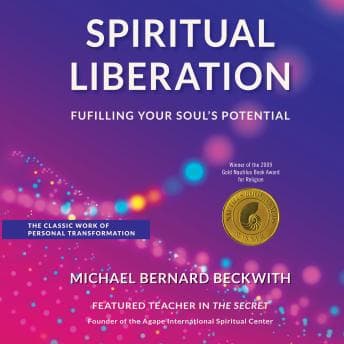

So it's 11:30 PM on a Tuesday, I just got off a 14-hour day that included a cascading failure across three microservices, and I'm lying in bed with my eyes closed trying to wind down. Kevin's already asleep. I put this on because - look, sometimes after staring at dashboards and stack traces all day, my brain needs something that's the exact opposite of incident response. Something that says "hey, slow down, you're a human being, not a load balancer." Spiritual Liberation was... partially that.
TL;DR: Worth your commute if you're in the right headspace. Not if you're at 6AM zombie mode.
The Blog Post Problem, But Make It Spiritual
Okay, I need to be honest here. My usual metric for self-help and spiritual books is: could this have been a blog post? Spiritual Liberation lands somewhere in the middle. There are genuine insights - Beckwith draws from a wide range of traditions and teachers, and he's clearly someone who has lived this material, not just read about it. But there's a wordiness problem. He'll take a concept that clicks in two sentences and orbit around it for twenty minutes, layering on increasingly abstract language until you've lost the thread.
This is basically a meditation retreat but for your commute. Except... it doesn't quite work as a commute book. And that's the core tension.
The end-of-chapter meditations are genuinely the best part. Each chapter wraps with a short narrative reflection and a guided meditation, and those moments - where Beckwith drops the intellectualizing and just gets present - are where the book earns its keep. I found myself actually pausing after those sections, lying in the dark, just sitting with whatever he'd said. That's rare for me. I'm the person who listens at 1.5x and skips intros.
Author-as-Narrator: When Authenticity Fights Itself
Here's the thing about author-narrated books: you're getting the real voice, the real intention behind every word. And Beckwith has a gentle, warm delivery that genuinely suits the material. When he's being conversational and direct, it feels like sitting across from someone who's figured out something important and wants to share it without ego.
But then he'll hit these dramatic flourishes - sudden shifts into a more performative, almost sermonic cadence - that feel like they belong in a different recording. It's like when a codebase has two completely different coding styles because two engineers worked on it without talking to each other. The gentle Beckwith and the dramatic Beckwith are both in here, and they don't always merge cleanly. The dramatic moments pulled me out of the flow more than once.
Narrator rating reflects that split: the authentic moments are a 4, the overworked passages drag it to a 3. Averaging out.
The ROI Calculation (Because I Can't Help Myself)
The ROI on this audiobook is... conditional. Here's my honest breakdown:
At 8 hours, it's about 4 commutes for me at 1.5x speed. But I actually slowed this one down to 1.25x, which is something I almost never do. The meditative sections genuinely benefit from the slower pace. Speeding through a guided meditation is like running rm -rf on the whole point.
The practical exercises and affirmations are useful if you actually do them. I tried a couple during a weekend morning when Kevin was out on a run, and they were... surprisingly grounding? (Don't tell Kevin. He already thinks my optimization podcast obsession is a cry for help. If he finds out I'm doing affirmations he'll stage an intervention.)
But here's where it lost me in places: when it gets too abstract and intellectualized, it becomes the kind of book where you realize you've been "listening" for 15 minutes and absorbed absolutely nothing. On a packed Caltrain at 6AM? That's a problem. This book requires more focus than most self-help I've consumed.
Perfect for: bedtime wind-down, quiet weekend morning, dedicated listening. Skip for: commute zombie mode, gym, background.
Who This Is Actually For (And Who Should Bail)
If you're already in the New Thought / spiritual growth space, or if you watched The Secret and wanted something deeper from Beckwith specifically, this will land well. I Am: The Power of Discovering Who You Really Are sits in the same neighborhood and actually has a tighter argument-to-word-count ratio, which matters when you're already half-asleep on the Caltrain. The man clearly has wisdom to share and the meditative closings alone are worth something.
If you're a skeptic looking for evidence-based self-improvement, or if wordiness makes you want to throw your AirPods into the Bay - skip it. And if you need high commute-worthiness where you can zone out for 30 seconds and still follow the thread, this isn't built for that.
Debugging My Recommendation
I'm giving this a qualified recommendation. It's not a credit-spend for me - I'd say stream it through your library app, listen to the chapter-ending meditations intentionally, and don't feel bad about skipping ahead when the prose gets circular. The best parts of this book are genuinely calming and insightful. The worst parts feel like they needed an editor who wasn't afraid to say "we got this point three paragraphs ago."
Worth noting: no production bells and whistles here. Just Beckwith and a microphone. For this kind of material, that's fine. You don't need sound effects for inner spiritual development. You just need the words to land. And about 60% of the time, they do.









