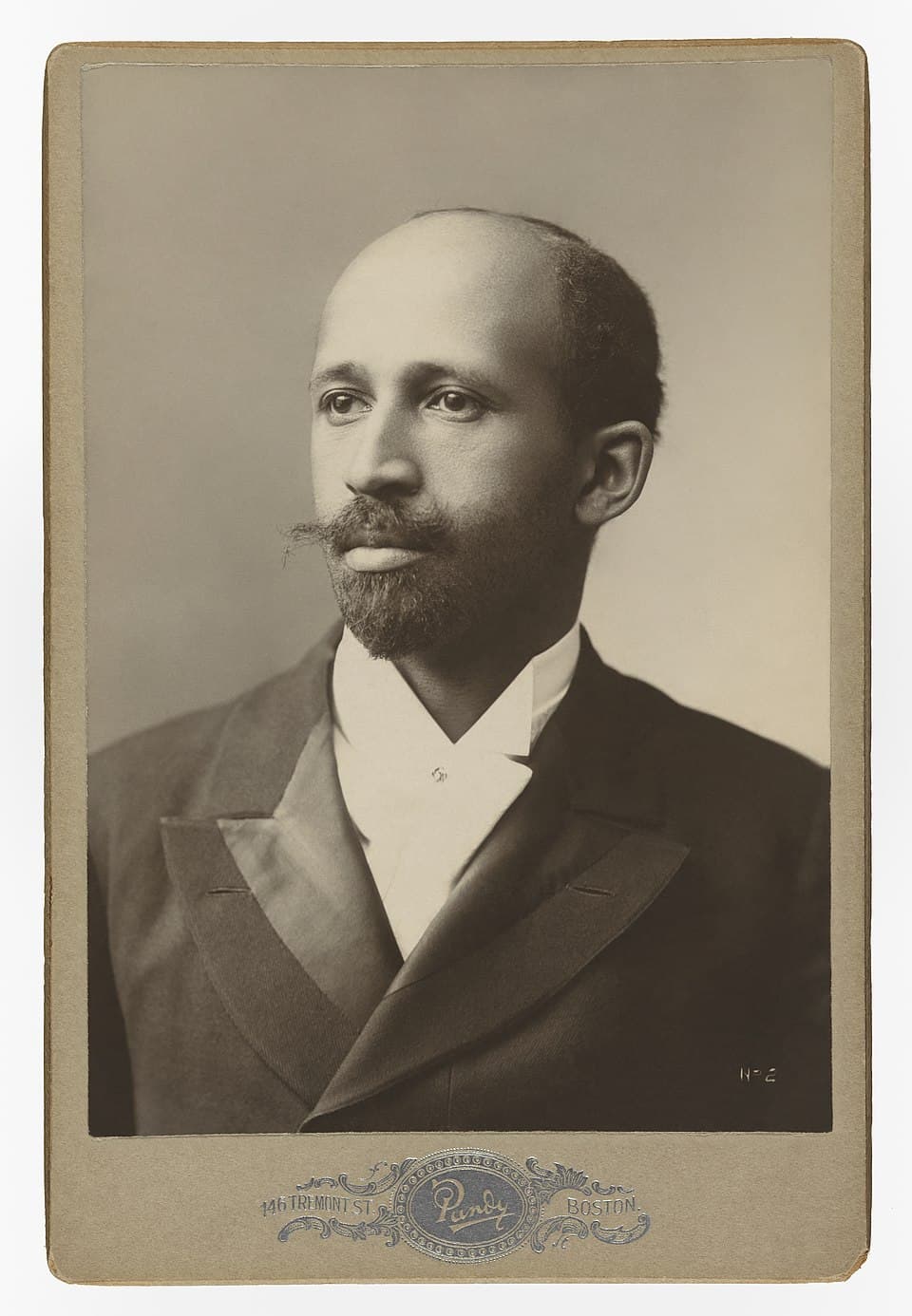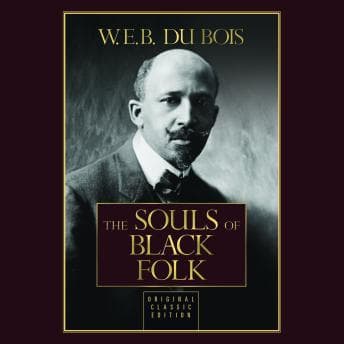

Every American should be required to sit with this book for seven and a half hours. I don't say that lightly — I've spent twenty years telling teenagers what they "should" read, and I've learned that the word "should" is poison for genuine engagement. But Du Bois wrote something in 1903 that hits harder now than half the op-eds published this morning, and the audiobook format strips away every excuse not to engage with it.
I finished it during a Saturday lakefront walk with Denise. She had her own thing going — some true crime podcast she's been devouring — and I had Du Bois in my ears while Lake Michigan did that thing where the light turns the water into hammered silver. Which sounds poetic until I tell you I nearly walked into a jogger during the "Of the Passing of the First-Born" essay because I was so wrecked I forgot I was in public.
Double-Consciousness Isn't Just a Concept — It's the Whole Architecture
Let me be honest about something. I've taught excerpts from The Souls of Black Folk for years. The "double-consciousness" passage from the first essay, "Of Our Spiritual Strivings," is probably the most-anthologized piece of African-American nonfiction in existence. But hearing the full collection — all fourteen essays, in sequence, the way Du Bois arranged them — is a completely different experience from cherry-picking the greatest hits.
Du Bois builds an argument across these essays the way a composer builds a symphony. He opens with the philosophical framework, moves through the political and economic realities of Reconstruction and its aftermath, then pivots to deeply personal material — his time teaching in rural Tennessee, the death of his infant son — before closing with "The Sorrow Songs," his examination of the spirituals as the foundational American art form. That structure matters. You lose it when you just read the famous passages.
And here's what my students would hate: this isn't easy listening. Du Bois writes in the rhetorical style of the late nineteenth century — long, periodic sentences with subordinate clauses stacked like cordwood. He quotes Swinburne, references Bismarck, drops German without translation. The man earned the first doctorate awarded to an African-American at Harvard, and the prose reflects that education. My students would call it "extra." I call it a man refusing to be anything less than his full intellectual self in a country that wanted him diminished.
Raymond Hearn Understands That Pause Is Punctuation
Hearn narrates this at a deliberate, measured pace, and for this particular text, that's exactly right. Du Bois's sentences need room to breathe. There are passages — particularly in "Of the Meaning of Progress," where Du Bois returns to the rural community where he once taught and finds that several of his former students have died or been ground down by poverty — where Hearn lets the weight of a sentence land before moving to the next one. He doesn't dramatize. He doesn't weep. He reads it straight, and the straightness of it makes the devastation hit harder.
His diction is clean and unhurried. One listener noted he speaks slowly and clearly, which sounds like faint praise, but for a text this dense, clarity is everything. I listened at 1.0x — because the author chose those words — and never once felt the need to speed up or rewind. That said, I'll note that this isn't a performance in the way some audiobook narrations are. Hearn doesn't do distinct "voices" because this isn't that kind of book. It's essays. The voice is Du Bois's, filtered through Hearn's steady delivery, and it works.
If you've heard Hearn's narration of Douglass's Narrative, you know what you're getting: respectful, clear, unadorned. He trusts the text. I respect that enormously.
Who This Is For (And Who Might Struggle)
One review I came across said the book was "very hard to get into," and I understand that reaction. If you're expecting a straight narrative — a memoir or a history with a clear through-line — the essayistic structure can feel disorienting. Du Bois shifts between sociological analysis, autobiography, allegory (the strange, haunting short story "Of the Coming of John"), and cultural criticism. You have to surrender to the rhythm of it.
This is for focused listening. Not background. Not the gym. Not half-attention during a faculty meeting. (Principal Martinez, I promise I wouldn't waste this on your budget presentations. This one I actually paid attention to.) If you loved Frederick Douglass's Narrative or James Baldwin's essays, this is their spiritual ancestor — the text that made both of those writers possible. I'll be honest — neither Armored nor Sense and Sensibility are in the same conversation as Du Bois, but they're what I've reviewed recently, and I keep finding myself measuring everything against books like this one — which is probably unfair to everyone involved.
My students ask me sometimes why we still read things from 1903. I tell them: because Du Bois describes the color line as "the problem of the twentieth century," and here we are, well into the twenty-first, still living inside his diagnosis. The prose deserves to be savored. The argument demands to be reckoned with.
This is why we still read the classics. Not because they're old. Because they're unfinished.