
I was grading sophomore essays on The Great Gatsby at 11:30 PM - you know, the ones where every third student insists Gatsby is "just a really nice guy who loved too hard" - when I needed something to cleanse my palate. Something honest. Something that didn't require me to write "show, don't tell" in the margins for the fortieth time.
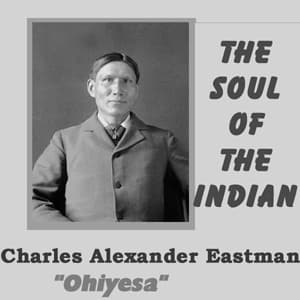
Charles Alexander Eastman's The Soul of the Indian found me at exactly the right moment.
What Hemingway Wished He Could Say
Eastman writes with a clarity that makes most contemporary prose feel bloated. This is a man who earned a medical degree from Boston University in 1890, who straddled two worlds his entire life - born Ohiyesa of the Santee Dakota, educated in white institutions, and spent his career trying to explain each world to the other. And here's what strikes you immediately: he's not angry. He's not defensive. He's simply... explaining. With the patience of someone who has accepted that he will be misunderstood anyway.
The book is structured around the spiritual practices of his people - the Great Mystery, worship, family altar, moral code. But calling this a "book about Native American religion" is like calling Walden a "book about pond life." Eastman is doing something far more subversive. He's holding up a mirror to Christian America circa 1911 and saying, gently, "You call us savages. Let me show you what we actually believe."
At under two hours, this is a single-sitting listen. I finished it before I finished grading. (The essays are still there. They can wait.)
David Mix Reads Like a Teacher Who Actually Cares
I don't have much specific data on David Mix's performance here, and honestly? That's almost a compliment. The narration doesn't call attention to itself. There's no theatrical flourish, no attempt to "perform" Native American identity. Mix reads Eastman's words with the kind of measured respect the text deserves - letting the prose breathe, trusting the author.
This is public domain material, likely recorded for Librivox, and it sounds like it. The production is clean enough, but don't expect studio polish. You're here for Eastman's words, not audio engineering.
What works is the pacing. Mix understands that Eastman's sentences need room. When Eastman describes how his people worshipped in silence - "We never quarrel about religion" - the pause before the next thought lands like punctuation.
The Classroom Echo
My students would hate this. I love it.
Not because they're incapable of appreciating it - they're not - but because it requires a kind of stillness that seventeen-year-olds raised on TikTok struggle to access. Eastman doesn't explain himself twice. He doesn't offer trigger warnings or content notes. He assumes you're intelligent enough to follow, and he assumes you're humble enough to learn.
That same quietly demanding quality — the author refusing to condescend, trusting you to meet him where he stands — is something I noticed in Working for God, though the tradition couldn't be more different.This reminds me of what Hemingway said about writing - the dignity of movement of an iceberg is due to only one-eighth of it being above water. Eastman's prose has that quality. He tells you about the naming ceremony, about the vision quest, about the preparation of the dead, and underneath every sentence is a lifetime of grief for what was being systematically destroyed as he wrote.
He never says "you destroyed us." He doesn't have to.
Who Needs This on Their Syllabus (And Who Doesn't)
If you teach American literature and you're still assigning only the usual suspects - Hawthorne, Melville, Fitzgerald - this is required listening. Eastman was writing simultaneously with Henry James, and his prose is just as controlled, just as deliberate. The difference is that Eastman had something urgent to say.
If you're looking for a comprehensive ethnography or a political polemic, look elsewhere. This is personal testimony dressed as cultural explanation. It's also, quietly, a work of mourning.
Skip this if you need action, plot, or anything resembling narrative momentum. This is philosophy. It moves at the speed of thought.
Class Dismissed
At 97 minutes, The Soul of the Indian asks almost nothing of you - a single commute, one late-night grading session, a Sunday morning walk. What it offers in return is the chance to hear an extraordinary man explain his people's spiritual life with dignity and precision, written at the exact moment when that way of life was being erased.
The prose deserves to be savored. Listen at 1.0x. Let Eastman's silences do their work.
Denise asked what I was listening to this morning on our lakefront walk. I said, "A Sioux doctor from 1911 explaining what we got wrong about everything." She nodded. We walked in silence for a while after that.
Some books don't need discussion. They need sitting with.