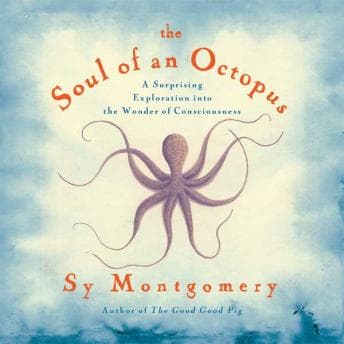

Look, I'll be honest - I downloaded this expecting a science book about octopuses. What I got was basically a love letter to eight-armed aliens that happen to share our planet. And somehow? It worked.
Sy Montgomery doesn't just write about octopuses. She befriends them. Names them. Mourns them when they die (which happens fast - these creatures only live a few years, and that's a gut-punch I wasn't prepared for). The book follows her time at the New England Aquarium, where she develops genuine relationships with individual octopuses - Athena, Octavia, Kali, Karma - and each one has a distinct personality that Montgomery describes with the kind of detail usually reserved for human characters.
When Science Gets Personal
Here's the thing about this audiobook: it's not a textbook. If you want pure octopus biology, this isn't it. Montgomery weaves in scientific facts - how octopuses taste with their suckers, how they can change color and texture in milliseconds, how they might be conscious in ways we don't fully understand - but it's all wrapped in personal narrative. She talks about her own spiritual journey, her diving expeditions, the aquarium volunteers who become her found family.
Some people hate this. I get it. If you're coming from a "just give me the data" mindset, the memoir elements might feel like filler. But for me, listening on the 6:47 AM train while everyone around me scrolled their phones, the personal stories made the science stick. I actually remember the facts because they're tied to moments - like learning about octopus intelligence while Montgomery describes Octavia recognizing her after weeks apart.
The science that IS here is fascinating. Octopuses have neurons in their arms. Their arms can literally think independently. They have three hearts. Their blood is blue. They're basically the closest thing to alien intelligence we've found on Earth, and Montgomery makes a compelling case that consciousness might be way weirder and more distributed than we assume.
The Author's Voice (Literally)
Montgomery narrates this herself, and - okay, I need to be real here. Her delivery is warm. Enthusiastic. Sometimes very enthusiastic. There were moments where her voice got a little perky for my pre-coffee brain, especially when she's describing something wonderful and her pitch goes up like she's talking to a beloved pet.
But here's why it works: you cannot fake the passion she has. When she describes touching an octopus for the first time, when she talks about the texture of their skin, the way they reach toward her - you can hear that she's reliving it. That authenticity is worth more than a polished narrator who's just reading words.
Some listeners apparently switched to print because the perkiness was too much. Fair. But I'd argue that hearing the author tell her own story adds something you can't get from text. When she describes grief over losing an octopus friend, her voice carries it differently than a hired narrator would.
Who Should Listen (And Who Should Skip)
This is perfect for commutes where you want to feel something but also learn something. It's 9+ hours, which got me through about a week and a half of train rides. I listened at 1.25x - her pacing is thoughtful, almost meditative, so speeding up a bit helped without losing the emotional beats.
Perfect for: nature lovers, anyone curious about consciousness and intelligence, people who liked "H is for Hawk" or other literary nature writing. The ROI here is high if you're into that blend of science and soul.
Skip if: you want hard science without personal narrative, or if author-narrated books generally annoy you. Also skip if you're not ready to get emotionally attached to invertebrates, because you will, and then you'll learn they only live 3-5 years, and you'll be sad on public transit.
The Consciousness Question
What stuck with me most - and I'm still thinking about this weeks later - is Montgomery's central question: what does it mean to be conscious? She doesn't answer it definitively (nobody can), but she makes you reconsider the assumptions. If an octopus can recognize individual humans, solve puzzles, express preferences, play... where's the line?
It's the kind of book that changes how you see the world a little bit. Not in a preachy way. Souls of Black Folk did something similar for me - shifted my perspective without lecturing. Just... you finish it and look at other creatures differently. That's worth 9 hours of train time.






![Steve Jobs [unabridged audiobook] audiobook cover](/_next/image?url=https%3A%2F%2Fcovers.audiobooks.com%2Fimages%2Fcovers%2Ffull%2F9788499923406.jpg&w=1920&q=75)