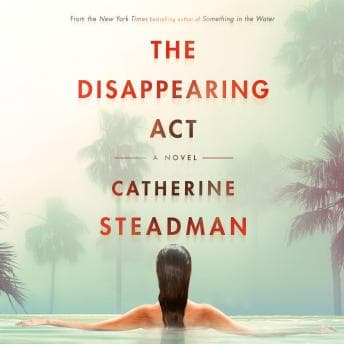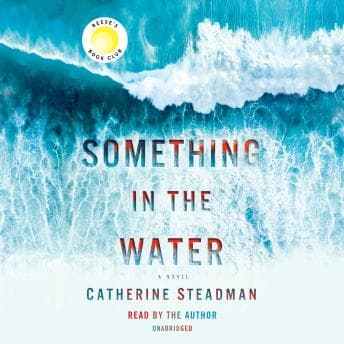

Look, I'm supposed to be grading thirty-four essays on The Catcher in the Rye right now. (If I have to read one more sentence about Holden Caulfield being a "phony," I might actually cry.) But instead, I'm sitting here with a half-empty glass of Merlot, staring at the wall, thinking about how long it takes to dig a grave.
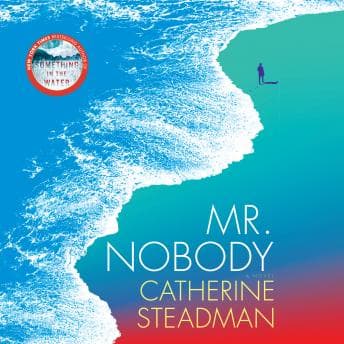
That's the opening hook of Something in the Water, by the way. Not a threat.
I usually stick to the classics. You know this. Give me Dickens, give me Eliot. But sometimes, after a long week of explaining to teenagers why semicolons matter, my brain just needs... candy. Or in this case, a stress-inducing psychological thriller that made me yell at my car stereo while driving down Lake Shore Drive.
The "Author-Narrator" Trap (That Actually Worked)
Here's a rule of thumb I usually swear by: Never trust a novelist to narrate their own fiction.
Writers are writers. We sit in dark rooms and type. We mutter. We don't project. But Catherine Steadman? She's a cheat code. She's an actress (she was in Downton Abbey, apparently?), and she wrote the book.
So when she reads it, she isn't just reciting text. She's performing a script she wrote for herself.
Honestly, it's unfair to other narrators. She knows exactly where the pauses go. She knows exactly which syllable in "Bora Bora" needs the emphasis to sound ominous instead of tropical. There's a scene early on where Erin and Mark are just talking in a hotel room, and the tension Steadman creates with just a slightly lowered pitch? Incredible. My drama students could learn a thing or two about subtext from this audio.
Watching Smart People Do Stupid Things
Okay, we have to talk about the plot.
If you've ever watched a horror movie and screamed "DON'T GO IN THE BASEMENT" at the screen, you know the vibe here. Erin and Mark find something while scuba diving on their honeymoon. (I won't spoil what, but the title is literal.)
And then?
Then they make a series of decisions that are so catastrophically bad, so morally questionable, that I almost had to pause the track just to breathe. It's the "Idiot Plot" trope, sure, but Steadman sells it. She makes their panic feel so visceral that you start thinking, "Okay, yeah, maybe I would do that."
(Actually, no, I wouldn't. I'd call the police. But that would be a very short, boring book.)
The British accent helps, frankly. Everything sounds more reasonable in a posh British accent. Even burying secrets.
The Verdict: Beach Read With a Body Count
Is this Middlemarch? No. It's not going to change your worldview or redefine the English language. But is it a clinic in sustained tension? Absolutely.
The pacing is relentless. I listened to the last two hours while pretending to clean the garage, but really I was just standing next to the lawnmower holding a rag, waiting to see if they'd get caught.
Steadman understands that audio is intimate. She whispers the scary parts right into your ear. It's effective. It's manipulative. I loved it. That same kind of creeping dread shows up in Outsider: A Novel, though with a completely different flavor of paranoia.
Who should listen: Anyone craving a propulsive thriller they can finish in a weekend—especially if you enjoy watching characters spiral into increasingly terrible choices. Who should skip: If you need protagonists who make sensible decisions, this will drive you up a wall.
If you want high art, go read Faulkner. If you want to forget that you have a stack of essays waiting for you on the dining room table, listen to this. Just maybe don't listen while scuba diving.
Now, if you'll excuse me, Holden Caulfield isn't going to grade himself.