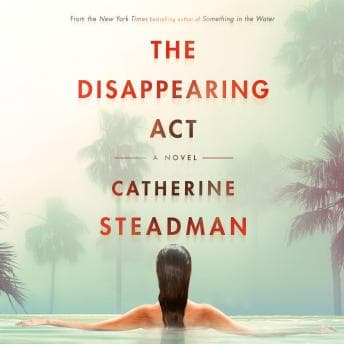

"In a city where dreams really do come true, nightmares can follow."
That line hit me around hour two, and I almost missed my exit on the I-10. Carlos would've killed me. But Catherine Steadman had me so deep in the paranoid, sun-bleached nightmare of Hollywood pilot season that Phoenix traffic became background noise.
When the Author Actually Knows What She's Writing About
Here's the thing - Steadman isn't just an author playing pretend. She's an actual working actress (Downton Abbey, among other things), and you can feel it in every humiliating audition scene, every fake smile in a casting waiting room, every moment where Mia has to perform being okay while falling apart inside. As someone who spends twelve-hour shifts performing calm while someone's bleeding out on my table, I recognized that particular brand of professional dissociation.
The audition scenes are brutal. Not in a dramatic way - in that quiet, soul-crushing way where you're one of forty identical-looking women reading the same lines, and the people behind the table are already looking at their phones. Steadman narrates her own work, and her British accent doing an American accent doing an audition piece? It's this layered performance that made me actually think about how exhausting it must be to be an actor. I've never considered that before. I've been too busy yelling at medical dramas to care about the people making them.
The Emily Problem (And Why It Works Anyway)
So Emily disappears. This mysterious, too-perfect blonde who befriends Mia at an audition and then vanishes after asking for a simple favor. The mystery itself is... look, I've read enough thrillers to see certain beats coming. The formula is familiar. But Steadman's narration sells it anyway. Wife Between Us: A Novel pulled off that same trick—familiar thriller beats elevated by sharp execution.
She gives Emily this distinct voice - slightly breathier, more vulnerable, the kind of person you'd want to protect even as alarm bells ring. When Mia starts digging into what happened, you're right there with her, even when you're screaming "girl, call the police!" at your dashboard. (I do this a lot. Carlos thinks I need therapy. I think I need better characters who make smarter decisions.)
The Hollywood sign scene - there's this extended sequence where Mia's up there, overlooking the city, and Steadman's narration slows down, gets contemplative. It's the kind of moment that would be nothing on the page but becomes atmospheric in audio. You can hear her processing the gap between the dream and the reality.
What Night Shift Taught Me About Endings
Okay. The ending. I need to talk about it without spoiling it.
In the ER, we have this saying: sometimes the diagnosis is more satisfying than the treatment. You figure out what's wrong, you feel brilliant, and then the actual fix is... anticlimactic. That's kind of this book. The final twist lands, there's a genuinely shocking chapter at the end, but some listeners have said it left them unsatisfied. I get it. The build-up is so good that the resolution feels a little rushed.
But here's my counter-argument: sometimes real life is like that too. Not everything wraps up neat. The book deals with sabotage, betrayal, assault - heavy stuff that doesn't always resolve cleanly. I've seen enough trauma to know that "satisfying" endings are a luxury.
Steadman Behind the Mic
Steadman reading her own work is a gift. She knows exactly where the emotional beats are because she wrote them. Her characterizations are sharp - you can tell every person apart without thinking about it. The protagonist's obsessive, compassionate nature comes through in the vocal performance, not just the words.
No weird mispronunciations. No pacing issues. Clean audio, no distracting production problems. After my last audiobook where the narrator pronounced "epinephrine" wrong three times (I counted), this was a relief. Not perfect, but professional in the best way - like watching someone who knows their craft do their job well. Night shift approved.
Who's This For?
This is not a background listen. You need to pay attention. The psychological thriller elements require you to track details, notice inconsistencies, catch the moments when something's off. If you're looking for something to half-listen to while charting at 3 AM, this isn't it.
But if you want something to keep you company on a long drive home when you're too wired to sleep but too tired to think? When you need something that'll hold your attention without requiring you to take notes? Perfect.
Skip if: you hate Hollywood settings, need airtight mystery resolutions, or can't stand when protagonists make questionable decisions. (Though honestly, if that last one bothers you, you can't read any thriller ever.)
Post-Shift Prescription
This is a solid 3.5 stars. Good narration, atmospheric setting, engaging mystery that doesn't quite stick the landing. Catherine Steadman knows her world - both the acting industry and the thriller genre - and it shows. The formula might be familiar, but she executes it with enough style that I didn't mind.
Carlos asked why I was sitting in the driveway for an extra ten minutes after my shift. I blamed the ending. He didn't buy it. But I needed to know what happened to Emily, and I wasn't walking inside until I did.
My mom would probably like this one. She's always saying I should've been a doctor, but she also loves a good mystery. Maybe I'll tell her it's about a woman who should've made better choices. She'll relate.