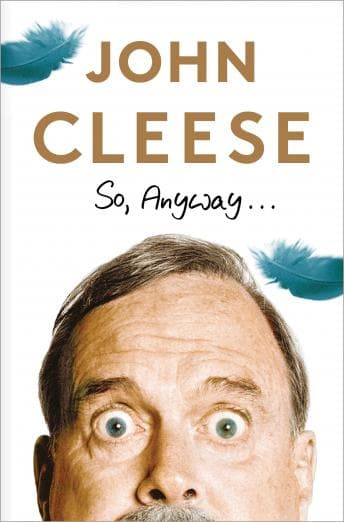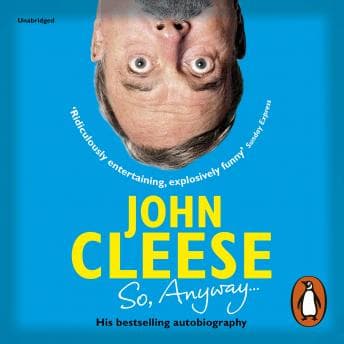

What happens when a comedian writes an autobiography that ends right before the thing you actually want to hear about?
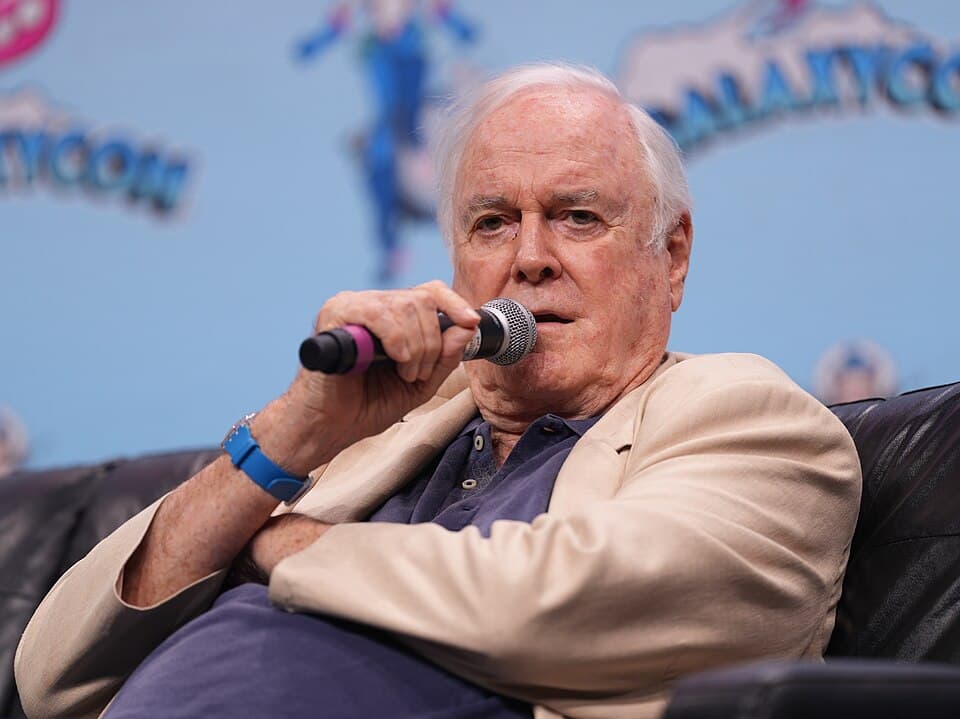
I was walking the lakefront with Denise last Saturday - one of those rare November mornings where Chicago pretends it's not about to become uninhabitable - and I kept stopping mid-stride. Not because of the wind. Because John Cleese was describing, with absolute deadpan precision, a soft-hearted school friend trying to mercy-kill a rabbit suffering from myxomatosis. The scene is absurd and awful and somehow tender, and Cleese delivers it the way he delivers everything here: like a man telling you a story at a dinner party who is genuinely surprised you find it funny.
That's the book in miniature. And it's both the gift and the frustration.
The Origin Story Nobody Asked For (But Maybe Needed)
Let me be honest about what this is and isn't. If you picked this up expecting thirteen hours of Monty Python behind-the-scenes chaos, you're going to be disappointed. The Python material is essentially the last act, and Cleese treats it almost like an afterthought - the book doesn't so much end as it stops, right around the time things get famous. Several listeners have called this a bait-and-switch, and I understand the complaint.
But here's what I kept thinking about as an English teacher who has spent two decades watching kids skip past the "boring parts" of novels to get to the plot: sometimes the boring parts ARE the story. Cleese spends enormous, loving, sometimes exhausting detail on his childhood in Weston-super-Mare, his parents' bizarre inability to stay in one house for more than six months, his discovery that he could make people laugh. The cricket in the garden. The ice rink trips. His father's anxieties, which clearly became his anxieties. This isn't padding - this is a man trying to explain how a desperately shy, tall, awkward kid from nowhere became... John Cleese.
This reminds me of what Hemingway said about icebergs - the dignity of movement is due to the seven-eighths underwater. Cleese is showing you the underwater part. Whether you have patience for that is another question entirely. RuPaul does something structurally similar in House of Hidden Meanings — spending so much time in the unglamorous before that by the time the fame arrives, you actually understand why it matters.
When the Narrator IS the Autobiography
Here's where this audiobook becomes something a print copy can't touch. Cleese reading his own life in that unmistakable baritone - the precise, clipped British RP that can make the word "hamster" sound like an indictment - is the whole experience. There's a moment where he starts laughing at his own anecdote mid-sentence, and you can hear him trying to pull it together, and it's so genuine it made me laugh out loud during a particularly tedious stack of sophomore essays. (Sorry, period three. Your Gatsby analyses weren't competing well against Cleese giggling.)
But - and this is the thing nobody tells you about thirteen-and-a-half hours of a single comedian's voice - it can become relentless. Around hour seven or eight, the narration starts to feel less like a conversation and more like being cornered at that same dinner party when everyone else has gone home. Cleese has a tendency to slide into what I can only describe as extended complaint mode, where observations about people curdle into something a bit dismissive. The wit is still there, but the warmth flickers.
The narrator understands that pause is punctuation - and Cleese uses pauses brilliantly in the early hours. By the later sections, though, the rhythm flattens out. He's still performing, but you can feel the difference between the stories he loves telling and the parts he's powering through.
The Comedy Lectures You Didn't Know You Wanted
The sections I found most genuinely interesting were the ones my students would hate the most - Cleese's tangents on the nature of comedy. Why timing works. What makes a sketch function versus flail. His early scriptwriting for Peter Sellers and David Frost and the education he got from watching how professional comedy rooms operated. If you loved reading about craft in something like Stephen King's On Writing, this is its spiritual successor for comedy. Cleese is an analytical mind wearing a silly walk, and when he gets into the mechanics of why something is funny, the prose deserves to be savored.
The Cambridge years and the early writing partnership with Graham Chapman are particularly good - you can hear real affection in his voice when he talks about Chapman, even knowing what came later. It's one of the few places the book lets genuine emotion leak through the British reserve.
Who Gets the Most Out of This
This is for people who want to understand where comedy comes from, not people who want to relive the greatest hits. If you're a Python completist who's already read the histories and watched the documentaries, the early-life material fills in gaps you didn't know existed. If you just want to hear about the dead parrot sketch, you'll be waiting a very long time and leave unsatisfied.
It's also not background listening. I tried it during a faculty meeting once and realized I'd missed an entire section about Cleese's teaching days - which, as a teacher, I actually wanted to hear. (A man who knew nothing about the subjects he taught. I've met that man. He teaches in my hallway.) This one requires your attention.
The Annotation in the Margin
I liked this more than I expected to and less than I wanted to. The first eight hours are genuinely wonderful - funny, specific, surprisingly moving in spots. The back third loses steam and the abrupt ending feels like Cleese simply ran out of contract pages. But hearing him tell his own story, laugh at his own jokes, and occasionally lose the thread the way real people do when they're remembering? That's something you can only get in audio. Worth the listen. Just know what you're signing up for.




![Steve Jobs [unabridged audiobook] audiobook cover](/_next/image?url=https%3A%2F%2Fcovers.audiobooks.com%2Fimages%2Fcovers%2Ffull%2F9788499923406.jpg&w=1920&q=75)