
"I was not a funny child."
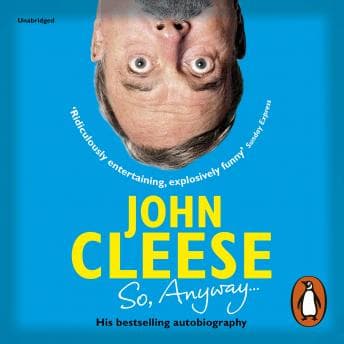
Cleese drops this line somewhere around the two-hour mark, and I actually laughed out loud during a faculty meeting. (Sorry, Martinez. But also, not sorry.) It's such a perfectly Cleesian admission—self-deprecating, precise, and somehow funnier for being completely sincere. The man who would become one of comedy's most influential figures spent his childhood being, by his own account, rather serious and anxious. This reminds me of what Hemingway said about writing—that the truest sentences come from the wounds. That same idea, finding truth in personal struggle, runs through Sergeant York and His People, though York's wounds were literal battlefields rather than boarding school anxieties. Cleese's wounds just happen to be hilarious.
The Long Road to the Ministry of Silly Walks
Here's where I have to be honest with you, and with myself. I came to this expecting Python. You probably did too. And if you're looking for behind-the-scenes tales of dead parrots and Spanish Inquisitions, you will be disappointed. The memoir essentially ends right as Monty Python is getting started—which is either a brilliant artistic choice or a setup for a sequel, depending on your level of cynicism.
But here's the thing I realized while walking the lakefront with Denise last Sunday, Cleese's voice in my ears and the wind off Lake Michigan trying to drown him out: this isn't a book about Python. It's a book about how comedy gets made. How a tall, awkward boy from Weston-super-Mare—and yes, he makes that name sound as dreary as you'd imagine—transforms into someone who can make millions of people laugh.
The early chapters are slow. I won't pretend otherwise. Some listeners have called it boring, even an ego trip. I understand that criticism. But as someone who's spent twenty years teaching young people how to read for subtext, I'd argue there's something more interesting happening. Cleese is showing us the soil before the flower. His nerve-racking first public appearance at St Peter's Preparatory School. The discovery that he could make people laugh—and more importantly, that making people laugh gave him power in a world where he otherwise felt powerless.
When the Author IS the Narrator
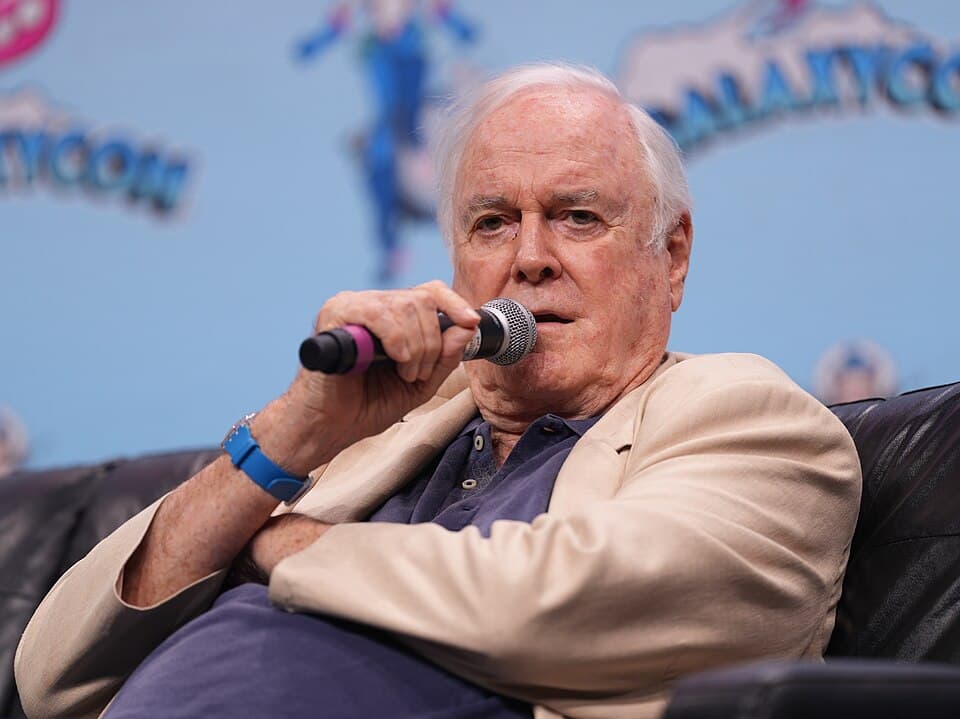
Let's talk about what makes this audiobook specifically worth your time, because this is where it earns its keep. John Cleese reading John Cleese isn't just appropriate—it's essential. No one else could perform this work.
His British baritone carries a permanent smirk, like he's perpetually on the verge of a joke even when discussing his parents' rather grim marriage. When he describes his early days at Cambridge with Graham Chapman, you can hear the affection underneath the comedy. The man actually laughs during his own anecdotes—not in a self-satisfied way, but like he's genuinely remembering something that still delights him. I heard that same genuine delight when listening to Fire and Fury—though there the laughter was more horrified disbelief at the chaos being described. It's endearing in a way that feels almost intimate.
The production includes actual TV and radio audio clips from his early work, which is a lovely touch. Hearing the original sketches rather than recreations adds an archival quality—like you're not just listening to a memoir but experiencing a curated museum exhibit of British comedy history.
What My Students Would Miss (And What I Nearly Did)
My students would hate this. I love it.
They'd find it too slow, too focused on a world that doesn't exist anymore, too concerned with the mechanics of comedy rather than the comedy itself. But there's a section—I wish I could give you the exact timestamp, but I was grading papers at 11 PM and lost track—where Cleese essentially delivers a primer on what makes things funny and why. It's the kind of thing you'd expect from a graduate seminar, delivered with the casual authority of someone who's spent sixty years thinking about it.
This is why we still read the classics, I kept thinking. Because understanding where something comes from helps you understand what it is. Cleese's partnership with David Frost, his work writing for Peter Sellers—these aren't just celebrity name-drops. They're the education of a comic mind.
The Frustrating Ending (Or Is It?)
I won't lie—when the book ended, I felt cheated. Thirteen and a half hours, and we barely get into the Python years? The Fawlty Towers stories I'd been anticipating never arrived. It's like reading a biography of Shakespeare that ends when he moves to London.
But then I thought about it while pretending to pay attention to another budget presentation. (I was definitely listening to your budget presentation, Martinez.) Maybe that's the point. Maybe Cleese is saying that the interesting part isn't the fame—it's the becoming. The man who walked into that BBC meeting, days away from becoming a lawyer, is more interesting than the man who emerged as a household name.
Or maybe he's just saving it for volume two. Either way, I'm in.
Who's Got Time for Thirteen Hours of Pre-Python?
If you want Python anecdotes and Fawlty Towers gossip, skip this—you'll be frustrated by hour three. But if you're curious about the mechanics of comedy, the making of a comic mind, or you simply want to hear Cleese tell stories in that perpetually amused baritone? Worth pausing the faculty meeting for. Worth the slow build. Worth hearing in his own voice, at 1.0x, because the author chose those words and the author chose how to say them.




![Steve Jobs [unabridged audiobook] audiobook cover](/_next/image?url=https%3A%2F%2Fcovers.audiobooks.com%2Fimages%2Fcovers%2Ffull%2F9788499923406.jpg&w=1920&q=75)