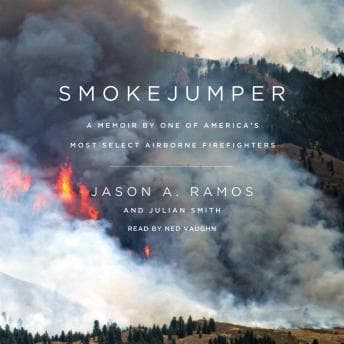

I was sitting in the break room at 2 AM, waiting for a trauma call that never came (knock on wood), scrolling my phone and half-listening to this when the passage about what firefighters might be thinking in their final moments hit me like a wall. I put my phone down. Stared at the vending machine. Had to just... sit with it for a minute. Because I know what it's like to be in a room where someone doesn't make it, and the way Ramos writes about loss - through Ned Vaughn's steady, no-drama delivery - felt like talking to a colleague who's seen the same things you have and doesn't need to dress it up.
Jumping Out of Perfectly Good Airplanes Into Fire
So here's what I didn't know before this book: smokejumpers parachute into wilderness areas so remote there are literally no roads, no trails, no nothing. They jump with 100+ pounds of gear, land in trees half the time, and then fight fires that can change direction in seconds - fire that can flow like liquid downhill behind wind. Ramos has been doing this for over 25 years, and the way he explains fire behavior made my brain light up the same way a good medical explanation does. He doesn't dumb it down but he doesn't drown you in jargon either. There's a section on how decades of fire suppression policy basically turned forests into tinderboxes, and it's the kind of systemic failure analysis that anyone in healthcare will recognize - the "we've been doing it this way forever" problem that eventually catches up with you.
At 5 hours and 27 minutes, it's tight. Ramos doesn't pad. He moves between his personal story, the history of the smokejumper program, and the science of wildfire in a way that kept me engaged even during the informational stretches. And the personal stuff - growing up, finding his way to this insane career - gives the technical material something to hang on.
Ned Vaughn's Voice Works. Mostly.
Here's where it gets complicated. Vaughn has this matter-of-fact delivery that's honestly perfect for the material. When he's reading Ramos's descriptions of fires and operations, you forget you're listening to someone who isn't the author. There's a sincerity to it - one listener nailed it when they said they kept forgetting Vaughn was just reading and not telling his own story. That's high praise for a narrator.
But. And there is a but. Every time dialogue comes up, Vaughn drops into this raspy affectation that pulled me right out. It's like he decided every smokejumper talks like they've been gargling gravel, and he commits to it every single time. It's not a dealbreaker - the book isn't dialogue-heavy - but when it happens, you notice. Also, some of the California-specific terms and place names don't quite land right. As someone who grew up hearing Tagalog and English and Spanish all mixed together at the dinner table, I'm probably more sensitive to pronunciation than most people. But if you're from the West Coast, you might flinch at a few of those.
The Part Where I Get Professional About It
What I respect about this book is that Ramos doesn't glorify the danger in a Hollywood way. He's honest about the fear, the physical toll, the friends lost. There's a passage where he's essentially sitting with the question of what goes through a firefighter's mind when they realize they're not getting out - and Vaughn reads it with exactly the right amount of restraint. No dramatic pauses, no vocal quiver. Just the words, delivered straight. That's the same energy I try to bring when I'm talking to a patient's family at 4 AM. You don't perform grief. You just tell the truth.
The book also made me think about how similar our worlds are - the brotherhood, the gallows humor, the way you process trauma by going back to work the next day. Ramos gets that without being precious about it. Carlos asked why I looked so serious when I came home that morning. I told him I'd been listening to a book about people who jump out of planes into forest fires. He said "and you think night shift is bad?" Fair point.
Who Should Grab This
If you're into memoirs from people who do genuinely dangerous work - not manufactured drama, actual life-and-death stakes - this is solid. People who liked Young Men and Fire by Norman Maclean will find a good companion here. Honestly, the only other nonfiction I've finished recently that had me this absorbed in a world I knew nothing about was Data and Goliath - completely different subject matter, but that same quality of someone who actually lives inside a complex system explaining it to you without talking down. It's also surprisingly educational about wildfire policy, which feels more relevant every year as the West burns. Skip it if you need a lot of character variety in your audiobooks or if dialogue-heavy sections are your thing - the narrator's raspy voice choice will bug you.
Night Shift Rx
Perfect for that post-shift decompression. Short enough to finish in a week of commutes, serious enough to hold your attention, and honest in a way that feels earned. The narrator mostly delivers, with a few quirks you'll either forgive or won't. I'm glad I listened. My mom would have no idea what a smokejumper is, but she'd appreciate the work ethic. (She still thinks I should've been a doctor.)