
What happens when the thing you love most becomes the weapon you use to destroy everything else?
I was three hours into this one, pulling into my driveway after a brutal night shift, and I couldn't get out of the car. Just sat there with the engine off, watching the sun come up over the oleanders, thinking about Mary Pat Fennessy and all the mothers I've seen in my trauma bay who would burn the world down for their kids. Carlos asked why I was crying in the car. I blamed allergies. He didn't buy it.
Southie Burns, and So Does Everything Else
Dennis Lehane doesn't write thrillers. He writes autopsies of neighborhoods. And Small Mercies is him cutting open 1974 Boston with a scalpel, showing us exactly how racism, poverty, and tribalism rot a community from the inside out.
Mary Pat Fennessy is looking for her daughter Jules, who didn't come home one night. Same night a young Black man dies on the subway tracks. Lehane lets you think you know where this is going. You don't.
The busing crisis—Boston's violent resistance to school desegregation—isn't just backdrop here. It's the accelerant poured on an already burning house. And Lehane doesn't flinch. The N-word flies constantly. The casual cruelty is documented with the precision of someone who grew up in this world and is now turning over every ugly stone. The way generational trauma and community loyalty twist into something monstrous? That rang true in ways that made my stomach turn.
Robin Miles Becomes Mary Pat
Robin Miles doesn't narrate this book. She inhabits it. Her Boston accent isn't the caricature you get from actors who learned it for a movie—it's the real thing, the dropped Rs and the flat vowels that sound like someone's been smoking Parliaments since Nixon was president.
But here's what got me: Miles makes Mary Pat sympathetic without ever letting her off the hook. This is a woman whose racism is baked into her bones, who loves her daughter fiercely while also being complicit in systems that destroy other people's children. Miles delivers her internal justifications with such conviction that you almost—almost—understand. And then you catch yourself, and you're horrified. That's acting.
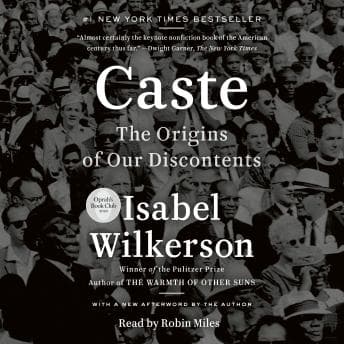
Robin Miles pulled the same trick on me in Caste—making you sit inside an ugly system's logic long enough to feel it, not just understand it intellectually.The emotional delivery during the scenes with Mary Pat's son Noel—a Vietnam vet with a heroin problem—physically hurt. Miles captures that particular exhaustion of loving an addict. I've held the hands of mothers like Mary Pat at 3 AM, waiting to see if their kid makes it through the night. She nailed it.
Power Isn't Dramatic. It's Bureaucratic.
Marty Butler, the Irish mob boss, is the kind of villain I wish more writers understood. He's not a mastermind. He's not even particularly smart. He's just a man who figured out that controlling the small things—who gets jobs, whose kid gets protected, whose complaints get heard—is how you own a neighborhood.
Lehane shows how the mob and the anti-busing movement feed each other. How racism becomes profitable. How good people become complicit because the alternative is losing everything. It's the kind of systems thinking that makes me want to hand this book to every administrator who's ever asked why certain communities don't "trust the system."
Who This Is For (And Who Should Skip)
If you loved Mystic River—and I mean really loved it, not just watched the movie—this is Lehane operating at that level again. Maybe higher. It's a revenge story that turns into something much harder to categorize.
Shutter Island has that same quality—you think you've clocked the genre, and then Lehane pulls the floor out from under you.Skip this if you need your protagonists likable. Mary Pat does terrible things. She does them for understandable reasons, but they're still terrible. If you can't sit with that discomfort for ten hours, this isn't your book.
Content warning: the racism is relentless and accurate to the era. Lehane doesn't sanitize 1974 Boston, and Miles doesn't soften it in the delivery. There's also significant violence, addiction, and one scene involving a teenager that made me pull over again.
Clocking Out on This One
I finished at 7:14 AM, still in my driveway, unable to go inside. Needed to sit with it.
My mom would love this (she still thinks I should've been a doctor). The family dynamics, the immigrant community loyalty, the way Mary Pat's love for her daughter becomes something dangerous—that's universal even when the specifics are Southie Irish.
Lehane wrote a thriller that's also an indictment. Miles delivered it with the kind of emotional precision that makes you forget you're listening to someone read. This is exactly how communities work when they're rotting from the inside. And that's the part that'll keep you up.