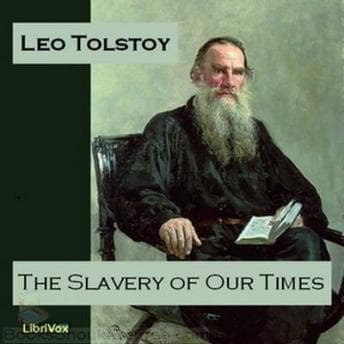

I was cleaning my Sig P320 at the kitchen table - Linda was already asleep - when I finished this one. Ranger looked up at me like he knew something had shifted. Under three hours, and Tolstoy managed to reframe how I think about economic systems. That's efficient. The old Russian would've made a decent briefing officer.
Let me cut to the chase: this isn't War and Peace. It's a philosophical essay, systematic and direct, about how modern economic structures create their own form of bondage. Tolstoy argues that wage labor, when combined with land monopoly and taxation, creates conditions where workers have no real choice but to accept whatever terms are offered. He calls it slavery without the chains.
When the Count Gets Political
Here's where it gets interesting for someone like me. I've seen governments operate in ways that would make your head spin - the gap between stated objectives and actual outcomes, the machinery of power grinding forward regardless of individual intentions. Tolstoy saw the same thing in 1900 Russia. His analysis of how governments, armies, and economic systems interlock to maintain control over labor? I've watched that play out in real life, just with different uniforms. Killing Kennedy examines similar machinery - how power structures operate behind the scenes, regardless of the individuals caught in them.
The book is organized almost like an operations order. He defines his terms, identifies the problem, traces the causal chain, and proposes a solution. Some listeners found this poorly organized - I disagree. It's methodical. Maybe too methodical for folks expecting storytelling, but I appreciated knowing exactly where he was going.
His core argument: modern workers aren't free because they can't access land independently, they're taxed into needing cash, and they must compete against each other for wages. The system isn't maintained by whips but by economic necessity backed by government force. Whether you agree with his conclusions or not, the logic chain is tight.
Maude Behind the Mic
Aylmer Maude was Tolstoy's actual translator and biographer - the man knew the material cold. The reading is straightforward, almost academic. No theatrical flourishes, no dramatic pauses. Just clear delivery of dense philosophical content.
Is it exciting? No. Is it appropriate for the material? Absolutely. This isn't a thriller. It's a treatise. Maude reads it like a treatise should be read - with clarity and respect for the ideas. Some folks might want to bump it to 1.5x or even 2x speed. I kept it at my usual 1.25x and found the pacing worked fine. The production is clean. No audio issues, no weird artifacts. Just a man reading Tolstoy's arguments about economic freedom and government coercion.
Where Tolstoy Loses Me
Here's my problem with the book, and it's a significant one. Tolstoy's solution - his principle of Non-Resistance - strikes me as operationally naive. He argues that if people simply refused to participate in government violence and coercion, the system would collapse. That's a lovely theory. I've been in rooms where violence was the only thing preventing worse violence. The world isn't populated entirely by people who respond to moral appeals.
He also tends to romanticize agricultural labor in a way that suggests he never actually had to survive on subsistence farming. Easy to praise simple peasant life when you're a count with an estate. The Short and Tragic Life of Robert Peace shows what happens when someone actually tries to bridge those economic gaps Tolstoy theorizes about - the real cost of moving between worlds. (Ranger just snorted. Even the dog's skeptical.)
But here's the thing - disagreeing with Tolstoy is productive. His framework forces you to articulate why you disagree, which means you're actually thinking. That's more than most books accomplish.
Who's This Op For?
This is for people who like their philosophy systematic rather than flowery. If you want Tolstoy the novelist, look elsewhere. If you want Tolstoy the political philosopher laying out his case like a prosecutor, this delivers. Skip it if you need narrative, characters, or any form of entertainment. This is education, not recreation.
Mission Debrief
At 2 hours 48 minutes, this is a short commitment with a high return on investment. You'll either find yourself nodding along with Tolstoy's critique of economic coercion, or you'll be sharpening your counterarguments. Either way, you're engaging with ideas that haven't gotten less relevant in 120 years.
For a morning commute or a long wait at the airport, it's exactly the right length to consume in one sitting and spend the rest of the day processing. Mission accomplished, with reservations about the exit strategy. Ranger approved - though he fell asleep during the chapter on taxation. Can't blame him.






![Steve Jobs [unabridged audiobook] audiobook cover](/_next/image?url=https%3A%2F%2Fcovers.audiobooks.com%2Fimages%2Fcovers%2Ffull%2F9788499923406.jpg&w=1920&q=75)