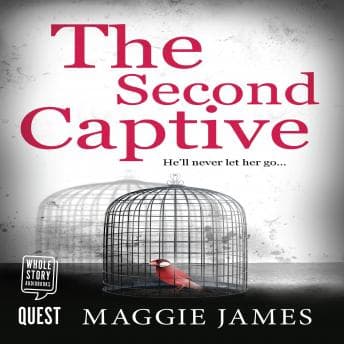

I was sitting alone in the kitchen last Saturday night. Denise was at her sister's, the papers were graded for once, and I'd poured myself something cheap and red. I put this on because the queue suggested it and I had seven hours to kill. By hour two I'd stopped drinking. Not because the wine was bad. Because it felt wrong to be comfortable.
Sarah Forsyth was nineteen. Nineteen. I teach nineteen-year-olds. I watch them stress about prom dates and college essays and whether their TikTok got enough views. Sarah, at that same age, answered a newspaper ad for a childcare job in Amsterdam, stepped off a plane, and was swallowed whole by a trafficking network that fed her cocaine, put a gun to her head, and forced her into prostitution in the Red Light District. The gap between those two realities - my students' world and Sarah's - sat in my chest like a stone for the entire listen.
The Architecture of a Trap
What struck me hardest wasn't the violence itself, though there's plenty. It's the engineering of it. The book lays out how traffickers construct dependency with surgical precision - the drugs to create addiction, the isolation from anyone who speaks your language, the systematic destruction of self-worth until the victim genuinely believes escape is impossible. Sarah's childhood, already marked by abuse and instability, made her the exact profile these predators hunt for. The book doesn't rush past that setup. It spends real time on her early years in the UK, the institutional failures, the gaps in care that left a young woman vulnerable enough to trust a newspaper ad. This reminds me of what Hemingway said about the iceberg theory - the real horror is everything beneath the surface, the systems that allow this to happen.
Tim Tate, the co-author, clearly did the structural work of shaping Sarah's account into a narrative that builds rather than just catalogues trauma. And that matters here, because this could easily have become misery tourism. Instead there's a deliberate progression - childhood, grooming, entrapment, the Red Light District, and eventually Sarah's fight through the Dutch legal system to be recognized as a trafficking victim rather than a criminal. That legal battle is where the book finds its backbone. Sarah went up against institutional indifference in the Netherlands and won a landmark ruling. The prose deserves to be savored in those sections - not because it's beautiful, but because it's precise about bureaucratic cruelty in a way that makes you angry at the right things.
Charlie Sanderson and the Problem of Male Narration
Let's talk about what the author is really saying - and who's saying it in your ear. Charlie Sanderson narrates a woman's first-person account of sexual slavery. That's an inherently strange choice, and I want to be honest: it never fully stops being strange. Sanderson keeps his tone measured and steady, which is probably the right call. He doesn't lean into melodrama during the worst passages, and the pacing stays controlled even when the content is unbearable. There's a restraint in his delivery during the Red Light District chapters that actually amplifies the horror - the flatness of his voice against what's being described creates this awful cognitive dissonance. The narrator understands that pause is punctuation, and he uses silence well in the spaces between Sarah's worst memories.
But. A male voice telling you "I was raped" in first person is a thing you have to actively metabolize as a listener. Some moments - particularly the early trafficking scenes where Sarah describes being broken in - I found myself wishing for a female narrator, not because Sanderson fails technically, but because the performance creates a layer of remove that might not serve the material. His accent work distinguishing between Sarah's Northeast English roots and the Dutch and Eastern European figures around her is competent, if not spectacular. You can tell who's speaking. That's enough.
I should note: at under seven hours, this is a tight listen. There's no padding. No chapters that feel like filler. The pacing never drags, which is a credit to the editorial structure.
Who Needs to Hear This (and Who Should Prepare Themselves)
If you read Zana Muhsen's Sold or Kristof and WuDunn's Half the Sky, this is its spiritual successor in the trafficking memoir space - but more granular, more personal, and set in Western Europe rather than somewhere Americans can comfortably distance themselves from. I'd also say that if the fictional treatment of predatory control is something you can stomach after this, Quiet Tenant does something unusually serious with that same architecture of psychological captivity - though sitting with it right after Sarah's story might be a lot to ask of yourself in one week. Amsterdam. A place people visit on vacation. That's the point.
Content warning, and I mean this seriously: this book describes sexual violence, drug abuse, and psychological torture in explicit detail. It's not gratuitous - it's documentary. But know what you're walking into. My students would hate this. Not because it's bad, but because it's real in a way that fiction lets you dodge.
If you work in education, social services, or criminal justice, this should be required listening. If you're a human being who's ever walked past a red-light window in any European city and not thought twice - this should be required listening too.
Worth Pausing the Faculty Meeting For
I finished this around 1 AM, sitting in the same kitchen chair, wine untouched. I thought about the girl in my third-period class who's always tired, always jumpy, who flinches when boys get loud. I'm not saying anything's wrong. I'm saying this book rewired how I pay attention. That's not nothing. That's the whole thing.