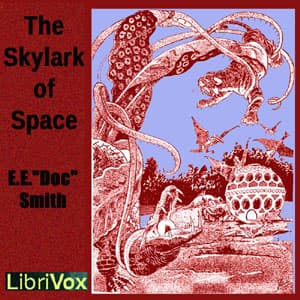

Everyone talks about Dune as the grandfather of space opera. Foundation gets thrown around. But E.E. Smith? The actual father of the genre? He's sitting in the corner of the party wondering why nobody remembers him. I was supposed to be debugging my procedural terrain generator at 2 AM, but instead I fell down a Wikipedia hole about pulp sci-fi origins and ended up committing to nearly ten hours of the book that basically invented interstellar adventure fiction.
And honestly? It's wild. In ways both good and deeply, hilariously dated.
The Magic System is... Wait, It's 1928?
Okay so here's the thing—Richard Seaton accidentally discovers clean nuclear power that manipulates gravity fields, and within like two chapters he's built a flying belt and is planning an interstellar spaceship. The progression is satisfying in that old-school pulp way where problems exist to be solved by SCIENCE and the hero is competent enough to just... do it. My D&D group would absolutely try to break a campaign with this kind of power escalation. "Oh, your villain has a slightly bigger ship? Cool, I'll just ally with an even MORE powerful alien race."
Smith basically invented the trope of escalating stakes through technological one-upmanship. Every time Seaton and his nemesis DuQuesne face off, they're wielding bigger toys than before. It's like watching a cosmic arms race written by someone who genuinely believed science would solve everything. (He was a food engineer by trade, which somehow makes this more charming.)
The galaxy-building is ambitious for its era. Multiple alien civilizations, interstellar politics, the works. But it's painted in broad strokes. You're not getting Sanderson-level magic system rules here—honestly, the closest modern equivalent I've found to Smith's gleeful scope is Return of the King, which also prioritizes epic scale over mechanical precision. Smith is more interested in the VIBE of cosmic adventure than the mechanics. Which is fine! It's just a different kind of read.
Where the Rust Shows
I'm not gonna lie to you—this book is nearly a hundred years old and it FEELS like it. The dialogue is stiff in that "golly gee whiz" way. The female characters exist primarily to be rescued or admired. There's a romance subplot that made me physically cringe at my desk. The pacing lurches between breakneck action and weirdly detailed technical exposition that reads like someone explaining their homebrew spaceship rules.
And the narrator situation is... interesting. Lee Hawkins Garby actually co-wrote the first part of the novel with Smith, which is a fun bit of trivia. But the audiobook production doesn't give me much to work with—this feels like a straightforward LibriVox-style reading rather than a dramatic performance. Functional, not theatrical. If you're coming from Tim Gerard Reynolds or Steven Pacey productions, adjust your expectations way down.
The nine-and-a-half hour runtime is actually pretty manageable. I bumped it to 1.25x speed during the more exposition-heavy sections and it helped considerably. At normal speed, some of the technical passages drag.
Who Should Strap Into This Skylark (And Who Should Stay Grounded)
This is for the completionists. The genre historians. The people who want to understand where Lensman came from, where space opera got its DNA. If you've ever wondered why so many sci-fi tropes feel familiar, it's because Smith basically invented half of them.
But if you need polished prose, modern sensibilities, or a narrator who does distinct voices for every character? Skip this one. This is reading the ur-text, not experiencing a refined adaptation of it.
My thesis advisor would be horrified to know I spent a week listening to 1928 pulp fiction instead of working on my procedural generation chapter. (Sorry, Dr. Patel. The Skylark wasn't going to listen to itself.)
Worth Rolling the Dice?
Here's my honest take: The Skylark of Space is historically important and genuinely fun if you can vibe with its era. The escalating space battles, the gleeful technobabble, the sheer audacity of the scope—it's all here. But it's also dated, the audio production is bare-bones, and you need to come in with the right expectations.
For genre nerds who want to understand their roots? Absolutely worth the time. For casual listeners looking for their next great audio experience? There are better entry points to space opera. This is the archaeological dig, not the museum exhibit.