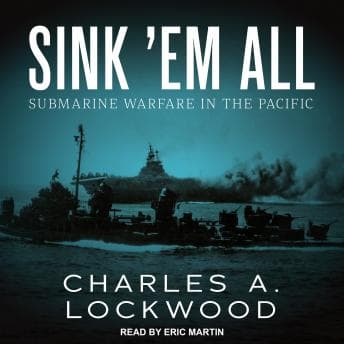

I was stripping down my Sig Sauer P320 in the garage when I started this one. There's something about the smell of Hoppe's No. 9 solvent that pairs perfectly with naval history. Ranger, my German Shepherd, was asleep on the concrete floor, twitching his paws—probably chasing squirrels in his dreams. I was chasing U-boats.
Let me cut to the chase: If you want the Hollywood version of submarine warfare where everyone is sweating and whispering, go watch a movie. If you want to know how the war in the Pacific was actually won, you listen to Vice Admiral Charles Lockwood. This isn't a historian guessing what happened from a dusty archive. This is ComSubPac. The man who sat at the desk, issued the orders, and had to write the letters home when the boats didn't come back.
The Mark 14 Torpedo Scandal
The first third of this book made my blood boil. And it should. Lockwood details the absolute incompetence of the Bureau of Ordnance regarding the Mark 14 torpedo. Imagine sending your men out to face the Japanese Imperial Navy, they fire a perfect shot, hear the clang against the hull, and... nothing. Duds. Deep runners. It's a leadership nightmare. Lockwood's frustration is palpable, even through the audio. He fought his own bureaucracy as hard as he fought the enemy. Different battlefield, same rot: Black Edge shows what happens when smart men decide the rules are for other people. As a guy who runs a security firm now, the lesson on equipment reliability vs. bureaucratic arrogance hit home hard.
Ice Cream, Clean Sheets, and Winning Wars
Most civilians think war is just shooting. Lockwood knows it's about ice cream and clean sheets. He spends a surprising amount of time talking about the Royal Hawaiian Hotel and how he fought to get his crews rest and relaxation between patrols. He understood that a burnt-out skipper makes mistakes. I appreciated this angle—it's the side of command you rarely see in the history books.
Eric Jason Martin at the Helm
Martin doesn't try to be a grizzled sea captain, and I thank him for it. No fake gruff voices or over-acted combat scenes. He treats the text with the respect of an official record. His delivery is crisp, professional, and stays out of the way. I heard that same no-nonsense control in Cleaning the Gold, though Reacher and Trent are a long way from Pearl Harbor. He handles the naval nomenclature—hull numbers, coordinates, torpedo types—without stumbling. It sounds like a very long, very detailed debriefing, which is exactly what I wanted.
Mission Assessment
This is old school. Written in 1951, so you don't get modern revisionism. You get the raw, immediate reaction of the guy who was there. It's 16 hours of logistics, tactics, and the cold hard math of attrition.
Who's This For? If you're the type who gets bored when things aren't exploding every five minutes, skip it. But if you want to understand the operational art of the Silent Service—the planning, the failures, the bureaucratic knife-fights—this is mandatory listening.





![Steve Jobs [unabridged audiobook] audiobook cover](/_next/image?url=https%3A%2F%2Fcovers.audiobooks.com%2Fimages%2Fcovers%2Ffull%2F9788499923406.jpg&w=1920&q=75)