
Two AM. Couldn't sleep. The kind of restless night where your brain won't shut up about tomorrow's budget meeting and whether you remembered to feed Shirley before bed. (I did. She's just dramatic.) So I figured - legal thriller. Courtroom drama. That'll either knock me out or keep me company until dawn.
It kept me company.
The First Hour Is a Test of Faith
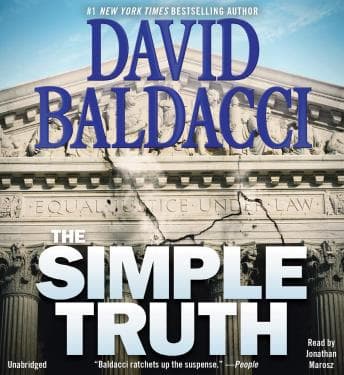
Let me be upfront: Jonathan Marosz's narration starts rough. Like, genuinely off-putting rough. There's this nasal, almost sing-songy quality to his delivery in the opening chapters that had me checking if I'd accidentally hit some weird audio setting. I nearly bailed. And look, I've sat through narrators who clearly didn't understand the material, who phoned it in, who treated horror like a grocery list. Serpentine had a similar issue with pacing in the first act, though the narrator there committed from the start. This wasn't incompetence - it was something else. Almost like Marosz was finding his footing, testing the waters of Baldacci's world before committing.
By hour three? Different narrator. I don't know what happened, but suddenly the characters started breathing. His dialogue work sharpens considerably - you can actually hear the difference between John Fiske's cop-turned-lawyer practicality and the polished evasiveness of the Supreme Court players. It's subtle, all tone shifts rather than distinct voices, but it works. The courtroom scenes especially benefit from this transformation. When justices are debating, when the legal machinery starts grinding, Marosz finally commits.
That's rare.
Baldacci Doing His Grisham Impression (And It Works)
This isn't the Baldacci I expected. No high-octane action sequences, no government conspiracies with explosions. The Simple Truth reads more like early Grisham - procedural, methodical, deeply invested in how the law actually functions (and fails). The setup is classic thriller architecture: Michael Fiske takes a prisoner's letter from the Supreme Court, breaks about seventeen ethical rules, and ends up dead. His brother John starts digging. Rufus Harms, the prisoner, escapes and runs. Nine Perfect Strangers uses that same structure - someone dies, secrets unravel, everyone's hiding something.
The twenty-five-year-old crime at the center of everything? Baldacci parcels out the truth in careful doses. And honestly, some of it you'll see coming. The plot isn't reinventing the wheel - it's executing a familiar pattern with enough craft to keep you invested. The ending veers into what some listeners have called "god stuff," a spiritual resolution that felt... unnecessary to me. Like Baldacci wasn't sure how to land the plane emotionally, so he reached for something transcendent instead of trusting the human drama he'd built.
But the courtroom confrontations? The investigation sequences where John pieces together what his brother stumbled into? Those work. Really work.
Thirteen Hours Demands Your Attention
Here's the thing about legal thrillers in audio form: you can't half-listen. This isn't background noise for folding laundry. The procedural details, the character connections, the slow reveal of who knew what and when - miss a section and you're lost. I ended up rewinding more than once during my 2 AM session, and I was trying to pay attention.
The pacing is deliberate. Some would say slow. I'd say it matches the subject matter - legal processes aren't fast, and Baldacci respects that reality even when it tests your patience. If you're coming off something action-packed, recalibrate your expectations. This is a simmer, not a boil.
Who Gets the Summons, Who Gets Dismissed
This is for the Grisham completists, the legal drama addicts, the people who find courtroom procedure genuinely fascinating rather than sleep-inducing. If you loved The Firm or A Time to Kill, Baldacci's playing in that sandbox here. Long-drive listeners, road trippers with hours to kill - you're the target audience. The 13-hour runtime demands commitment, and the complexity rewards it.
Skip if: you need your thrillers fast and furious, you can't tolerate a narrator finding his groove, or you're looking for something to fall asleep to. The slow burn will frustrate you, and the early narration might drive you away before it gets good.
Fair warning - there's violence, language, and some sexual content. Nothing gratuitous, but it's there.
The Verdict from the Night Shift
Okay, this isn't horror. Obviously. But there's something unsettling about institutional corruption, about how systems designed for justice can be weaponized against the vulnerable. Rufus Harms's situation - a man who's been in prison for decades for reasons that don't quite add up - carries its own kind of dread. The horror of bureaucracy. The terror of being trapped by paperwork and powerful people.
Marosz eventually captures that weight. Eventually. Push through the first hour, adjust your expectations from Baldacci's usual pace, and there's a solid legal thriller here. Not a masterclass, not essential listening. But competent, engaging once it finds its rhythm, and worth the credit if this is your genre.
Shirley (my cat) was unimpressed. But she's unimpressed by everything that isn't wet food or 3 AM zoomies.