
Everyone told me this was a quick, fun horror listen. And they're right - but nobody mentioned the slow-burn first half that nearly made me tap out.
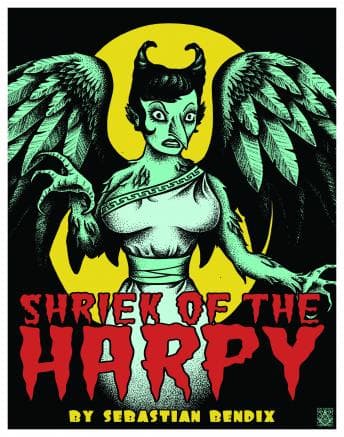
I was up past midnight with a bourbon and a restless dog. Ranger had one of those nights where every sound outside needed investigating, so I figured I'd knock out something short while we both settled down. At 1 hour and 18 minutes, Shriek of the Harpy seemed like the perfect late-night snack. And honestly? By the time it was done, I was wide awake for different reasons.
The Setup Feels Like a Briefing That Won't End
Let me cut to the chase - the first thirty-odd minutes of this thing tested my patience. Muriel Sharpe is a film archivist with a chip on her shoulder the size of a JDAM, and we spend a lot of time marinating in her resentment toward her employers before anything actually happens. There's some blog-style material woven into the narrative that feels like it wandered in from a different story entirely. It didn't match the tone of the main thread, and I kept waiting for the horror to kick in.
But here's what I didn't expect: the premise actually hooked me despite the slow ramp. A bitter film archivist discovers a cache of lost golden-age Hollywood prints in a derelict movie theater and decides to run her own private film festival instead of reporting them? That's a genuinely clever setup. Bendix clearly knows his classic cinema - the guy runs a horror film series in LA called Friday Night Frights, and that obsessive film-nerd energy bleeds through every description of dusty reels and crumbling theater seats. When Muriel threads up the infamous Shriek of the Harpy - a fictional horror picture from a sadistic director - the atmosphere shifts hard.
When the Celluloid Bites Back
This is where it got interesting for me. The intersection of film-as-artifact and film-as-weapon is something I haven't encountered in horror before. The mythology Bendix builds around this cursed picture - a harpy drawn from ancient Greek tradition, weaponized by a misogynist filmmaker - has real teeth. Once the horror starts, the line between what Muriel is seeing on screen and what's happening to her gets genuinely unsettling. Hallucination, madness, or something crawling out of the celluloid? The story keeps you guessing.
I've seen plenty of "cursed object" horror. This one works because the object isn't just cursed - it was designed to be cruel. Shots in the Dark scratched a similar itch for me - another horror listen where the real menace is baked into human intention rather than some ancient, impersonal evil. The director within the story intended his film to punish, and that intentionality gives the horror a different flavor than your standard haunted-house fare.
Now - the dual narration. Jennifer Yarbrough and Sebastian Bendix (the author himself) share duties here. At this length, it's basically a long short story, so there's not a ton of room for either narrator to stretch out. I would've liked more range from both - the production is clean enough, but nobody's going to point to this as a showcase performance. It gets the job done. Bendix narrating his own work brings an authenticity to the film-world details that a hired gun might not have nailed, but I can see how some listeners might want a single, more polished voice carrying the whole thing.
The 78-Minute Question
Worth your time? Here's the debrief. At just over an hour, this is barely longer than an episode of whatever streaming show you're binging. The back half delivers genuine creepiness and a satisfying ending that doesn't cop out. The front half asks for patience you might not want to give something this short.
Film buffs will get more out of this than the average listener - the golden-age theater setting and classic horror references clearly come from someone who lives and breathes that world. If you don't care about celluloid nostalgia, about half the story's charm evaporates.
Here's my honest assessment: this is a solid piece of short-form horror fiction with a unique premise and a genuinely interesting monster mythology, hampered by a first act that doesn't earn its runtime and a production that's adequate rather than memorable. It's the kind of thing you listen to on a sleepless night when you want something with bite but don't want to commit to a full novel.
Ranger fell asleep before the harpy showed up. His loss.
Who's Rolling This Film
Horror fans who appreciate old Hollywood atmosphere and don't mind a slow build in a short package - this is your midnight screening. If you need wall-to-wall action or you've never cared about the romance of actual film projection, you'll probably check out during the setup. And if you're spending a credit on this, know that you're getting barely over an hour. Stream it if you can.