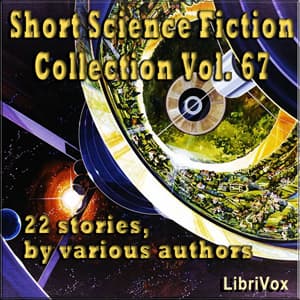

Three AM. Production alert firing, dashboards all green (which somehow makes it worse), and I'm too wired to sleep but too fried to actually debug anything. So I did what any reasonable engineer does—grabbed a free audiobook collection and let vintage sci-fi wash over me while I waited for the next alert.
Collection 067 specifically. Not 066, not 068. This one. And honestly? It became my weird little companion for a week of fragmented, chaotic listening.
The Potluck Dinner of Public Domain Fiction
Let me be upfront about the LibriVox model: volunteer readers, variable quality, zero production budget. You're getting the audio equivalent of open-source software—sometimes brilliantly maintained, sometimes clearly someone's weekend project that never got a second pass.
The variance here is real. One story had a narrator recording in what sounded like a closet (in a good way—clean, intimate). Another had that unmistakable laptop-mic-in-an-echoey-room quality. But here's the thing: I've sat through enough conference calls with worse audio. If you can handle a Zoom meeting with someone's dog barking, you can handle LibriVox.
What actually surprised me was catching Mack Reynolds' "Adaptation" in this collection. Reynolds was basically writing about cultural imperialism and economic systems in space before it was cool—the guy predicted gig economy dynamics in the 1960s, I swear. His story here isn't his most famous work, but it's got that same sharp edge about how societies absorb outsiders. Made me think about onboarding documentation, weirdly enough.
And then there's Philip K. Dick's "The Variable Man"—yeah, THAT Philip K. Dick. Pre-Blade Runner, pre-everything. It's this wild premise about a guy from the past who can fix anything but nobody understands how, dropped into a future that's forgotten how to improvise. As someone who's debugged legacy systems written by engineers who left no documentation, I felt that story in my bones. The narrator for this one clearly got the material—you could hear the tension ratcheting up during the war council scenes.
Why 1950s Speculative Fiction Hits Different at 1.75x
I bumped my usual 1.5x to 1.75x for some of the slower readers, and honestly? A few of these stories could've been blog posts. (The irony of saying that about magazine fiction from the Eisenhower era isn't lost on me.) But the ideas are fascinating time capsules. These writers didn't know they were inventing tropes—they were just riffing on "what if" with zero genre conventions to follow.
If you want to see where those seeds eventually grew, Second Foundation shows what happens when Asimov took similar concepts and built entire civilizations around them. But there's something about catching the ideas in their raw, unpolished form that's genuinely interesting. The earnest optimism is almost alien now. These writers really believed science would solve everything.
The ROI on Free Content
Here's my math: 6 hours 47 minutes, zero dollars. Maybe 60% genuinely good listening. That's 4+ hours of decent sci-fi for the cost of nothing. The stories are short enough that if one isn't landing—and a couple didn't for me—another starts in 15-20 minutes. Self-correcting system.
Perfect for: background during code reviews, late-night monitoring, those weird gaps between meetings. Skip for: dedicated listening where you want consistent quality, or if audio variance genuinely bothers you.
I skipped forward twice when dry narrator plus slow plot wasn't working. No guilt. That's the beauty of collections—you're not abandoning a book, you're just changing the channel.
Who Gets Value Here (And Who Doesn't)
If you're curious about sci-fi's roots but don't want to commit to full novels, this is your sampler platter. If you need something for fragmented listening sessions, short stories are ideal. If you're a LibriVox skeptic expecting Ray Porter quality, this won't convert you.
But if you're like me and you've got hours to fill with something that doesn't require your full attention? It's basically a free podcast feed of vintage speculative fiction. Some episodes are great (the Dick and Reynolds stories genuinely surprised me), some are meh, and you can skip freely.
git push --force
Bottom Line: Worth your commute if you calibrate expectations. Free, variable, and a surprisingly effective way to absorb the DNA of modern sci-fi. I finished it across 8 fragmented sessions over two weeks. Not every story landed, but "The Variable Man" alone was worth the download.
Just keep that skip-forward button handy.