
Why are we so terrified of our own messy bits? You know—the jealousy, the rage, the part of you that secretly hopes your ex's new partner has terrible taste in shoes. (Okay, maybe that's just me.)
Carl Jung called it the Shadow. I call it job security for psychologists.
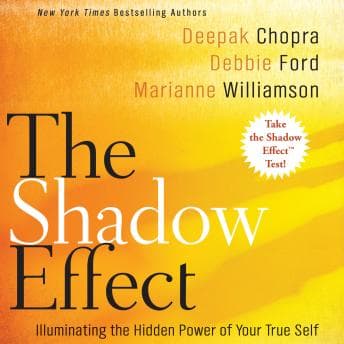
I picked up The Shadow Effect hoping for a rigorous breakdown of repression mechanisms. What I got was... well, a bit of a mixed bag. It's essentially three separate lectures trench-coated together into a single audiobook. And let me tell you, the transition between these narrators gave me emotional whiplash.
The Jungian Elephant in the Room
Here's the thing about Shadow work: it's not cute. It's ugly. It's looking at the parts of yourself you've spent decades shoving into the basement and realizing they're running the house.
The content here is actually solid—basically Jungian psychology repackaged for the Oprah crowd. And you know what? I'm not mad at it. The premise—that suppressing our "dark side" only makes it stronger—is backed by plenty of research (and about half the papers I've graded this semester). The authors argue that we need to embrace the mess to be whole. For practical tools on dealing with that mess when it inevitably surfaces, Emotional First Aid offers concrete strategies I actually recommend to students.
My mother would say we just need to pray more and stop complaining. But psychologically? This tracks.
Three Voices, Three Vibes
I listened to this during my morning loop around Cambridge, and I have to agree with the general consensus: the casting here is chaotic.
First, you have Deepak Chopra. Look, the man is brilliant. But his voice? It's a sedative. I was listening to his section near the Harvard Bridge and I swear I almost sleep-walked into the Charles River. He's monotone, meditative, and completely dangerous if you're operating heavy machinery. Or trying to stay awake. The material is deep, but the delivery is so flat it's hard to absorb.
Then—bam—Marianne Williamson shows up.
She is the absolute star here. Her narration has this fierce, urgent energy that grabs you by the shoulders. She articulates the pain of the human condition in a way that feels personal. While Chopra feels like a lecture, Williamson feels like a confession. That kind of raw emotional honesty reminds me why I gave Art of Seduction a reluctant 3.5 stars—Greene understands human darkness but lacks Williamson's compassion. I found myself actually stopping on the sidewalk to rewind her sections.
And then there's Debbie Ford. I wanted to like her section more—she's the one who really systematized this stuff—but the delivery felt a bit... scripted? A little too "self-help seminar" for my taste. It dragged.
Who's This Actually For?
Skip this if you want a polished, cohesive narrative—three friends who couldn't agree on a presentation style just did their own things. But if you're curious about why you keep sabotaging your own happiness, or you're new to Shadow work and want an accessible entry point, give it a listen. Williamson's section alone is worth the price of admission.
The Psychologist's Prescription
Is this a perfect audiobook? No. The structure is clunky.
But is it useful? Surprisingly, yes.
Just maybe speed up Chopra's section to 1.5x speed. Or 2.0x.
(Don't tell him I said that.)