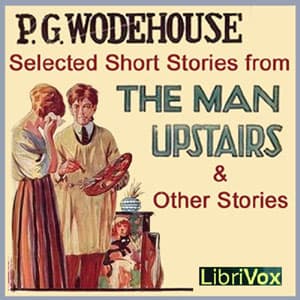

I went into this collection expecting Jeeves. Or Blandings Castle. Or at least Psmith making sardonic observations about capitalism. What I got instead was Wodehouse without his usual suspects - and honestly? It reminded me why the man could write circles around most humorists even when he wasn't leaning on his beloved recurring characters.
These stories are what I'd call "Wodehouse unplugged." No safety net of familiar faces, just pure comic craftsmanship applied to love-struck young men, scheming relatives, and the peculiar social anxieties of Edwardian England. And Mike Harris narrates them like he genuinely understands that Wodehouse's humor lives in the pauses as much as the punchlines.
The Voice That Gets the Joke
Here's what separates a good Wodehouse narrator from a great one: timing. The man wrote sentences that unfold like elaborate mechanical toys - you can see the gears turning, anticipate the spring, and still laugh when it goes off. Harris gets this. His pacing isn't rushed, which is crucial. I've heard narrators race through Wodehouse like they're trying to catch a train, and it murders the comedy.
Harris takes his time. He differentiates characters cleanly without turning them into cartoons, which is harder than it sounds when you're dealing with a parade of befuddled young aristocrats and formidable aunts. There's warmth in his delivery that matches Wodehouse's fundamental affection for his ridiculous creations. These aren't cruel caricatures - they're gentle mockeries of human foolishness, and Harris seems to understand that.
I listened to most of this during my lakefront walks with Denise, and she kept asking why I was grinning like an idiot. Hard to explain that a story about a young man's catastrophically misguided attempt at romantic poetry was making my morning. But there it was.
Why These Stories Still Work
My students - the ones who actually do the reading, bless them - often ask why we still teach literature from a century ago. And I tell them it's because human nature doesn't change, just the costumes. Wodehouse understood that young men will always make fools of themselves over women, that family politics will always be treacherous, and that social pretension will always be absurd.
These stories aren't deep. Let me be clear about that. If you want psychological complexity or moral ambiguity, Wodehouse is not your man. But what he offers is something equally valuable: perfectly constructed comic machinery. Every simile lands. Every escalation of disaster follows logical absurdist rules. It's like watching a master watchmaker at work, except the watch occasionally explodes in someone's face.
The romance plots are light as meringue - will young Archibald win the hand of fair Gwendolyn despite the interference of her dragon of a mother? You know he will. The pleasure isn't in the destination but in watching Wodehouse choreograph the chaos of getting there.
The Classroom Connection (Stay With Me Here)
I teach Hemingway. I teach Fitzgerald. I teach the weight of American literature pressing down on teenagers who'd rather be anywhere else. I get that same weight with Sing, Unburied, Sing - beautiful, necessary, but heavy in a way Wodehouse never is. And sometimes I wish I could slip in some Wodehouse just to remind them that prose mastery doesn't require suffering.
Because make no mistake - Wodehouse was a master of his craft. Those seemingly effortless sentences? They're constructed with the precision of a Swiss watch. The way he builds a metaphor, extends it past the point of reason, then somehow lands it perfectly? That's craft. Real craft.
My students would probably hate these stories. The social world is too foreign, the concerns too trivial by modern standards. But I loved them. Sometimes you need literature that doesn't ask anything of you except that you appreciate a well-turned phrase and a perfectly timed disaster.
The Ideal Listening Scenario
This is not an audiobook for intense focus. It's not going to change your life or make you reconsider your fundamental assumptions about existence. What it will do is make your commute better. Make your morning walk lighter. Give you something pleasant to half-listen to while grading papers at 11 PM. (Not that I do that. Okay, I absolutely do that.)
At just under six hours, it's the perfect length - substantial enough to feel like you're getting somewhere, short enough that individual stories don't overstay their welcome. Harris's clear delivery means you can zone out for a moment and still pick up the thread without rewinding.
Who Should Listen (And Who Should Skip)
If you've never read Wodehouse, this is actually a decent entry point. You don't need to know Jeeves or Blandings to appreciate these standalone comedies. And if you're already a fan, it's like finding a box of chocolates you forgot you had - familiar pleasures in slightly different packaging. Skip it if you need psychological depth or can't stomach Edwardian social concerns - these stories won't convert you.
Worth the listen. Worth savoring at 1.0x. Worth remembering that sometimes the best literature is the kind that simply makes you happy.