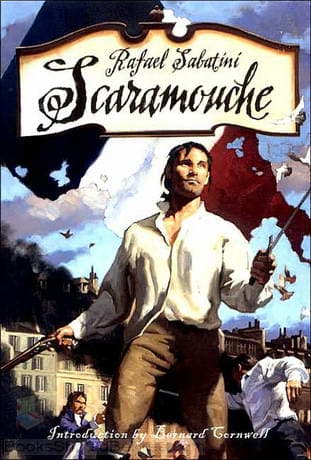

"He was born with a gift of laughter and a sense that the world was mad."
That opening line. I've taught it for fifteen years, and every single time I read it aloud to my sophomores, at least one kid sits up straighter. Sabatini knew exactly what he was doing—he gave us the entire thesis of the novel in seventeen words. And honestly? Listening to Gordon McKenzie deliver it through my earbuds while walking the lakefront last Tuesday, I got chills. Again. After all these years.
Look, I'll be upfront: Scaramouche is one of those books I assign specifically because I want teenagers to understand that "old" doesn't mean "boring." The French Revolution through the eyes of a man who becomes a revolutionary almost by accident, who stumbles into swordsmanship, acting, law, and love with equal parts brilliance and buffoonery—this is the novel that made me fall in love with historical fiction back in grad school.
When the Prose Demands 1.0x
Seventeen hours is a commitment. My wife Denise kept asking if I was ever going to finish "that French thing," and I kept telling her that you don't rush Sabatini. The man wrote sentences that deserve to breathe. McKenzie seems to understand this—his pacing gives the language room to unfold, which I appreciated more than I can say.
But here's the thing. Some reviewers have complained that McKenzie doesn't differentiate the characters enough, and... yeah, I can see it. During the political debates in the National Assembly (and there are several), I occasionally lost track of who was speaking. André-Louis Moreau's voice isn't always distinct from the Marquis de La Tour d'Azyr, and when you're grading papers at 11PM while listening, that matters.
(Don't tell my students I grade while listening to audiobooks. They already think I don't read their essays carefully. They're wrong. Mostly.)
The accent question is interesting. Some folks online have noted it's not quite "authentic" to the period and setting—but honestly, what would authentic even sound like? We're not doing a documentary here. McKenzie's approach is theatrical without being over-the-top, which fits the commedia dell'arte spirit of the whole enterprise. Scaramouche is a performer. The narration should feel like a performance.
The Dumas Question (Because Someone Always Asks)
Every time I recommend Scaramouche, someone says "Oh, like The Three Musketeers?" And yes. But also no.
Sabatini was clearly influenced by Dumas—you can't write swashbuckling adventure without tipping your hat to the master. But where Dumas gives you camaraderie and honor, Sabatini gives you irony and rage. André-Louis doesn't become a revolutionary because he believes in liberty, égalité, fraternité. He becomes one because his best friend was murdered by an aristocrat who faced no consequences. The idealism comes later, almost reluctantly.
This is why I keep teaching it. The cynicism feels modern. My students—the ones who actually read it—always say it reminds them of watching someone get radicalized on the internet. That same tension between chaos and control shows up in Edge, though in a completely different context. (I'm not sure that's the comparison Sabatini intended, but I'll take it.)
If you loved The Scarlet Pimpernel, this is its angrier, more complicated cousin. Less disguises, more dueling. Less romance, more... well, actually there's plenty of romance, but it's messier.
Where McKenzie Earns His Keep
The swordfighting scenes. I know that sounds strange—how do you narrate a sword fight?—but McKenzie finds this rhythm during the dueling sequences that genuinely had me walking faster along the lake. The final confrontation between André-Louis and the Marquis is about twenty minutes of pure tension, and McKenzie doesn't rush a single beat.
Also the comedy. Scaramouche is genuinely funny in places, and McKenzie lands the humor without winking at it. The scenes where André-Louis is performing in the commedia dell'arte troupe are delightful—there's a lightness there that contrasts beautifully with the political violence surrounding everything.
The production quality is solid throughout, though I noticed a few spots where the audio seemed to dip slightly. Nothing that pulled me out of the story, but worth mentioning if you're an audio quality stickler.
Who Gets Extra Credit (And Who Should Drop the Course)
This one's for readers who love ornate prose and don't mind political speeches mixed with their sword fights—anyone who's ever wished historical fiction had more teeth. Skip it if seventeen hours of 1920s literary style sounds like homework, or if you need crystal-clear character voices to stay engaged during long listens.
Class Dismissed
I'll be honest—I've heard Simon Vance's version of this exists, and Vance is one of those narrators who could read a phone book and make it compelling. I haven't done a direct comparison, so I can't tell you definitively which is "better." What I can tell you is that McKenzie's version served the novel well, and at seventeen hours, that's no small thing.
My students would hate this. Too long, too wordy, too many political speeches. But that's precisely why they need it. The prose deserves to be savored. The revolution deserves to be understood. And André-Louis Moreau—born with a gift of laughter and a sense that the world was mad—deserves to be heard.
Just maybe don't try to grade papers while listening to the Assembly debates. Trust me on this one.