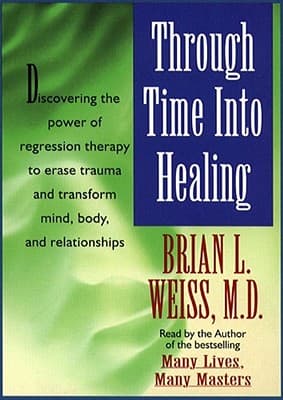

I usually bill clients a ludicrous hourly rate to tell them their future. In my world, we call it "strategic forecasting" or "long-term market positioning." Brian Weiss calls it "progression therapy." My parents would call it witchcraft—or at least a massive waste of billable hours.
So here I am, stuck in LA traffic, listening to a Yale-trained psychiatrist tell me that visualizing my next life can fix my current back pain. My skepticism meter was redlining before the intro finished. But Jenny insisted. She said my chakras were "blocked." I told her my calendar was blocked. She won.
The ROI on Future Tripping
Here's the thing—and I hate to admit this—Weiss is basically teaching scenario planning. That's it. That's the tweet.
He walks through these case studies—like Samantha, who was failing school until she saw herself as a doctor in a future life—and suddenly she's motivated. In the startup world, we just call that "visualizing the exit." You work backwards from the IPO. Weiss just extends the timeline by a few hundred years.
(I actually stopped the track at the Samantha story to voice-note a thought for a client meeting. If visualizing a future success drives current KPI performance, maybe I should be hypnotizing my founders. Don't tell HR.)
The concept is simple: Your choices now determine the quality of your future. Basic economics. Opportunity cost. If you act like a jerk now, your future self pays the debt. It's karma, sure, but it's also just compound interest on bad behavior.
That Voice Made Me Slow Down (A First)
I listen to everything at 2.0x speed. Minimum. Life is short, and most authors read like they're paid by the second.
But Weiss? The man has a voice like a sedative. If I played this at 1.0x, I would've driven off the 405 into a guardrail from sheer relaxation. I had to crank it to 2.5x just to keep his cadence conversational.
That said, there's a weird credibility to it. He doesn't sound like a guru trying to sell you a crystal subscription. He sounds like a doctor reading a chart. Very clinical. Very matter-of-fact about the fact that his patient just visited the year 3000. It disarmed me. I kept waiting for the sales pitch, the "buy my seminar" pivot. It never came. He just believes this stuff.
Fancy Goal Setting or Actual Therapy?
Look, I'm a data guy. I don't know if Evelyn actually saw herself as a hate victim in a past life or if her brain was just running a simulation to process trauma.
Does it matter?
From a results standpoint—my favorite standpoint—the therapy worked. The patients got better. The anxieties cleared up. If pretending to be a medieval peasant helps you stop having panic attacks in 2024, that's a net positive. This Naked Mind uses a similar trick—reframing your brain's autopilot to break destructive patterns.
I found myself doing the exercises (mentally, eyes on the road, obviously). It forces you to look at your current trajectory and ask, "If I keep doing exactly this, where do I end up?" Most business books take 300 pages to ask that question. Weiss does it in four hours. That's efficiency.
Who Gets Value Here
If you're open to visualization exercises wrapped in past-life language, and you want a practical framework for thinking about long-term consequences—this delivers. Skip it if you need hard data or can't stomach the reincarnation framing; the woo-woo packaging will drive you nuts.
The Billable Summary
Jenny was right. It's not total nonsense. It's just cognitive behavioral therapy with a sci-fi wrapper. And frankly, it's cheaper than my hourly rate.