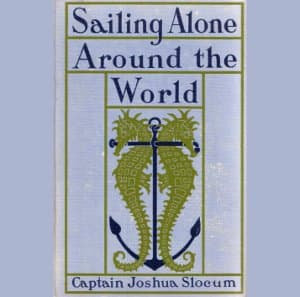

Look, I'll cut to the chase: this is the real deal. Not some ghostwritten adventure tale polished by a New York editor. This is a man who actually did the thing - sailed around the entire planet alone in an 11-meter boat he rebuilt with his own hands - and then sat down and wrote about it. In 1895. Before GPS. Before satellite phones. Before anyone thought you could even survive such a thing.
And honestly? That authenticity hits different when you've spent time in situations where the margin for error is measured in seconds, not hours.
The Voice That Carries the Salt Spray
Alan Chant. I couldn't find much about him online, but based on this performance, the man understands something crucial about narrating adventure: you don't need to shout to convey danger. His delivery is warm, clear, professional - and he knows when to let Slocum's words do the heavy lifting.
There's this moment when Slocum describes being chased by pirates off the coast of Morocco. Chant doesn't go all Hollywood with it. He keeps that steady, practical tone that mirrors how Slocum himself probably processed the experience. Because here's what civilians don't always understand about real danger: when you're in it, you're not panicking. You're solving problems. Chant gets that.
Some listener said his narration "would fetch a warm smile from Joshua Slocum himself." I believe it. There's a respect in how Chant handles the late 19th-century language - authentic but accessible. Never condescending.
Where the Sea Gets Real
This isn't a fast-paced thriller. Let me be clear about that. If you're expecting Tom Clancy on a boat, recalibrate. This is a man's journal of three years alone with the ocean. There are long stretches about rigging repairs and navigation calculations and the particular way the Spray handled in different winds.
And I loved every minute of it.
Why? Because Slocum writes like someone who's actually been there. When he describes a storm, you feel the exhaustion. When he talks about the loneliness, it's not dramatic - it's just true. There's this passage where he's so sleep-deprived he hallucinates the pilot of Columbus's Pinta giving him navigation advice. (I've had some long missions, but I never got advice from a 15th-century ghost. Slocum wins that one.)
The pacing is what I'd call operationally appropriate. It matches the reality of long-distance sailing: stretches of routine punctuated by moments of genuine peril. Chant handles both modes well. He doesn't try to inject artificial urgency into the quiet parts.
SITREP
Here's who needs this audiobook: Anyone who's ever wondered what it actually takes to do something nobody else has done. Sailing enthusiasts, obviously. History buffs who want primary sources instead of interpretations. Veterans and adventurers who appreciate competence over bravado.
Who should skip it? If you need constant action, this isn't your mission. If detailed discussions of sail configurations make your eyes glaze over, maybe not. But honestly, if you give it a chance, Slocum's voice - through Chant's delivery - has a way of pulling you in.
I listened to this during a long drive to a client site in Houston. Four hours of Texas highway, Ranger in the back seat, Slocum in my ears describing the Strait of Magellan. It worked. The production quality is clean, no audio issues, just a man's voice telling you about the time he sailed around the world because he decided he could.
At just under 8 hours, it's a perfect length. Not padded, not rushed. Slocum says what he needs to say and stops. (More authors should learn that skill.)
Worth your time? Absolutely. This is the original adventure memoir. Everything that came after - all those solo sailing books, all those "one man against nature" narratives - they're all responding to this. I found a similar kind of timeless wisdom in The Art of War - another primary source that cuts through the noise. Chant delivers it with the respect it deserves.
Mission accomplished. Ranger approved.