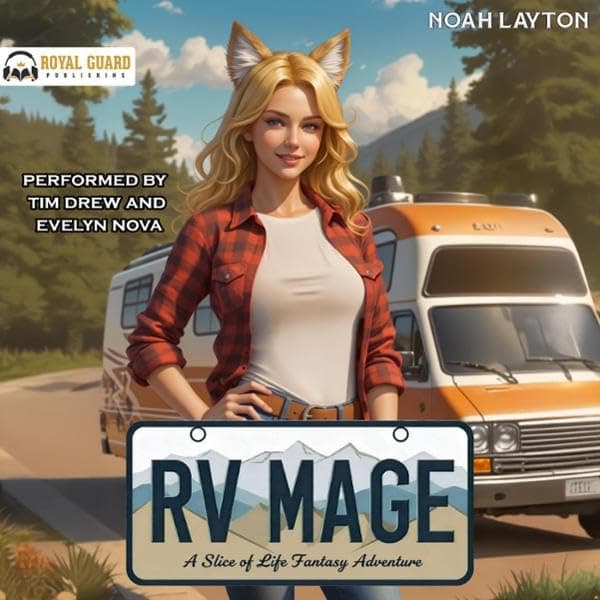

An RV as a magical class system is either the dumbest thing I've ever heard or kind of brilliant. Turns out it's somewhere in between.
I started this one on a late March evening, holed up in the cabin while a spring storm rattled the tin roof and the woodstove was doing its best against a draft I still haven't fixed. Six hours and forty-three minutes - just about the length of a good snowbound evening when the dark comes early and there's nothing else to do but listen.
The Trail Gets the Bones Right
Here's what surprised me: Noah Layton actually understands what it feels like to be on a long trail. The 700-mile circuit through Arlana - forests, rivers, beaches, hilly ranges - reads like someone who's at least studied a thru-hike, even if the magical overlay is pure fantasy. The progression from one biome to another, the way towns and camping grounds are spaced along the route, the rhythm of travel and rest - it maps onto real wilderness travel patterns in a way most fantasy authors wouldn't bother with. The protagonist's outdoor strength isn't just a stat block; it's framed as something earned through years of physical labor, which I respect.
That said, this is still a LitRPG slice-of-life fantasy, so don't expect Aldo Leopold levels of ecological accuracy. The wilderness here is a playground, not a living system. Creatures exist to be fought, landscapes exist to be traversed, and the weather mostly cooperates when the plot needs it to. Nature doesn't forgive mistakes. Neither do I. But I went in knowing this was comfort food, not a field manual.
The RV Mage Class - Dumber Than It Sounds, Then Smarter
The central conceit - guy buys a cheap RV, the RV teleports him to a fantasy world and grants him the "RV Mage" class - is ridiculous. I'll just say it. But Layton leans into the absurdity with enough mechanical specificity that it starts to work. The RV functions as mobile base, magical focus, and home, which actually tracks with how any backcountry traveler relates to their vehicle. Your rig IS your lifeline. Your shelter. Your identity on the road.
The class abilities tie directly to the RV itself, which means upgrades to the vehicle feel like character progression. It's a neat trick. The slice-of-life pacing means you spend real time with the protagonist as he figures out Arlana's rules, meets locals, and slowly builds competence. Cassie the magical surveyor and Anya the fae treasure hunter fill the companion roles you'd expect - there's clear harem undertones here, and if that's not your thing, you'll feel it by hour two.
Tim Drew and Evelyn Nova handle narration duties. Dual narrators for a book this length is an interesting choice. Drew carries the male protagonist's perspective with a straightforward, unhurried delivery that fits the slice-of-life pacing. Nova picks up the female POV sections. Neither performance blew me away, but neither broke immersion either. Functional. Steady. Like a truck that gets you where you're going without any surprises.
Romanticized vs Real - This Stays Romanticized
Let me be honest about what this book is and isn't. It's a cozy power fantasy set on a trail. The protagonist faces danger but never feels truly threatened. The women are beautiful and immediately interested. The world is dangerous but accommodating. If you've ever actually been three days deep in grizzly country with a storm rolling in and no cell service, you know that's not how wilderness works. But that's not the point here.
The point is escapism, and on that front, the book delivers. I listened while snowshoeing at 8,000 feet the next morning - picked it back up for the last couple hours - and it paired well with easy terrain and clear skies. It's a road trip fantasy for people who like the idea of vanlife with magic systems bolted on. The fae elements and companion dynamics reminded me of A Court of Frost and Starlight, another book that leans hard into comfort over consequence — though that one at least commits to its emotional stakes in a way Layton hasn't quite earned yet.
At under seven hours, it doesn't overstay its welcome. The pacing is relaxed but not stagnant. There's enough worldbuilding to suggest a larger series framework without drowning you in exposition dumps. It's a setup book, clearly, and it does setup-book things - introduces the world, the characters, the magic system, and leaves plenty of room for expansion.
Who Should Listen (And Who Should Skip)
If you like cozy LitRPG, vanlife daydreams, or low-stakes fantasy with harem elements, this one's built for you. Skip it if you want real ecological grit, genuine danger, or stories where the wilderness actually bites back.
Last Light on the Trail
RV Mage isn't going to change your life. It's not trying to. It's a campfire story - warm, easy, a little silly, and gone by morning. I enjoyed it the way I enjoy instant coffee on a cold trail: it's not the real thing, but it does the job when you need it. If the ecology were sharper and the stakes a little higher, we'd be talking about something special. As it stands, it's a solid first entry in what could be a fun series if Layton keeps building.