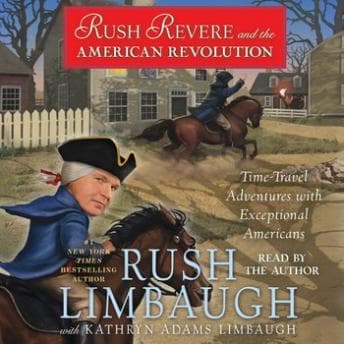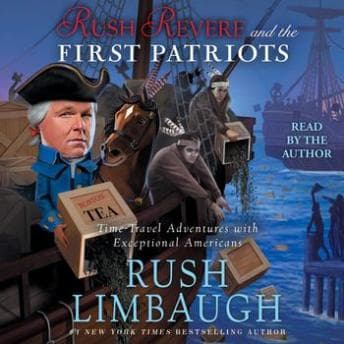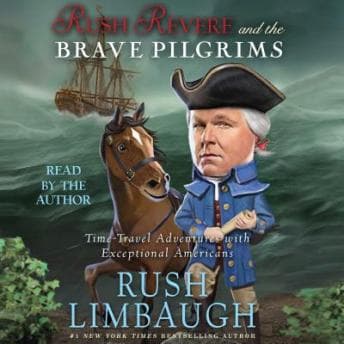

Look, I'm going to be honest here - this is way outside my usual wheelhouse. My D&D group doesn't exactly pass around Rush Limbaugh books between sessions. But my cousin asked me to listen to this with her kids during a road trip, and here we are. A talking time-traveling horse named Liberty. A history teacher who dresses like Paul Revere. The Mayflower.
I went in expecting to hate it. I didn't hate it. I also didn't love it. It's... complicated.
The Time-Travel Premise Actually Works (Sort Of)
Okay, so the magic system here - if we're being generous and calling it that - is basically "horse says words, portal opens, boom you're in 1620." As someone who has spent way too many hours debating the internal consistency of Sanderson's Allomancy, this is not exactly rigorous. But for kids? It works. The talking horse Liberty provides comic relief, the time-travel gets you into the action fast, and the whole thing moves at a clip that would keep most elementary schoolers engaged.
The Mayflower stuff is actually pretty interesting if you can get past the framing. The descriptions of the voyage - the cramped quarters, the storms, the general misery of crossing the Atlantic in a wooden boat - that's solid historical content. Kids will probably remember that the Pilgrims ate hardtack and dealt with seasickness. Educational mission accomplished, I guess?
But here's where it gets weird. The book takes some liberties with history (ironic, given the horse's name) and the portrayal of Native Americans is... not great. It's got that simplified, almost sanitized version of first contact that makes historians wince. I kept thinking about how my D&D group handles cultural encounters with more nuance than this, and we once had a barbarian try to seduce a dragon.
Rush Behind the Mic
Limbaugh narrates this himself, and your mileage will vary wildly depending on your tolerance for his particular brand of enthusiasm. He's got energy - I'll give him that. The man commits to the bit. His Rush Revere voice is distinct, Liberty the horse gets this goofy characterization, and the kids in the car seemed to track who was who.
Sometimes the enthusiasm tips into grating territory, though. There's this relentless positivity that starts to feel like being trapped in a room with someone who's had way too much coffee. I found myself reaching for the speed controls more than once - not to speed up, but just to take a break. At 4.5 hours, it's mercifully short, but even that felt long in places.
Production quality is solid. Clean audio, no weird background noise, easy to follow. If you're going to listen to this with kids in the car, you won't have to constantly adjust the volume or deal with mumbled passages.
Who Should Saddle Up (And Who Should Ride On By)
Here's the thing - I can see this working for a very specific audience. Kids who are into American history, families who want educational content with a conservative bent, or parents looking for something their elementary schoolers can follow on long car rides. It's not for me. It's probably not for most of the fantasy nerds reading this site. Skip it if you want historical nuance or if Limbaugh's voice grates on you.
But my cousin's kids? They asked questions about the Pilgrims for like an hour afterward. They wanted to know more about the Mayflower Compact. They remembered character names. So... mission accomplished? The book does what it sets out to do, even if what it sets out to do isn't particularly nuanced or historically complete.
I kept comparing it to the Magic Tree House series in my head - another time-travel-for-kids franchise - and honestly, those books handle the educational balance better. American Gods does something similar with American history, though obviously not for kids - it weaves mythology into the American experience in a way that actually respects complexity. They're less preachy, more willing to show complexity. If you're looking for time-travel history for young listeners, I'd point you there first.
Rolling a Nat 10 (From a Reluctant Listener)
This is a weird one to rate. As an audiobook experience, it's competent. As historical fiction, it's got issues. As something I'd recommend to my usual crowd? Absolutely not. But I'm not the target audience, and I know it.
If you're a parent or grandparent looking for something to get kids interested in American history, and you're okay with a simplified, patriotic framing, this might work for you. Sample it first. Know what you're getting into. The talking horse is charming, the history is surface-level, and Limbaugh's narration is an acquired taste.
I'm going back to my Stormlight reread now. Liberty the time-traveling horse is no Ryshadium, but at least he tries.