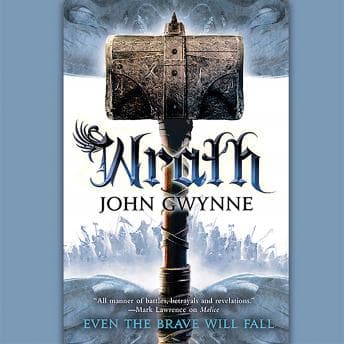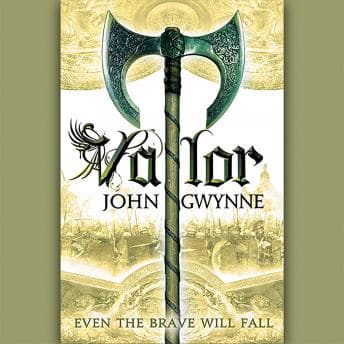

I started this one during a particularly brutal on-call week. You know the kind—debugging race conditions at 3AM and questioning every life choice that led you here. Twenty-eight hours of epic fantasy seemed like exactly the escape I needed. And honestly? It mostly delivered.
So look, this is book three of The Faithful and the Fallen series, and if you haven't listened to the first two, turn back now. John Gwynne does not hold your hand. You're dropped into a world already at war, with like fifteen POV characters scattered across the Banished Lands, and the stakes are basically "demons want to take over everything." It's classic epic fantasy in the best way—think Game of Thrones meets Tolkien, but with a talking crow and giants who actually feel like characters instead of set pieces. Ship of Magic gave me that same sprawling, multi-POV epic fantasy feel, though the world-building there leans harder into maritime politics.
Damian Lynch: Clear Signal, Occasional Static
Lynch narrates this beast, and here's where I have mixed feelings. His voice is mature, clear, and honestly perfect for the tone. When he's doing Queen Edana or the quieter character moments, he absolutely nails it. The emotional delivery during the gut-punch scenes—and there are several—hit exactly right.
But. (You knew there was a but.)
During battle scenes, when characters are supposed to be shouting, Lynch stays pretty... level. It's not monotone exactly, but it's methodical. Like he's reading a battle report instead of living through one. I noticed it most during the big siege sequences where I wanted to feel the chaos, and instead I got clear, measured delivery. Didn't ruin anything, but it definitely pulled me out a few times.
The character voices though? Solid. I could always tell who was speaking, which is crucial when you're half-asleep on the 6:47 train surrounded by other tech zombies.
Gwynne's Kill Switch
This series doesn't pull punches with character deaths. I won't spoil anything, but there were moments I actually had to pause and stare out the train window for a minute. Corban's arc in particular—watching him go from running away to actively choosing to fight—is the emotional core that makes the whole thing work.
The world-building is dense but accessible. You've got the seven treasures, the Kadoshim demons, the prophecy about the Bright Star versus the Black Sun, and somehow Gwynne juggles all of it without losing you. The journey to Drassil (the hidden fortress in Forn Forest) gives the book a clear quest structure that keeps things moving despite the massive runtime.
My one complaint: some of the political maneuvering sections dragged. I found myself bumping up to 1.5x during a few of the council scenes. Not every book needs to be a sprint, but 28 hours is a lot, and there were stretches where I felt the length.
Is the Time Investment Worth It?
Here's the thing—this is a commitment. We're talking three solid weeks of commuting, or one very long road trip. But if you're already invested in the series, the payoff is real. Gwynne knows how to build toward those big moments, and when they land, they land hard.
Production quality is clean. No weird volume spikes or background noise, which matters when you're listening through train announcements and the guy next to you who refuses to use headphones for his podcast.
Perfect for: Long commutes, road trips, anyone who wants to disappear into a world for a while. Skip if: You need constant action or get frustrated with slower pacing—this might test your patience.
Deploying to Book Four
I finished this in about three weeks of commuting, and I'm already eyeing book four. Kevin keeps asking why I'm so invested in "the crow book" and honestly, I don't have a good answer except that sometimes you just need 28 hours of swords and prophecies and demons to forget about production outages. The science doesn't hold up (it's fantasy, there is no science), but the emotional beats absolutely do.