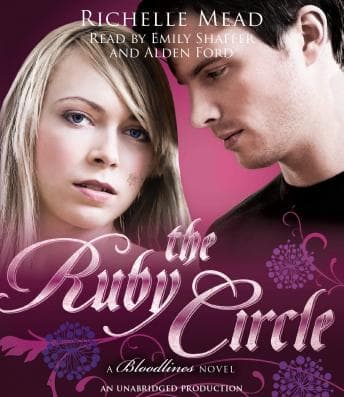

"I won't let them rewrite who I am."
Somewhere around hour two, Sydney says something to that effect—I'm paraphrasing because I was elbow-deep in a biryani that was rapidly becoming more ambitious than my skill level—and I had to pause. Not because it was surprising, but because it so perfectly encapsulates the psychological arc Richelle Mead has been building across six books. Sydney Sage's entire journey is a case study in identity reconstruction: what happens when the belief system you were raised in turns out to be the cage keeping you small.
The Psychology of Leaving the Group
Look, I study how narratives shape identity. It's literally my job. And what Mead does with the Alchemists—this insular, dogmatic organization that indoctrinates its members into believing vampires are abominations—is basically a fictional model of cult deprogramming. Sydney's arc from obedient Alchemist to someone who marries a vampire? The research actually shows that this kind of identity shift doesn't happen gradually. It happens in ruptures. Moments where the old self can't hold. And Mead gets that right. By this final book, Sydney isn't just rebelling—she's grieving the person she used to be while fighting to protect who she's become.
Adrian, meanwhile, exhibits classic patterns of someone whose self-worth is entirely externalized. Spirit magic as metaphor for mental health struggles? Not subtle, but effective. His puzzle-solving arc here—digging into a secret about spirit magic that could upend Moroi society—works because it mirrors his internal question: am I more than my worst impulses? My therapist would have thoughts about this character, and most of them would be "he needs better coping mechanisms than sarcasm and grand gestures."
What makes this book psychologically interesting as a series finale is that the external threats (Alchemist wrath, Moroi politics, a returning nemesis) are really just pressure tests for the internal work Sydney and Adrian have already done. The tension isn't "will they survive" so much as "will they survive without losing what they've built together." That's a mature question for a YA series.
Two Narrators, Two Psychologies
Alden Ford and Emily Shaffer have been doing this for six books, and it shows. Shaffer's Sydney is controlled, precise—there's this tightness in her delivery that loosens incrementally when Sydney is with people she trusts versus when she's performing for Alchemists. Ford's Adrian is warmer, more impulsive in his vocal cadence, which tracks with a character who literally feels emotions more intensely due to spirit magic. The dual narration isn't just a gimmick here. It's structural. You're getting two different psychological perspectives on the same events, and the narrators sell that distinction.
That said—and this is where I have to be honest—the narration is solid but not extraordinary. It's consistent with the previous Bloodlines audiobooks, which means if you've been listening all along, you'll feel at home. But I wouldn't point to any single moment and say "that performance broke me." The emotional heavy lifting comes from the writing. The narrators carry it competently.
Where the Pattern Breaks Down
Here's the thing about series finales: they have a psychological contract with the reader. You've invested—in this case, across ten Vampire Academy books and six Bloodlines books—and you expect payoff proportional to that investment. And Ruby Circle mostly delivers on the emotional contract. The epilogue is genuinely satisfying (guest appearances from Vampire Academy characters that feel earned rather than fan-servicey). The Sydney-Adrian relationship reaches a conclusion that respects both characters' growth.
But psychologically, this doesn't track as well on the surprise front. Previous books in the series had genuine "wait, WHAT" moments that recontextualized everything. This one plays it safer. The plot twists are present but predictable if you've been paying attention. I found myself asking: why does the nemesis arc feel thinner than the relationship arc? Because Mead's heart is clearly with the love story, and the thriller elements are scaffolding rather than architecture. At ten hours, some listeners wished it were longer, and I get it—not because the story drags, but because the external conflict wraps up almost too neatly while the emotional complexity could've used more room to breathe.
For what it's worth, I listened to the last three hours while on a late-night jog through Cambridge that turned into more of a walk because I was too invested in the epilogue to maintain pace. (My therapist says exercise helps. She didn't say anything about maintaining a consistent heart rate.)
Who This Is Really For
If you haven't read the previous five Bloodlines books—or ideally the Vampire Academy series before that—do not start here. You will be lost. This is a payoff book, not an entry point. The psychological groundwork was laid way back in Bloodlines, where Sydney's compartmentalized thinking is practically a clinical symptom waiting to be cracked open. But if you've been following Sydney and Adrian's arc? This is the emotional conclusion you've been waiting for, even if the plot doesn't surprise you the way Silver Shadows did. Alden Ford's narration in that earlier installment captured Adrian's vulnerability so sharply that I still think Silver Shadows: A Bloodlines Novel is the series' psychological peak. It's comfort food for people who've earned it.
Skip it if you need your YA finales to reinvent the wheel. Pick it up if you want to watch two characters finally stop fighting what they already know about themselves.
Case Closed, File Archived
Mead understands something fundamental about human nature: the scariest thing isn't the external villain. It's the moment you realize you have to become someone your family won't recognize. Sydney Sage's entire arc is about that terror—and the freedom on the other side of it. As a narrative psychology case study, this series finale is more emotionally intelligent than half the self-help books on my shelf. And the biryani turned out fine, thanks for asking.