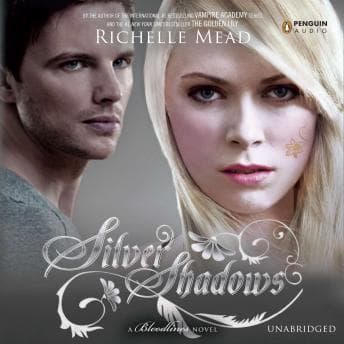

Okay, so here's my problem with this book: it's basically re-education camp torture porn for the first half, and I'm sitting here trying to code a procedural dungeon generator while Sydney Sage is getting psychologically broken down by vampire-hating zealots. Not exactly the escapist fantasy I signed up for when I started this series.
But here's the thing—I couldn't stop listening. And that's annoying.
The Dual POV That Actually Works
Look, I've listened to a lot of audiobooks with alternating narrators. Most of them feel like two separate books awkwardly stitched together. Emily Shaffer and Alden Ford? They've got this down to a science. Shaffer's Sydney is sharp, controlled, the kind of voice that sounds like she's constantly running calculations in her head. Which, you know, she literally is. Ford's Adrian hits that perfect balance of confident and vulnerable—his Russian accent work is legitimately good, which is rare. Most narrators go full Boris and Natasha with it, but Ford keeps it grounded.
The contrast between their sections mirrors the story perfectly. Sydney's trapped in what's essentially a cult deprogramming facility (fun times), so her chapters are claustrophobic, tense, measured. Adrian's out in the world falling apart, so his sections have this desperate, frantic energy. The narrators lean into that without overdoing it.
When the Magic System Becomes the Weapon
Here's where my D&D brain kicked in. Richelle Mead has always done interesting things with her magic systems—Alchemists use science-adjacent magic, Moroi have elemental abilities, Spirit users pay with their sanity. But Silver Shadows takes the worldbuilding and weaponizes it against the protagonist. The Alchemists aren't just boring bureaucrats anymore. They're genuinely terrifying.
Sydney's sections are hard to listen to. I mean that as a compliment, I think? The psychological manipulation, the gaslighting, the systematic attempt to erase everything she's become—Shaffer delivers it with this quiet horror that hit different while I was walking across campus at 2 AM. (Yes, I was coding late. No, my thesis is not done. Moving on.)
The progression here is satisfying in a brutal way. Sydney doesn't just survive—she games the system. She uses her intelligence the way a good player uses their character sheet, finding exploits and loopholes. It's the kind of character work that makes you want to fist-pump, except you're also deeply uncomfortable.
Adrian's Arc (Or: Spirit Magic Is Basically a Curse)
Meanwhile, Adrian's dealing with the consequences of Spirit use, which Mead has always treated like a degenerative condition rather than a superpower. Ford captures the desperation without making Adrian pathetic. There's a scene—I won't spoil it—where Adrian has to make a choice between his mental health and finding Sydney, and Ford's delivery just... yeah. That one stuck with me.
The romance elements are still here, but they feel earned at this point. Five books in, these two have chemistry that doesn't rely on will-they-won't-they nonsense. They're separated for most of the book, which could've been frustrating, but instead it ratchets up the tension.
The Slow Burn That Pays Off
I'll be honest—the first third drags if you're not invested. Sydney's captivity is repetitive by design, and some listeners might bounce off the bleakness. But Mead's playing a long game here. The payoff in the back half is worth it.
At 10 hours 42 minutes, this is a solid listen for a road trip or a coding marathon. I knocked it out over a weekend while pretending to work on my literature review. (Dr. Patel, if you're reading this somehow: I'm making progress. Really.)
Who's Rolling Initiative on This One?
Actually, maybe my D&D group would dig this? It's got the political intrigue, the magic system depth, the morally complex factions. One of my players is super into vampire stuff, and this series does vampires better than most. Though honestly, Bound by Prophecy scratches a similar itch if you're looking for paranormal romance with actual stakes.
Listen if: You've read the previous Bloodlines books (and ideally Vampire Academy before that—yes, that's like 12 books of homework), you appreciate magic systems with real costs, and you can handle some genuinely dark psychological content. Skip if: You want standalone escapism or can't stomach extended captivity sequences.
The audiobook production is clean—no weird audio artifacts, consistent levels between narrators. Basic stuff, but you'd be surprised how many audiobooks mess it up.
Save vs. Reading: Audiobook Wins
Shaffer and Ford make this the definitive way to experience the story. I'd honestly recommend the audiobook over reading it—the dual narration adds a dimension the text can't replicate.