
Okay, look. I know what you're thinking.
"Tom, aren't you supposed to be analyzing the narrative structures of 100-hour epic fantasies? Didn't you just spend three weeks arguing on Reddit about whether hard magic systems are superior to soft magic systems? Why are you reviewing a six-minute children's book about a baby elephant?"
Here's the thing. It's 2:45 AM. My procedural generation code is currently outputting gibberish that looks less like a dungeon map and more like a Rorschach test for people who hate themselves. Dr. Patel sent me an email with the subject line "Quick Check-in" (which we all know is academic code for "Where is your thesis, Thomas?"). I needed a win. Just one. I needed to finish something.
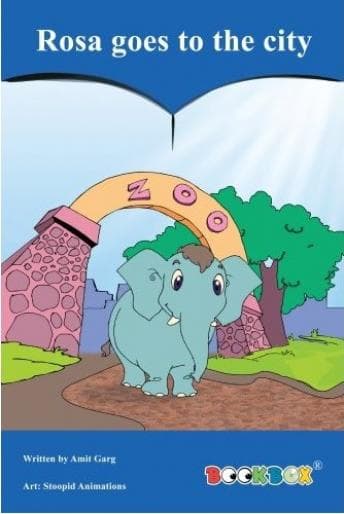
So I saw Rosa Goes to the City. Duration: 6 minutes.
I clicked play. Don't judge me.
The Speed Run of Storytelling
If you're used to Sanderson or Jordan, where the prologue alone is long enough to ruin your sleep schedule for a week, this is a shock to the system. Even Brisingr felt like a sprint compared to Jordan's doorstoppers. Six minutes is the literary equivalent of a blink. But honestly? Kind of refreshing.
There is no "slog" here. No three-chapter descriptions of the fabric on a dress. Rosa is a baby elephant. She goes to the city. That's the plot. It's efficient. Streamlined. If my thesis was this direct, I would've graduated two years ago.
The pacing is—obviously—brisk. You don't have time for character arcs or tragic backstories. Rosa doesn't have a dark past where her village was burned down by a dark lord. She just wants to explore. In D&D terms, this is a pure exploration encounter. No combat, no traps, just vibes. My DM would hate it. "Where's the conflict, Tom? Where's the risk?"
The risk, Gary, is that Rosa gets lost. And for a six-minute runtime, the stakes felt appropriate. Compare that to the world-ending stakes in Return of the King, where the fate of Middle-earth hangs on every chapter—sometimes you just need a story where the biggest problem is finding your way home.
Amit Garg's Calm, Clean Delivery
Amit Garg narrates this himself, and look—he's not Steven Pacey. He's not doing a gritty, gravel-voiced inquisitor or a high-pitched goblin. But he shouldn't be. This is for kids. (And burnt-out grad students, apparently.)
His delivery is super clean. Very deliberate. You can tell this is part of that "BookBox" ecosystem designed for language learning. He enunciates every syllable like it's the most important sound in the world. Reminds me of those old educational tapes I used to listen to in the library back in Georgia, trying to learn Spanish before I realized C++ was the only language I was actually going to use.
It's soothing, okay? After listening to 40 hours of grimdark battles where people are losing limbs, hearing a calm voice talk about an elephant is... nice. A palate cleanser. Like eating a cracker between wine tastings, if the wine was blood and the cracker was a cute animal story.
World-Building: Minimalist by Design
The publisher blurb talks about a "scientifically proven read-along feature." Since I listened to the audio-only version, I missed the visual component, which I assume is where the "science" happens.
From an audio perspective, the sound design is decent. Not a full-cast graphic audio production—you're not getting immersive 3D soundscapes of city traffic that make you check your blind spot—but it works. Simple. Clean.
And the world-building? Minimalist. We don't know which city. Could be New York. Could be Mumbai. Could be a procedurally generated city in my failing thesis project. Doesn't matter. The universality is the point. (See, Mom? I am using my degree. Sort of.)
Who Should Listen (And Who Should Skip)
Did this audiobook change my life? No.
Did it distract me from the existential dread of my academic deadlines for exactly six minutes? Yes.
If you have kids, this is a no-brainer. Short enough that they won't get bored, educational enough that you can feel like a good parent while you zone out. Perfect for language learners too, given that BookBox pedigree.
If you're a fantasy nerd like me? Skip it—unless you really, really need to mark a book as "Read" on Goodreads to hit your yearly goal. I'm not saying I did that. But I'm not saying I didn't.
Now, if you'll excuse me, I have to go explain to my advisor why my "narrative research" involved a runaway elephant.